

How Successful Bloggers Use Long-Tail Keywords: Portable Power Station for Drones and AI Devices
Intro: Why Portable Power Stations for Drones and AI Devices Matter
A drone mission rarely fails because the aircraft cannot fly. More often, the limiting factor is power: depleted batteries, an unavailable wall outlet, an overloaded vehicle inverter, or an edge-computing device that shuts down at the wrong moment. The same challenge affects field researchers, emergency teams, content creators, industrial inspectors, and AI developers working outside a traditional office.
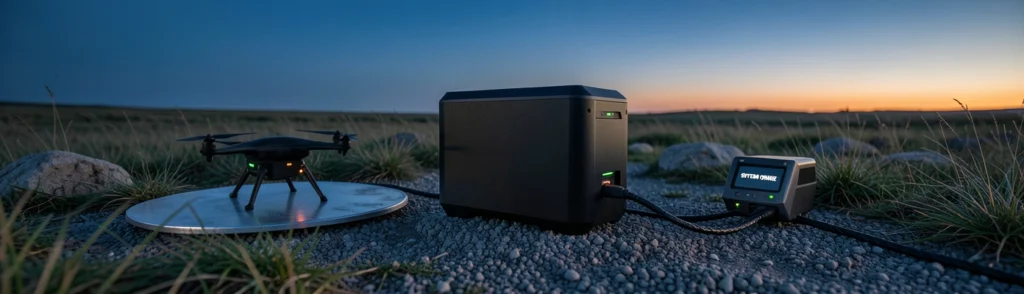
That is why interest in a portable power station for drones and AI devices is growing. These systems combine rechargeable battery capacity, inverter output, USB-C charging, specialized drone connections, and backup-power functionality in one transportable unit. Instead of carrying several adapters and relying on a gas generator, operators can build a cleaner and quieter field power system around a single battery platform.
The most useful buying decisions come from specific requirements rather than broad product categories. A buyer searching for “portable power station” may be comparing dozens of models. A buyer searching for a portable power station with SDC drone charging ports, high-wattage USB-C, long LFP battery cycle life, and fast UPS switching for mission continuity already understands the operational problem.
That is the value of long-tail keywords. They describe a precise use case, just as a technical power plan describes a precise workload. This article applies that same implementation-focused approach to choosing and deploying portable power for drones, laptops, networking equipment, and AI-enabled edge devices.
Background: What Is a Portable Power Station for Drones and AI Devices?
What Is a Portable Power Station for Drones and AI Devices?
A portable power station is a rechargeable battery system with multiple outputs for AC appliances, USB devices, and specialized equipment. A model designed for drones and AI devices typically includes a pure sine-wave inverter, high-capacity lithium battery, USB-C Power Delivery, and enough output headroom to handle chargers, laptops, monitors, routers, cameras, and compact edge-computing systems.
Think of it as a mobile electrical hub. A drone operator might recharge flight batteries while powering a laptop for mission planning and a cellular router for cloud uploads. An AI field technician could run a small workstation, camera system, sensor gateway, and communications equipment from the same battery.
5 Benefits of a Portable Power Station for Drones and AI Devices
LFP Battery Cycle Life for Reliable Field Power
Lithium iron phosphate, or LFP, batteries are increasingly preferred because they offer strong thermal stability and long service life. A high-quality LFP battery may support thousands of cycles while retaining a substantial portion of its original capacity. For teams that recharge after every field deployment, this matters more than a low initial purchase price.
The practical analogy is a commercial vehicle. A cheap battery with limited cycle life may look affordable, but its replacement schedule can create higher ownership costs. LFP chemistry is generally better suited to repeated operational use.
SDC Drone Charging Ports for Faster Recharging
Specialized SDC drone charging ports can reduce the need for separate charging bricks and adapters, especially within compatible drone ecosystems. Direct connections may also simplify cable management at a remote site.
This is particularly valuable when several batteries must be rotated during a long survey. Instead of treating the power station as a generic wall outlet, the operator uses it as an integrated drone charging base.
UPS Switching for Mission Continuity
UPS functionality allows a power station to provide backup power when the primary electrical source fails. Fast UPS switching for mission continuity is important for network equipment, data-storage devices, edge computers, and monitoring systems that cannot tolerate an interruption.
A short switching interval is like a relay runner passing a baton without dropping it. The equipment may continue operating even when utility power or a vehicle connection becomes unstable. However, users should verify actual switching behavior and compatibility rather than assuming every UPS mode supports every device.
Edge Device Power Management for AI Workloads
AI systems in the field often combine cameras, processors, storage, displays, and communications hardware. Efficient edge device power management means prioritizing essential loads, limiting idle consumption, and scheduling high-power tasks around available battery capacity.
For example, a vision system could process data locally while a lower-power modem handles uploads periodically. This approach extends runtime without sacrificing the entire workflow.
Portable Backup Power for Outdoor Operations
Portable power stations are useful for construction sites, outdoor broadcasts, environmental monitoring, emergency response, camping, and mobile offices. They operate quietly compared with fuel generators and do not produce exhaust at the point of use.
Their main limitation is finite stored energy. A station that runs a laptop and several drone chargers for a day may not run a large heater or refrigerator for the same period. Capacity must therefore be matched to the workload.
Trend: How Portable Power Stations Are Evolving for Drones and AI
Portable Power Station for Drones and AI Devices vs. Traditional Generators
Battery Capacity, Portability, and Noise Comparison
Traditional generators can provide long runtimes when refueled, but they are heavier, noisier, and dependent on fuel. A portable battery station is simpler to deploy and better suited to locations where noise, fumes, or maintenance are concerns.
Battery capacity is measured in watt-hours, while generator output is often discussed in watts. Watt-hours describe how much energy is stored; watts describe how quickly that energy can be delivered. A 1,000Wh station may theoretically power a 100W load for 10 hours, although real-world runtime will be lower after inverter and conversion losses.
Charging Speed and Device Compatibility Comparison
Modern power stations are becoming faster to recharge through AC input, solar panels, vehicle connections, and other battery systems. They are also offering more output options, including USB-C ports capable of charging laptops and compact workstations.
Generators remain useful for extended high-power demands, but battery stations are often more convenient for mixed loads. A field team can charge drone batteries, power a laptop, and run communications equipment without carrying multiple fuel-powered devices.
Why SDC Ports and High-Wattage USB-C Matter
SDC ports matter because they can connect directly with supported drone batteries and charging accessories. High-wattage USB-C matters because many modern laptops, displays, cameras, and AI development devices increasingly use USB-C as both a power and data interface.
Using the correct port can improve efficiency. Converting battery power to AC and then back to DC through a laptop charger may waste more energy than using a direct USB-C connection. This is similar to transporting water through a short pipe rather than pumping it through several unnecessary transfer stations.
Insight: How to Choose a Portable Power Station for Drones and AI Devices
Match Battery Capacity to Drone and AI Device Loads
Begin with a device inventory. Record each device’s operating wattage, charging time, and expected daily usage. Include drone battery chargers, laptops, monitors, routers, camera systems, storage drives, and lighting.
Estimate Runtime for Drones, Laptops, and Edge Devices
Multiply each device’s wattage by the number of hours it will run. Then add charging demands from batteries and peripherals. For example:
- Laptop: 80W for six hours = 480Wh
- Edge computer: 120W for four hours = 480Wh
- Communications equipment: 20W for eight hours = 160Wh
- Drone charging and accessories: 200Wh estimated daily demand
This produces a theoretical total of 1,320Wh. A station with only 1,000Wh would be undersized unless the team reduces usage, adds solar input, or plans a midday recharge.
Account for Inverter Losses and Peak Power Demand
Real-world systems lose energy through inverters, chargers, heat, and standby consumption. A planning margin of 15% to 25% is sensible for many mixed workloads. Also check surge requirements. A device may have a modest operating wattage but demand more power when starting.
Evaluate LFP Battery Cycle Life and Long-Term Value
Look beyond capacity. Compare the stated LFP battery cycle life, warranty, thermal protections, battery-management system, and replacement policy. A station used occasionally for camping has different requirements from one recharged every day by a drone services company.
Check UPS Switching for Mission Continuity
If the station will protect a router, server, data recorder, or AI gateway, verify UPS switching specifications. Check whether the UPS output remains active during charging, whether pass-through power is supported, and whether sensitive equipment has been tested with the system.
Confirm SDC Drone Charging Ports and Other Connections
Confirm that SDC or SDC Lite ports match the drone batteries and chargers you actually use. Also check AC outlet type, USB-C wattage, USB-A availability, solar input limits, and vehicle-charging options.
Avoid Common Sizing and Compatibility Mistakes
Common mistakes include confusing watts with watt-hours, ignoring peak loads, assuming every USB-C port supports laptop charging, and selecting a station that is too heavy for field transport. Weather exposure is another concern: many units are not waterproof and require sheltered operation.
Forecast: The Future of Drone Charging and Edge Device Power Management
Smarter Edge Device Power Management
Future systems will likely use software to monitor each connected load and automatically prioritize critical devices. A power station could reduce display brightness, delay nonessential uploads, or shut down idle peripherals before battery reserves become critical.
Longer LFP Battery Cycle Life and Faster Charging
Battery-management improvements should increase usable cycle life while reducing recharge downtime. Solar charging will also become more practical as controllers improve and portable panels become more efficient.
More Integrated SDC Drone Charging Ports
Drone manufacturers and power-station makers are likely to develop more integrated charging ecosystems. Instead of carrying several proprietary chargers, operators may use modular ports, interchangeable cables, and direct battery diagnostics.
More Reliable UPS Switching for Mission Continuity
UPS systems will become more capable of supporting networking, storage, and edge AI equipment. Future products may provide better load visibility, automatic failover testing, and remote alerts when battery reserves approach a defined threshold.
Call to Action: Choose the Right Portable Power Station for Drones and AI Devices
Define Your Devices, Runtime, and Power Requirements
List every device, calculate expected watt-hours, and add a reserve. Separate continuous loads from short charging events so the station can handle both energy capacity and peak output.
Compare Battery Chemistry, Ports, and Safety Features
Prioritize LFP chemistry, suitable cycle-life ratings, thermal protection, overload protection, high-wattage USB-C, and compatible SDC drone charging ports. Specifications should support the workflow, not merely look impressive.
Prioritize Reliability for Every Mission and Workflow
A reliable portable power station is infrastructure. Test it before deployment, label cables, protect it from heat and moisture, and create a recharge plan. Reliability comes from both product design and operational discipline.
Conclusion: Use Long-Tail Keywords to Find Better Portable Power for Drones and AI Devices
The best portable power station for drones and AI devices is not necessarily the largest or most expensive model. It is the one that matches the actual load profile, charging ecosystem, runtime expectations, and continuity requirements of the user.
Long-tail searches reveal those requirements. Terms such as LFP battery cycle life, UPS switching for mission continuity, SDC drone charging ports, and edge device power management help buyers move from generic product research to practical system design.
As drones and AI workloads move further into remote environments, portable power will become a strategic part of field operations. Teams that size capacity correctly, use efficient connections, and plan for continuity will spend less time searching for outlets—and more time completing the mission.