

[Best] How Successful Content Creators Use Emotional SEO Titles to Drive More Traffic With Endpoint Security for Multi-Monitor Laptop Setups
Intro: Why Endpoint Security Matters for Multi-Monitor Laptops
A multi-monitor laptop setup can transform a small workspace into a powerful command center. With one screen for research, another for communication, and a third for active work, users can move faster and reduce the constant switching between windows.
But every added display, dock, adapter, keyboard, mouse, and cable also expands the number of connections that must be trusted. That is why endpoint security for multi-monitor laptop setups is not simply an IT concern. It is a practical requirement for remote workers, creators, students, consultants, and businesses that rely on portable workstations.
The central lesson is simple: a larger workspace should not become a larger attack surface.
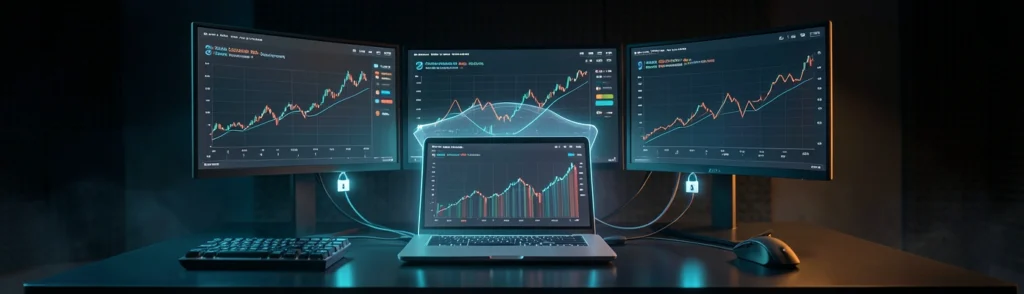
Think of your laptop as the front door to a building. Adding external monitors is like installing additional doors for convenience. Those doors may improve movement, but each one needs a reliable lock, clear ownership, and regular inspection. A secure setup preserves the productivity benefits without leaving overlooked entry points.
Endpoint security protects the devices and connections used to access data, applications, and networks. In a multi-monitor environment, the primary endpoint is usually the laptop, but the security boundary extends to every connected accessory.
This includes:
- Portable external monitors
- USB-C hubs and docking stations
- HDMI adapters
- Display cables
- Keyboards and mice
- Webcams, storage devices, and charging accessories
- Wireless display transmitters
- Remote access applications and cloud services
The monitors themselves typically do not store information permanently. However, the systems that drive them may expose sensitive content. A compromised adapter, malicious peripheral, outdated driver, or unsecured remote session could allow attackers to interfere with data or use the laptop as a starting point for further intrusion.
Endpoint security therefore combines technical controls and user behavior. Operating system updates, encryption, endpoint detection tools, strong authentication, device management, and careful accessory selection all contribute to a safer workspace.
External displays create several categories of risk. The first is physical exposure. A traveler working in an airport, hotel, or coworking space may unintentionally display confidential documents to people nearby. Privacy filters, reduced screen brightness, and careful positioning can help.
The second risk involves connectivity. USB-C is especially convenient because one cable may carry power, video, data, and networking. That convenience also means a single compromised accessory could have broader access than a basic display cable.
The third risk is software compatibility. Display extenders and docking stations often require drivers or management utilities. If those components are downloaded from unreliable sources or left unpatched, they may introduce vulnerabilities.
Finally, a larger workspace can encourage users to keep more sensitive applications open simultaneously. A password manager, customer database, internal chat, and financial dashboard may all be visible at once. Security must protect not only the laptop but also the information being displayed.
Background: Build a Secure Multi-Monitor Laptop Foundation
A secure foundation begins before the first monitor is connected. Confirm that the laptop uses a supported operating system, receives regular security updates, and has full-disk encryption enabled. Create separate user accounts when appropriate, and avoid using administrator privileges for routine work.
The laptop should also have a strong login method, such as a long unique password combined with biometric authentication or a hardware security key. Automatic screen locking is essential, especially when the workstation is used in shared environments.
1. Better protection for sensitive information. Endpoint security reduces the chance that credentials, files, and business data will be exposed through an overlooked device or connection.
2. Safer remote work. Employees can use portable displays in hotels, client offices, and coworking spaces while maintaining stronger controls over access and data movement.
3. Faster detection of suspicious activity. Endpoint monitoring can identify unusual processes, unauthorized peripherals, or unexpected network behavior.
4. More reliable compliance. Organizations in regulated industries can apply device policies consistently across laptops, docks, and remote access tools.
5. Easier incident response. Centralized management makes it possible to disable accounts, isolate a laptop, revoke certificates, or remove risky accessories quickly.
These benefits work together like layers in a security system. A strong lock helps, but so do cameras, alarms, and a plan for responding to an attempted break-in.
Reducing device attack surface means minimizing the number of software components, services, ports, and accessories that could be exploited. Begin by disconnecting equipment that is not needed. Remove unused display utilities, disable unnecessary wireless features, and block unknown USB devices through system policy where possible.
Use trusted accessories from established manufacturers, and keep firmware updated. A cheap hub from an unknown source may function correctly while offering little transparency about its firmware or supply chain.
It is also wise to separate personal and business equipment. A monitor used at home may be harmless, but a shared dock used by several people presents more uncertainty. Treat every connection as a trust decision rather than assuming that a display is automatically passive.
Portable workstations are attractive targets because they combine valuable data with physical mobility. Before traveling, enable full-disk encryption, update the operating system, and remove unnecessary local files. Store highly sensitive information in approved cloud systems or encrypted storage rather than leaving it permanently on the laptop.
Use a privacy screen in public spaces and position displays away from corridors or windows. Never leave a laptop and attached screens unattended in a vehicle or open hotel room.
A secure travel routine should also include:
- Using a trusted virtual private network when required by company policy
- Avoiding unknown charging stations and public USB ports
- Locking the screen whenever stepping away
- Carrying adapters and cables in a controlled kit
- Reporting lost equipment immediately
USB-C security considerations deserve special attention because the connector supports many functions. A USB-C cable can carry power, video, storage data, and networking traffic. Users should confirm what a dock or adapter actually supports before connecting it to a business laptop.
Avoid plugging in unknown USB-C accessories, even if they appear to be ordinary charging devices. Use company-approved docks when possible, restrict external storage through endpoint policy, and disable automatic execution of unfamiliar media.
Organizations should maintain an inventory of approved adapters and monitor firmware advisories. A USB-C connection is like a multi-lane highway: it is efficient, but more traffic lanes mean more opportunities for unsafe traffic to enter.
Recommended controls include endpoint protection, application allowlisting, automatic updates, disk encryption, screen locking, and multi-factor authentication. Businesses should also use mobile device management or unified endpoint management to enforce settings consistently.
For display extenders, verify the manufacturer, firmware source, operating system compatibility, required permissions, and data paths. If a device needs a driver, download it only from the official support channel. Remove that software if the extender is no longer used.
Trend: How Multi-Monitor Workflows Are Changing Endpoint Security
Portable multi-monitor workstations are becoming more common because professionals want desktop-style productivity without remaining in one office. Creators, analysts, developers, and customer support teams can carry a compact setup that unfolds when needed.
Three-screen configurations allow users to compare documents, monitor conversations, and perform focused work simultaneously. A person might keep a video meeting on the laptop display, a research document on one external screen, and a writing application on the other.
The productivity gains are real, but so is the complexity. More displays mean more cables, more power requirements, and more opportunities for misconfiguration. Security teams should treat portable monitor kits as complete computing environments rather than simple visual accessories.
Peripheral threat modeling asks what each accessory can do, what it can access, and what would happen if it were compromised. This approach avoids treating every device as equally dangerous or equally trustworthy.
HDMI generally carries display and audio signals, while USB-C may carry several types of data. Docks can connect displays, storage, Ethernet, and input devices at the same time, making them particularly important to evaluate.
Document every adapter and identify whether it requires firmware updates or privileged drivers. Use the least complex connection that meets the requirement. If HDMI is sufficient for a display, it may reduce exposure compared with a dock that also provides storage and networking functions.
Keyboards and mice can introduce wireless, firmware, and supply-chain risks. Prefer peripherals with reputable security support, strong pairing controls, and current firmware. Disable Bluetooth when it is not needed, and avoid pairing devices in public locations.
Even a wireless mouse can be part of the security conversation. It may not hold business files, but a vulnerable receiver could provide a pathway into the laptop. Peripheral security is therefore part of endpoint security, not an unrelated hardware issue.
Insight: Compare Secure Strategies for Multi-Monitor Laptop Setups
The built-in display is usually the simplest option because it requires no extra adapter or driver. Portable monitors provide more workspace but add cables, firmware, physical exposure, and compatibility concerns.
Choose external displays when they deliver a clear productivity benefit, and avoid adding screens merely because they are available.
Wired connections are often easier to control and troubleshoot. Wireless displays may reduce cable clutter but introduce pairing, network, and authentication risks. If wireless projection is necessary, use encrypted connections, updated software, and network segmentation.
Local workflows keep processing on the laptop and may reduce dependence on remote services. Secure remote access enables employees to reach company systems from anywhere but requires stronger identity, device, and session controls.
Secure remote access should use multi-factor authentication, device posture checks, least-privilege permissions, and session timeouts. Organizations should verify that the connecting laptop is encrypted, patched, and protected before allowing access to internal systems.
Encryption protects data while it moves between the laptop, remote services, and corporate systems. Authentication confirms that the user and device are legitimate. Together, these controls help ensure that a larger visual workspace does not become a larger data exposure.
Forecast: The Future of Endpoint Security for Multi-Monitor Laptop Setups
AI-assisted endpoint tools may soon identify unusual accessory behavior, detect abnormal display drivers, and flag connections that differ from a user’s normal pattern. Device management platforms will likely automate firmware checks, accessory inventories, and policy enforcement.
Zero-trust principles assume that no device or connection is automatically trustworthy. Each accessory, user, and session must be evaluated continuously. This model fits portable workstations because they regularly move between networks and physical locations.
Future setups will likely favor fewer multifunction accessories, stronger hardware authentication, secure-by-default operating systems, and standardized enterprise docks. The goal will not be to eliminate productivity tools, but to make each connection easier to verify and manage.
Call to Action: Secure Your Multi-Monitor Laptop Setup
Create an inventory of every connected device. Record its manufacturer, model, firmware version, required software, and business purpose. Remove equipment that cannot be trusted or maintained.
Check whether a USB-C accessory carries data, power, video, or networking traffic. Use approved equipment, update firmware, and avoid unknown chargers, hubs, and cables.
Require multi-factor authentication, encryption, automatic locking, endpoint protection, and approved remote access tools. Review these policies regularly as work locations and devices change.
Conclusion: Make Endpoint Security Part of Every Multi-Monitor Setup
Secure multi-monitor computing depends on disciplined choices: minimize unnecessary connections, control peripherals, update firmware, protect the laptop, and verify every remote session. Endpoint security for multi-monitor laptop setups should be treated as an ongoing process rather than a one-time installation.
Before using a multi-monitor laptop workstation, confirm that:
– The laptop is patched and encrypted
– Multi-factor authentication is enabled
– External displays and docks come from trusted sources
– USB-C security considerations have been reviewed
– Unused ports, services, and wireless features are disabled
– Sensitive screens are protected in public spaces
– Secure remote access uses encryption and device checks
– Every peripheral is inventoried and regularly updated
A larger screen arrangement can improve focus, speed, and flexibility. With thoughtful peripheral threat modeling, secure remote access, and a commitment to reducing device attack surface, it can also remain a responsible and resilient way to work.