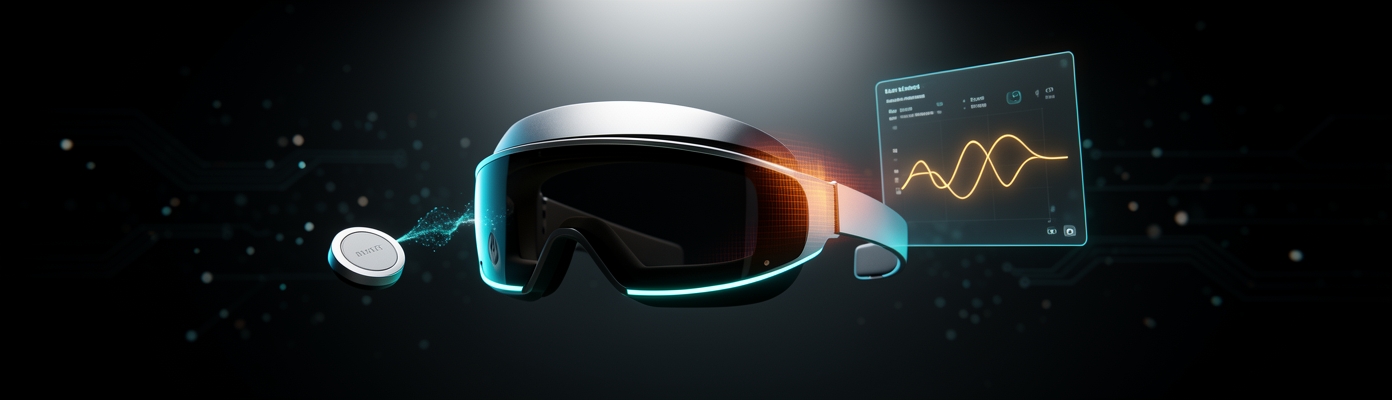

The Hidden Truth About AI Content That’s Killing Organic Reach: AI Headset Product Design and Latency
Intro: Why AI Content Fails So Many Searches
AI content is booming—but organic reach is not keeping the same pace. The uncomfortable truth is that many AI-written pages are technically “correct” and still underperform, because they miss what users (and search systems) reward: a sense of immediate, low-friction value. When the experience feels slow, shallow, or inconsistent, users bounce before they convert that first impression into engagement signals.
A helpful way to see the problem is through AI headset product design and latency. In spatial computing, latency doesn’t just mean “milliseconds on a chart.” It’s the difference between an interaction that feels glued to the real world and one that feels like a delay you can sense in your bones. Search intent works similarly. If your content delivery—clarity, relevance, structure, and pace—feels “late,” readers don’t wait. They scroll away.
Think of organic reach as a conversation with gravity. If your content drops weight quickly (speed to usefulness), it lands near the top of the feed. If it drops too slowly (confusing phrasing, generic structure, weak intent match), it falls out of view. Another analogy: content is like a product demo—users “try” it instantly. If the demo stutters, they don’t stick around for the performance.
And there’s a compounding effect. Search results are crowded with AI outputs that look fluent but don’t necessarily feel precise. So your page must outperform on perceived responsiveness: the “latency” between the query and the satisfaction it receives.
In this article, we’ll connect product-level thinking from AI headset product design and latency to content strategy. We’ll use headset concepts like passthrough quality and delay, virtual monitors and interaction, edge vs puck compute architecture, and battery efficiency and thermal constraints to build a practical framework. The outcome is simple: stop treating AI content as a text problem, and start treating it as an experience delivery problem.
Background: AI Headset Product Design and Latency Basics
In virtual and mixed reality, AI headset product design and latency refers to how quickly the system turns sensing and intent into an output the user perceives as responsive. But the key is that “latency” is not one thing—it’s a pipeline.
A headset has to:
– detect motion and gaze,
– process inputs and run tracking models,
– render imagery (often with AI assist),
– display the result,
– and support user feedback loops (hands, controllers, voice, or spatial gestures).
When any stage lags, the user feels it as a mismatch between expectation and feedback.
Analogy 1: Latency in VR is like watching a live sports broadcast with a delayed sound. You can tolerate it for a second, but once it becomes noticeable, it breaks immersion.
Analogy 2: It’s also like typing in a chat app where the letters appear a beat late. Your mind wants to predict the output; when it can’t, confidence drops.
Analogy 3: Latency is comparable to buffering on video—content may still be “there,” but the experience fails at the moment users want it most.
Latency is the measurable delay between input and output. Perceived responsiveness is how quickly and reliably the user feels the system responds.
Two systems can have the same raw latency but different perceived responsiveness due to:
– how stable the output is,
– how predictable the delays are,
– whether the UI compensates with techniques like prediction,
– and whether the content updates in a way that matches motion and intent.
This is especially true for virtual monitors and interaction. When a user moves their head, points at a UI element, or expects a window to snap into place, the system must update the interaction state quickly and consistently. If it updates “late,” the user stops trusting their inputs.
The reason this matters for organic reach is direct: AI content often fails not because it lacks information, but because it lacks perceived responsiveness—the user doesn’t feel the page is responding to their intent at the moment they need it.
Passthrough is what the headset shows from the real world, often to maintain context and reduce disorientation. passthrough quality and delay affect how naturally users can orient themselves and act.
Low-quality passthrough or noticeable delay causes:
– higher cognitive load (users work harder to interpret what they see),
– reduced trust (the system feels unreliable),
– and faster disengagement.
In content terms, passthrough is analogous to the “preview” your user sees before committing: snippet relevance, first-paragraph clarity, page structure, and how quickly the page answers the query. If the “preview” is blurry, generic, or off-target, the user doesn’t wait for the rest of the page to improve.
Users don’t measure milliseconds, but they do notice patterns of delay. The following latency signals map cleanly from headset experiences to content experiences:
1. Mismatch to expectation: The moment the user’s mental model doesn’t match the output, responsiveness collapses.
2. Stutter in flow: Repetitive sections, sudden tone changes, or slow transitions make the experience feel “laggy.”
3. Input uncertainty: When your actions feel ignored—like headings that don’t summarize, or claims that don’t support—the user disengages.
4. Overhead before payoff: Too many abstractions before the first concrete answer feels like buffering.
5. Inconsistent timing: If updates vary wildly in usefulness (some parts great, others vague), the experience becomes unpredictable—like a jittery frame rate.
Treat these as latency sensors for your content pipeline.
Trend: The Reach-Killing Pattern Behind AI Content
AI content often follows a predictable pattern: it optimizes for production speed and keyword coverage, but it fails to optimize for the experiential qualities that keep users engaged. Organic reach suffers because search ecosystems increasingly reward engagement quality—time to satisfaction, scrolling depth, and low pogo-stick behavior.
The reach-killing pattern mirrors headset latency design failures: the output exists, but it doesn’t feel immediate.
In a headset, edge vs puck compute architecture describes where compute happens—near the user (edge) or on a separate compute unit (sometimes called a “puck”). The architecture changes how quickly the system can process inputs and render what the user sees.
If processing is distributed poorly, you might get delays in:
– tracking updates,
– rendering frames,
– or running AI-enhanced features.
In content, the parallel is how your production pipeline distributes “compute” across stages: ideation, drafting, editing, fact-checking, optimization, and publishing. If those stages create bottlenecks or inconsistent review, the final experience feels uneven—like a pipeline that can’t keep stable frame pacing.
Edge-heavy designs tend to reduce the time between input and response because processing is closer to the source.
For users, the difference is straightforward:
– More immediate feedback loops (lower perceived lag)
– More consistent interaction timing
– Smoother “virtual monitors and interaction” behavior
On the other hand, puck-heavy designs can introduce:
– variable delays (felt as jitter),
– reduced responsiveness in interactive features,
– and increased dependence on stable connectivity or thermal headroom.
Translate this to content:
– When content is created with fast intent alignment and consistent editorial standards, it “renders” quickly for users.
– When content is stitched together late in the process, relevance arrives after the user already left.
Virtual monitors and interaction are where latency becomes emotionally obvious. Users expect UI to behave like physics: windows should track, selections should register instantly, and motion should feel coherent with visuals.
When interaction feels off, you get:
– overshooting selections,
– repeated clicks,
– and mental fatigue.
Organic reach has the same failure mode. If your page feels like it’s “fighting the reader”—through unclear headings, weak scannability, or content that doesn’t answer the query promptly—users re-try elsewhere. They go back to search results and choose a competitor whose page “interacts” with their intent more naturally.
A practical way to connect the two worlds is to treat search results as the “controller input.” Your page becomes the display. If the content display updates late—meaning you answer the question late, define terms late, or provide examples late—users drop.
Common “interaction delay” equivalents in AI content:
– The first paragraph is generic, so the user doesn’t feel the response.
– The page doesn’t provide a clear structure early enough to guide reading.
– Examples are missing or arrive after the reader already lost trust.
The result is predictable: higher bounce rates, lower scroll depth, and weaker long-tail traction.
Insight: Turning latency thinking into better content strategy
Latency thinking reframes AI content as a system. Your goal isn’t just correctness; it’s perceived speed to usefulness and consistency of response.
Headsets have limited power and thermal headroom. battery efficiency and thermal constraints force trade-offs: run everything at full power and risk overheating; throttle and accept performance dips. Great headset design manages these constraints so perceived responsiveness stays stable.
Content has a parallel constraint: attention. Users have limited cognitive “battery.” If you burn it on fluff or repetitive AI phrasing, you end up throttling the experience—meaning usefulness arrives late or unevenly.
When a headset throttles, frames drop and motion becomes less stable. For content, throttling shows up as:
– generic sections that don’t add incremental value,
– repetitive phrasing that doesn’t progress the argument,
– and “late clarity,” where definitions appear only after the reader is already confused.
Analogy: Thermal throttling is like a blog post that starts strong but slowly degrades into vague statements. The system is still “working,” but it’s no longer meeting the user’s expectations.
Use this insight to treat editing as thermal management:
– Keep the page’s “temperature” stable by enforcing consistency and eliminating redundancy.
– Protect peak usefulness by placing high-value answers earlier.
– Prevent quality drops by using tighter review gates.
A headset has multiple latency components. Content should, too. If you don’t plan the “budget,” your page will spend it unpredictably—like a renderer allocating compute poorly, causing stutters.
A latency budget is an explicit allocation of acceptable delay across the pipeline stages so the end experience stays responsive. Instead of asking “Is the page good?”, you ask:
– How quickly does the user get the first real answer?
– How quickly do key concepts appear after the query?
– How reliably does the structure support scanning?
In content, your latency budget includes:
– time-to-clarity (first useful answer)
– time-to-evidence (examples, data, comparisons)
– time-to-action (next steps, checklists, summaries)
In both VR and search, the winning system reduces the gap between user intent and system response.
AI content often “matches” intent at a high level (keywords) but misses it at the moment-to-value level (structure, specificity, and pacing). To outperform, prioritize speed-to-satisfaction.
Structured checklist: What to measure before publishing AI content
1. First-paragraph relevance: Does it directly answer the query within the first few sentences?
2. Answer placement: Are the main claims or steps visible before the reader is tempted to scroll away?
3. Example density: Do you provide concrete examples early enough to validate the promises?
4. Terminology timing: Are definitions introduced before confusion accumulates?
5. Scannability: Are headings and lists used to reduce “reading latency”?
6. Claim-support alignment: Do statements lead to evidence, or do they stand alone?
7. Consistency across sections: Does the page maintain a stable “quality temperature” or degrade mid-read?
If you treat these as your content latency budget, you’ll systematically reduce the drop-off points.
Forecast: Next-gen AI experiences users will reward
The next wave of AI experiences will be judged less by how “smart” content sounds and more by how instantly and reliably it responds. The headset industry trend toward better passthrough quality and delay, along with improved interaction standards for virtual monitors and interaction, will influence what users come to expect from every digital interface.
In coming products, smarter rendering will reduce perceived lag without necessarily increasing raw compute. Expect techniques like:
– more predictive tracking,
– adaptive resolution strategies,
– and improved synchronization between sensory input and display output.
Forecast snippet: latency improvements that increase retention
– Reduced “orientation lag” will keep users engaged longer in mixed environments.
– More stable previews will reduce cognitive load during the first moments—analogous to higher retention from better content intros and tighter intent matching.
– Smoother frame pacing improves trust; in content, equivalent trust signals are clearer definitions, consistent structure, and faster evidence delivery.
As spatial productivity grows, users will demand interaction norms that behave predictably. That means:
– consistent window behavior,
– clearer selection and focus states,
– and standardized interaction patterns that reduce user correction actions.
Forecast snippet: interaction design patterns that reduce perceived lag
– UI patterns that “lock” onto user intent quickly (fewer misclicks)
– Visual feedback that acknowledges input immediately
– Lower variance in response time (less jitter)
For AI content, these translate into predictable reading patterns:
– immediate context,
– consistent formatting,
– and interaction-like feedback (clear sections, summaries, and checklists that let users navigate with confidence).
The future implication is strong: the winners won’t just generate content—they’ll engineer responsiveness.
Call to Action: Fix your AI content using latency-inspired QA
If organic reach is dying, don’t only audit keywords. Audit responsiveness like a product team.
Before publishing, run a “responsiveness QA” pass. Treat your page like a rendering pipeline: can it deliver the right output fast enough, reliably enough, with no stutters?
Action list-style snippet: 7-step QA to protect organic reach
1. Intent checkpoint: Summarize the user’s query in one sentence—then verify your intro answers it directly.
2. First-value audit: Highlight the earliest concrete value (definition, step, example). Is it too late?
3. Structure stability: Ensure headings match the order of the argument and reduce reader navigation effort.
4. Evidence timing: Confirm that key claims have supporting examples or comparisons before the reader reaches the halfway point.
5. Read pacing test: Remove fluff and compress repetitive phrasing; verify the page still feels complete.
6. “Interaction” scan: Can a reader skim and still understand what to do next? If not, you have interaction latency.
7. Consistency check: Read the page as if you’re switching tasks every minute—look for sections that degrade quality or clarity.
Not all topics are equally sensitive. High-latency topics—where errors erode trust fast—need human review gates. Think of it as applying “thermal protection” to content quality.
Action checklist: where to add edits for accuracy and clarity
– Add human review to definitions and boundaries (to prevent subtle confusion).
– Review sections that contain recommendations and step-by-step instructions (where wrong pacing causes real user harm).
– Tighten claims that depend on assumptions—verify context, scope, and limitations.
– Ensure examples are representative, not generic placeholders.
– Audit for overconfident phrasing that AI models commonly produce.
When you add these gates, you reduce the chance that your content “jitters” mid-read—preserving perceived responsiveness.
Conclusion: Organic reach survives when experience feels instant
AI content isn’t doomed—but the way it’s often produced is. Organic reach suffers when pages fail the responsiveness test: the user’s intent arrives now, but the page’s value arrives later than expected. That delay—whether caused by weak intent alignment, slow evidence, or inconsistent structure—acts like latency in AI headset product design and latency.
By thinking in latency terms, you can redesign your strategy around what users actually feel:
– improved passthrough quality and delay becomes sharper intros and faster clarity,
– edge vs puck compute architecture becomes a consistent pipeline that doesn’t stutter quality,
– virtual monitors and interaction becomes scannable, predictable reading paths,
– and battery efficiency and thermal constraints becomes managing attention so your page doesn’t throttle into fluff.
Forward-looking content teams will win by engineering perceived immediacy—pages that feel instant, reliable, and responsive. And when the experience feels instant, organic reach doesn’t just survive. It compounds.