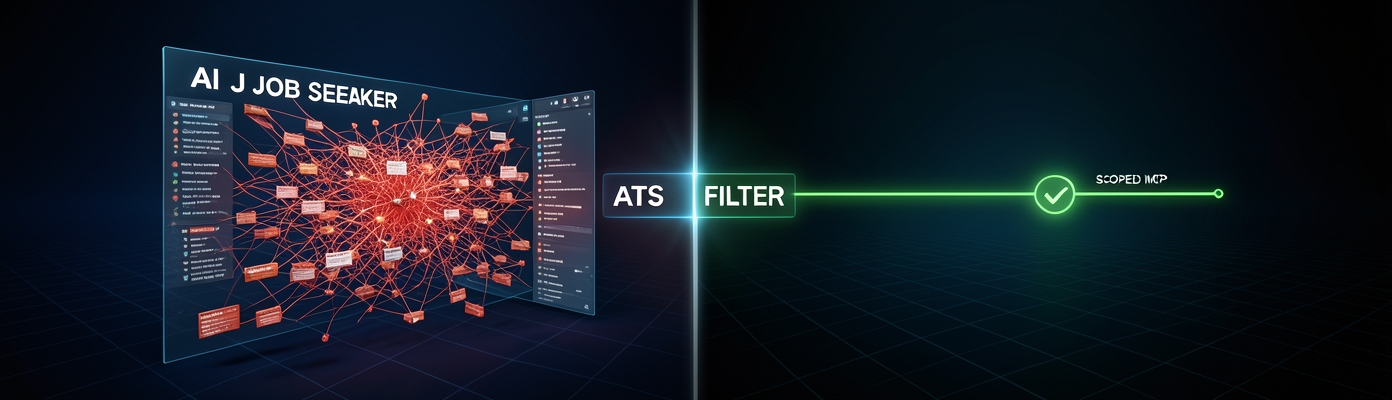

The Hidden Truth About AI Personalization in 2027: AI coding agents vulnerability lifecycle
Intro: Why AI Personalization Breaks Trust in 2027
By 2027, AI personalization will feel less like a feature and more like an operating layer—adapting code help, agent behavior, and even security posture to each team, each repository, and each developer’s habits. That sounds helpful. It is also dangerous.
Here’s the hidden truth: personalization doesn’t just tailor outputs; it tailors the paths an AI coding agent takes to produce those outputs. And when those paths include vulnerability discovery, patch generation, and automated validation, the weakest link often isn’t the model—it’s the AI coding agents vulnerability lifecycle that orchestration accidentally personalizes into something exploitable.
Think of it like a concierge service that not only recommends restaurants, but also carries your keys and grants staff access based on your profile. If the concierge learns you prefer “fast entry,” it may start skipping the verification steps that would have blocked an impersonator. In security terms, that’s what lifecycle gaps look like: the agent is “helped” into skipping trust boundaries because the system believes (often incorrectly) that the next step will work.
In 2027, the trust model fractures in three ways:
– Personalization accelerates iteration, so agents get more autonomy earlier—shortening the time window where defenders can intervene.
– Agents reuse learned workflows, so the same mistake repeats across many environments.
– Validation becomes probabilistic, because it’s optimized for developer throughput rather than deterministic safety checks.
The result is a new failure mode: lifecycle exploits survive because the loop that should eliminate them is itself personalized, cached, or partially bypassed.
To keep this concrete, imagine a lock-checking robot. A naive system watches for “obvious issues” and declares the lock safe. A robust system does more: it reproduces the failure in a controlled sandbox, applies a minimal fix, and then attacks the fix again. In 2027, personalization can make the robot “confident” after the first observation—especially if the system has seen similar locks before—so it stops reproducing and re-attacking. That confidence is how vulnerabilities slip through.
Background: Define AI coding agents vulnerability lifecycle
The AI coding agents vulnerability lifecycle is the end-to-end process an AI coding agent uses to identify a suspected weakness, confirm it, remediate it, and validate that remediation actually reduces exploitability.
In an ideal security-first implementation, the lifecycle is not a single “scan.” It’s a loop with measurable gates and explicit trust boundaries. Each gate produces artifacts (reproducers, logs, patches, risk scoring) that are used by the next gate. If any gate is missing—or if orchestration treats it as optional—the lifecycle becomes a story the model tells instead of evidence the system can trust.
At a high level, a strong lifecycle includes:
1. Suspected flaw discovery
2. False-positive reduction
3. Deterministic reproduction in a sandbox
4. Minimal patch generation
5. Patch verification by re-attack
6. Residual risk scoring and reporting
Personalization in 2027 typically optimizes for speed and style—summaries, caching, command selection, and code patterns. The dangerous part is when it also optimizes for skipping the evidence-heavy steps. That’s how the lifecycle becomes vulnerable.
The AI coding agents vulnerability lifecycle is the operational sequence that turns “I think there’s a bug” into “I verified the bug, fixed it, and demonstrated the fix holds under re-attack,” while scoring residual risk with audit-ready evidence.
If you want a definition snippet that emphasizes the core trust boundary, it’s this:
Sandboxed reproduction and patch re-attack means the agent must:
– Execute a suspected exploit attempt inside a restricted environment (no ambient network access, controlled resources, and strong isolation).
– Generate or reuse a minimal proof-of-concept reproducer that reliably triggers the issue.
– Apply a minimal patch.
– Re-run the reproducer (or an equivalent attack harness) against the patched build to confirm exploit failure.
– Only then conclude remediation, optionally with a residual risk score.
The trust boundary is “did the vulnerability reproduce and did it stop reproducing after the patch?” not “does the model think the patch is correct?”
Analogy 1: It’s like medical diagnostics. A preliminary symptom checklist is not diagnosis. The gold standard is running tests under controlled conditions, then verifying treatment results.
Analogy 2: It’s like writing an IDS rule and then testing it against known packets. If you don’t run replay tests after the rule change, you don’t know if it works—or if it broke.
Analogy 3: It’s like fixing a circuit and then measuring the same failure mode again. You don’t stop at replacing components; you verify the electrical behavior.
In security-first agent systems, this is where agentic security review skills matter most: the agent needs to behave like a reviewer with repeatable experiments, not like an autocomplete model.
agentic security review skills are the specialized capabilities an AI coding agent uses to perform structured security work across the lifecycle. They typically include:
– Threat modeling and architecture-aware reasoning
– Evidence-driven triage (reducing false positives)
– Reproducer construction
– Controlled execution and isolation enforcement
– Patch reasoning with minimal diffs
– Re-attack harnessing
– Residual risk scoring and audit packet generation
In 2027, these skills become differentiators between “agent demos” and production-grade review loops. Systems that lack them often stop at generating findings or patches without proving the remediation actually withstands exploitation.
There’s a misconception that de-alignment is only about models refusing safety constraints. In practice, lifecycle de-alignment is about process drift—when an agent’s behavior no longer matches the security assumptions of the system orchestrating it.
Lifecycle gaps become attacks when any of the following happens:
– Reproduction is skipped or replaced with narrative reasoning.
– Patches are accepted without re-attack, so adversarial inputs can resurface the bug.
– Trust boundaries are blurred, like running “test” code with network access or elevated privileges.
– Artifacts are not deterministic, so a later step can’t reliably validate what earlier steps changed.
Analogy: If your CI pipeline says “tests passed” but the tests didn’t actually run the vulnerable code path, an attacker can later craft inputs that reach the real bug. The report is true in form and false in meaning.
Personalization increases this risk because it makes workflow selection adaptive. The orchestration layer may learn which steps correlate with “good outcomes” in a dataset—and start eliding steps it has seen succeed before. Attackers exploit that by shaping code and metadata so the agent’s learned assumptions lead it to the wrong part of the lifecycle.
Trend: 2027 AI Personalization will amplify lifecycle exploits
In 2027, personalization will amplify lifecycle exploits in three main ways: execution validation becomes inconsistent, sandboxing becomes uneven, and action pipelines become more repeatable—often without adequate security gates.
Many production environments adopt isolation layers to safely run untrusted code. gVisor VM exploit verification becomes a critical practice when AI coding agents need to validate vulnerability reproduction and patch outcomes without giving exploit payloads direct host access.
But personalization can accidentally reduce the “strictness” of verification:
– If the orchestration chooses different isolation profiles per developer or per repo trust level, attackers can target the weakest profile.
– If exploit verification is tuned for speed, the system may accept partial traces instead of definitive evidence of failure.
– If evidence collection differs across personalization cohorts, later steps may not be able to compare “before vs after” results.
A security-first implementation treats gVisor VM exploit verification as a required gate for reproduction and re-attack—never a best-effort option.
The trend shouldn’t be optional. In 2027, the safer baseline is: sandboxed reproduction and patch re-attack are defaults, not “extra credit.”
Personalized systems often push “defaults” based on convenience. Attackers leverage that by making suspected vulnerabilities appear like “similar prior cases” where reproduction was previously successful or unnecessary. That’s why sandboxed reproduction and patch re-attack must be hard-coded into the lifecycle contract:
– Reproduction runs in a restricted environment.
– Patch validation includes re-running the attack harness.
– Residual risk scoring is blocked until verification artifacts exist.
When these defaults are enforced, personalization can still happen—style, formatting, code navigation—but not around the trust boundary.
Agent action repeatability is a double-edged sword. slash-command skill pipelines enable consistent stages: discover → triage → reproduce → patch → re-attack → score. That determinism is exactly what defenders want.
However, personalization will also learn which slash commands succeed quickly for a user or org and may reorder or substitute commands in risky ways. If the pipeline contracts aren’t enforced, the agent might still “run the loop,” but with mismatched stages—e.g., a reproducer that doesn’t correspond to the patched artifact, or a re-attack that doesn’t match the original threat model.
Security-first pipelines require that each inter-stage contract validates inputs/outputs. That means artifacts like:
– build hashes
– reproducer parameters
– dependency graphs
– sandbox policy identifiers
– re-attack traces
must match across stages, not just “look similar.”
Insight: Vulnerability lifecycle has 6 hidden failure points
If the AI coding agents vulnerability lifecycle is the engine, then lifecycle gaps are the worn gears. In 2027, personalization will expose more of them because it changes which path the agent takes through the loop.
The six failure points often hidden from dashboards are:
1. Suspected issue ≠ validated vulnerability (triage drift)
2. Reproducer non-determinism (can’t reliably rerun)
3. Sandbox policy mismatch (test environment differs from validation environment)
4. Patch drift (patch modifies related behavior but doesn’t address root cause)
5. Re-attack harness mismatch (wrong exploit chain, wrong parameters)
6. Residual risk scoring not gated (conclusions made without verified evidence)
Naive AI code scanning often produces findings that are “plausible,” but not proven. A full lifecycle loop demands evidence.
To make the difference concrete, consider a scoring exercise:
– AI coding agents vulnerability lifecycle scoring (1–10) vs findings
– A naive system might score based on similarity or confidence alone.
– A full lifecycle loop scores based on verified reproduction, re-attack failure, and residual risk evidence.
A practical comparison:
– Finding-only (typical naive approach): 3–6/10
– Lots of plausible issues, low verified confirmation.
– Validated with sandboxed reproduction: 6–8/10
– Evidence exists: the bug reproduces under controlled conditions.
– Re-attack after patch success: 8–10/10
– The attack harness can’t reproduce after remediation.
– Residual risk scoring without gating artifacts: can collapse back to 4–6/10 in practice
– Because the score is decoupled from proof.
Analogy: It’s the difference between “we ran a simulation” and “we proved the simulation prevents the exact scenario with replayable evidence.”
agentic security review skills close those gaps by enforcing structure and evidence.
In particular, teams should invest in skills that:
– Build minimal reproducers
– Enforce deterministic execution
– Create exploit-chain harnesses that match threat models
– Maintain artifact lineage across stages
This is where lifecycle de-alignment is most likely: if the agent lacks these skills, personalization can “optimize” away the very steps that would prevent exploitation.
gVisor VM exploit verification should produce deterministic, comparable evidence:
– Host isolation guaranteed by policy
– Network disabled unless explicitly required
– Resource limits to prevent runaway payloads
– Audit logs proving the re-attack was performed and what happened
Without deterministic validation, the system becomes vulnerable to “verification theater”—logs that look correct but don’t prove exploitability or non-exploitability.
Trust boundaries must be explicit:
– sandboxed reproduction environment must be isolated and consistent
– patch builds must be bound to the reproducer inputs (no silent substitution)
– patch verification must include re-attack, not just unit tests
When trust boundaries are porous, attackers exploit transitions—between “tests,” “builds,” and “validation conclusions.”
slash-command skill pipelines are most secure when each stage has reproducible inter-stage contracts:
– Stage outputs must include structured artifacts, not just text
– Stage inputs must include hashes and policy IDs
– Failures must stop the pipeline—no “best effort” fallback
This turns personalization from a risk into an acceleration: the agent can still act quickly, but it can’t break the chain of evidence.
Forecast: How AI personalization in 2027 changes defense priorities
Defense priorities shift from “scan everything” to “verify the lifecycle everywhere.” Personalization will make systems faster, more autonomous, and more customized—so attackers will target the personalization seams.
Expect automation of sandboxed reproduction and patch re-attack across CI/CD:
– Build once, reproduce in sandbox, patch, re-attack, score
– Fail closed when evidence is missing
– Store artifacts for audit and future regression
Forecast implication: organizations that do not automate lifecycle verification will see an increasing gap between “agent-generated fixes” and “agent-validated fixes.”
slash-command skill pipelines will likely evolve from “agent orchestration” into governance. That means:
– policy-controlled execution permissions
– stage-level acceptance criteria
– role-based constraints on what an agent can do next
The future isn’t only technical; it’s operational: engineering must treat the pipeline as a security boundary, like a production firewall rule.
As sandbox technology improves, the headline risk “sandbox escape” may receive less attention than lifecycle verification correctness. Attackers will shift toward:
– making the agent reproduce the wrong thing
– causing patch drift
– exploiting artifact mismatches between stages
So defenders should invest in lifecycle verification, including gVisor VM exploit verification evidence collection, rather than relying solely on the sandbox being “there.”
Call to Action: Build an agentic security review workflow now
If you’re shipping AI coding agents in 2027-like conditions today, start by building a workflow that treats the lifecycle as mandatory.
1. Fewer false positives through reproduction-driven triage
2. Verified fixes because patches are validated via patch re-attack
3. Auditability with artifacts tied to stage contracts
4. Better residual risk estimation that’s evidence-based
5. Reduced attacker advantage because exploitability is tested, not assumed
1. Bind stage artifacts
– Record build hash, dependency snapshot, and sandbox policy ID.
2. Run reproduction inside isolation
– Enforce sandboxed reproduction and patch re-attack in restricted execution with deterministic harness parameters.
3. Re-attack the patch
– Validate remediation by executing the same (or equivalent) exploit chain against the patched build.
– Block conclusions if evidence is incomplete.
Before any patch reaches production:
– Require gVisor VM exploit verification evidence for reproduction and re-attack.
– Stop the pipeline if re-attack results are inconclusive or missing.
– Ensure network and permission boundaries match the intended threat model.
This converts “deployment readiness” into a security claim backed by verification.
– Enforce slash-command skill pipelines with strict inter-stage contracts.
– Require residual risk scoring to be computed only after verified re-attack outcomes exist.
– Store the final review packet for audit and continuous improvement.
Future implication: organizations that standardize these pipelines will shorten review cycles without reducing security—because evidence is reusable and comparable across time.
Conclusion: The personalization future depends on verified cycles
AI personalization in 2027 will make coding agents faster, more adaptive, and more deeply integrated into developer workflows. That’s not inherently bad. The hidden danger is that personalization will also reshape how agents move through the AI coding agents vulnerability lifecycle—and lifecycle shortcuts are where vulnerabilities hide.
The security-first answer is clear: make verification non-negotiable. Use sandboxed reproduction and patch re-attack as the trust boundary, enforce gVisor VM exploit verification gates, and implement slash-command skill pipelines as reproducible governance controls.
If your agent can’t reproduce the bug, can’t prove the patch, and can’t re-attack the fixed artifact—then personalization is not empowerment. It’s a risk amplifier.