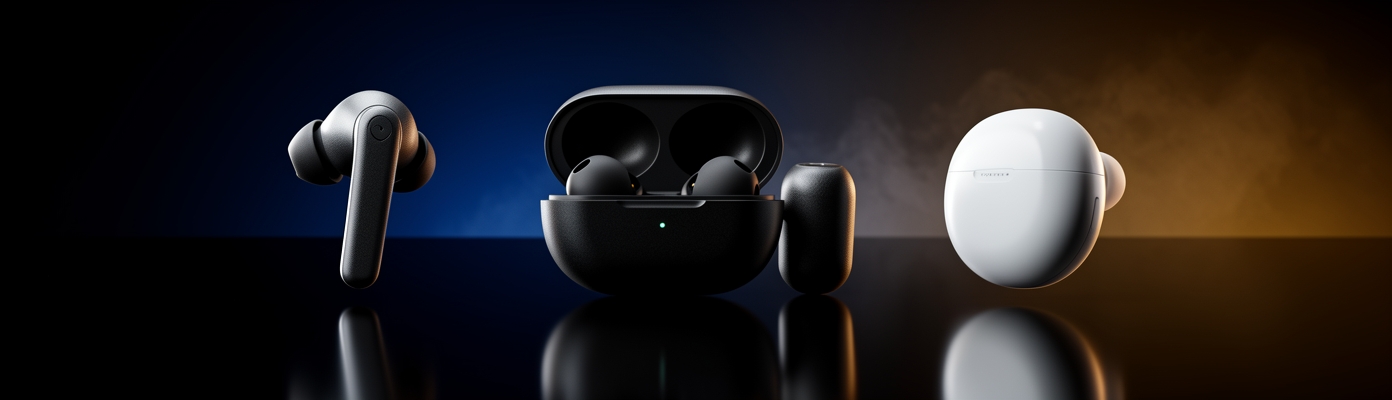

Why AI Video Tools Are About to Change Everything in Marketing: AirPods 5 vs AirPods Pro 3 vs AirPods 4 ANC
Marketing teams have always personalized—just not at the speed and granularity modern customers expect. Today, AI video tools are changing the equation by turning creative production from a one-time asset into a continuously adaptable system. And if you want a simple way to understand what’s coming, look at consumer electronics where the buying decision is inherently comparative: AirPods 5 vs AirPods Pro 3 vs AirPods 4 ANC.
This isn’t about earbuds for the sake of earbuds. It’s about how “fit” and “function” map to customer intent—and how AI-driven video personalization will soon do for audiences what ANC and adaptive features do for listening experiences.
Think of it like this:
– Traditional ads are like a fixed sound profile: you can “like it” or “not like it,” but you can’t realistically tailor it.
– AI video personalization is like switching to the right Adaptive Audio mode: the experience adjusts to the moment.
– AI-driven creative variants are like testing speaker placement in different rooms—you don’t ask people to guess; you deliver the best match for where they actually are.
If your marketing strategy still treats video as static, you’ll feel the lag first in CTR, then in watch time, and finally in conversion efficiency. The shift is already underway.
—
Why marketers are asking “AirPods 5 vs AirPods Pro 3 vs AirPods 4 ANC?”
When buyers compare products, they’re not comparing features in isolation. They’re comparing outcomes: comfort, battery life, noise reduction, and whether the device works in their real environment. That same logic is moving into video marketing through AI video tools—especially tools that can adjust creative delivery based on user behavior, device context, and listening preferences.
The reason AirPods 5 vs AirPods Pro 3 vs AirPods 4 ANC is such a strong mental model is that it mirrors how marketing questions actually sound:
– “Do I get noise cancellation without sacrificing natural awareness?”
– “What’s the battery tradeoff when ANC is on?”
– “Will this work for my routine—commute, office, gym, errands?”
– “Does it adapt, or do I have to?”
In other words, audiences don’t just want information; they want the creative to anticipate their needs.
Open-ear ANC is an approach to active noise cancellation that prioritizes openness and comfort—aiming to reduce external noise while still keeping a more natural, less “sealed” feel. In marketing terms, it’s a design philosophy with a clear audience implication: the feature is optimized for people who want relief from noise without losing awareness.
That matters because it changes the emotional “fit” of the product—and emotional fit is what most video ads try (and often fail) to express.
A useful analogy: open-ear ANC is like a well-insulated window rather than building a sealed room. You still experience the outside world, but the loud parts are softened. In creative, that means the ad should communicate “balanced presence,” not “complete isolation.”
Here’s how that translates into buyer-focused messaging:
– If your audience is noise-sensitive but still wants awareness, your AI video variants should emphasize natural engagement, clarity, and less abrupt listening changes.
– If your audience is noise-cancellation-first, your variants should emphasize reduction, immersion, and performance under constant noise.
This is exactly where AI video tools begin to win: they let you deliver the “right framing” without manually producing every permutation.
If you’re building AI video personalization, comparing ANC styles (like open-ear ANC vs more traditional ANC implementations) gives you an audience fit shortcut. Here are five practical benefits:
1. It clarifies intent: People who ask about ANC usually have a high “problem-awareness” moment—your ad can address it immediately.
2. It reduces cognitive load: A comparison gives viewers a mental decision tree instead of a feature list.
3. It enables creative segmentation: ANC preference becomes an actionable variable for AI video variants.
4. It improves relevance: Ads align with real routines—commutes, offices, travel—where noise is constant.
5. It supports trust-building: When you explain tradeoffs (like battery under ANC), you signal honesty—buyers convert faster.
A second analogy: comparing ANC is like choosing a travel class. You don’t just want “a seat.” You want the cabin experience that matches your tolerance for noise, discomfort, and cost.
And a third example: it’s like selecting skincare based on your skin type. Two people can both “need skincare,” but the regimen and messaging should differ.
—
AI video tools turning audio-level personalization into demand
AI video tools are pushing marketing toward the same type of personalization we now expect from devices: dynamic adjustment based on context. When audio products talk about Adaptive Audio, customers implicitly learn to expect responsiveness. Marketers can now bring that expectation into video ads.
The key shift: instead of asking viewers to interpret your message, AI video tools can deliver a message that interprets them—based on behavior signals, device, and even the narrative style that historically performs best for segments.
In practice, that’s why the comparison framework of AirPods 5 vs AirPods Pro 3 vs AirPods 4 ANC is useful: it’s outcome-driven. It’s not “here are features.” It’s “here’s what you’ll experience.”
Adaptive Audio has become more than a feature name—it’s an expectation. Once customers see “adaptive” as part of the product experience, they start assuming their content experience will also adapt. In video marketing, that becomes:
– the right emphasis (comfort vs isolation, awareness vs immersion)
– the right pacing (quick reassurance vs deeper explanation)
– the right proof (battery claim vs ANC effectiveness vs “Find My speaker ANC” context)
For AI video tools, this is a creative operating system problem. The software doesn’t just generate captions; it can tailor edits and narrative elements so the ad feels like it was made for the viewer’s situation.
A simple buyer-focused translation:
– If someone watches “ANC comparison” content, they want clarity and tradeoffs.
– If someone engages with “battery life with ANC,” they’re likely cost- and routine-sensitive.
– If someone searches Find My speaker ANC, they may care about asset recovery and real-world reliability more than pure sound metrics.
Even if a viewer doesn’t buy immediately, AI video tools can use context clues to retarget with relevance. The goal isn’t to “remind”—it’s to reduce uncertainty.
Here are examples of context-aware retargeting, using the concept behind Find My speaker ANC (accounting for real-world use, recovery, and practical reliability):
– Example 1: Post-visit reassurance
– If a viewer watched a comparison video, the retargeting ad can highlight practical reliability cues (e.g., “so you can find your device when it matters”).
– Example 2: ANC preference follow-up
– If a viewer engaged more with “open-ear ANC” clips, retarget with a creative that emphasizes awareness and comfort while still reducing noise.
– Example 3: Battery-fit messaging
– If the viewer paused on battery slides, the next ad can focus on AirPods 5 battery life messaging—especially “ANC on” expectations vs listening without ANC.
Third analogy: retargeting without context is like showing someone a map but refusing to highlight where they are. Context-aware retargeting is the highlighted route.
Adaptive Audio refers to audio behavior that changes automatically based on the listening environment—aiming to maintain a consistent experience across changing real-world conditions. In the context of marketing, the term becomes a shorthand for “the experience adjusts to you.”
So when marketers plan AI video personalization, treat Adaptive Audio as a creative requirement:
– Don’t deliver the same ad to everyone.
– Deliver the “right experience framing” based on the environment the viewer cares about.
That framing includes whether the viewer is seeking open-ear ANC comfort, maximum noise reduction, or a balance that extends AirPods 5 battery life expectations.
One of the biggest weaknesses in video ads is that they state battery specs without matching buyer expectations. You should reuse scripts that frame battery life as a tradeoff users actually ask about.
You can adapt your AI video scripts using a structure like:
– “With ANC on, you get the performance you need for noisy routines—without constantly recharging.”
– “When ANC is off, you can stretch listening time further—ideal for longer sessions.”
If AirPods 5 battery life is part of your product narrative, reuse those phrasing patterns in every variant, but adjust the emphasis depending on the segment (commuters vs office vs travel).
—
Trend: from static video to “listener-aware” creative
The next wave of AI video tools will make ads feel less like broadcasting and more like listening. The creative will become listener-aware—not just personalized by demographics, but by inferred needs and context signals.
The comparison logic of AirPods 5 vs AirPods Pro 3 vs AirPods 4 ANC shows why. People don’t buy earbuds because the box is pretty; they buy because their daily sound environment changes constantly. Your ads need to reflect that reality.
An open-ear ANC product concept often fits users who want reduced noise while staying connected to their surroundings—like commuting, working, or walking with awareness. That means the user journey is dynamic: sometimes they want more attention to what’s around them; sometimes they want noise softened.
AI video personalization can map that by changing:
– opening hook (“still hear what you need” vs “block what you don’t”)
– proof sequence (comfort-first vs reduction-first)
– call-to-action tone (reassurance vs performance confidence)
When you run AI video A/B tests, don’t just vary color or thumbnail. Use the comparison itself as the creative variable.
A practical testing plan for AirPods 5 vs AirPods Pro 3 vs AirPods 4 ANC:
– Variant A: “Open-ear ANC + awareness” messaging (AirPods 5 style framing)
– Variant B: “Best-in-class isolation for heavy noise” messaging (AirPods Pro 3 style framing)
– Variant C: “Balanced value with ANC” messaging (AirPods 4 ANC framing)
The “why” is buyer clarity. Each variant answers a different question a buyer is already asking.
—
Insight: comparison-driven decisions across AirPods models
Comparisons aren’t just educational—they’re conversion scaffolding. The buyer uses your ad to make a decision. If your video supports that process, performance improves. If it fights the process, performance stalls.
Comparison-driven decisions are exactly what AI video tools can scale. Instead of producing one video and hoping it performs broadly, you can generate multiple versions that correspond to buyer intent.
Use a tight, buyer-focused comparison angle:
– AirPods 5: emphasize open-ear ANC, balanced awareness, and “daily comfort” framing.
– AirPods Pro 3: emphasize stronger noise control and “immersion when you need it.”
– AirPods 4 ANC: emphasize “good ANC with value” and straightforward expectations.
This isn’t about declaring winners universally—it’s about matching the right message to the right buyer.
Battery messaging is where many marketing teams overpromise or fail to clarify the tradeoff. Buyers want the ANC-on reality, not just the maximum claim.
A buyer-friendly rule for your scripts and overlays:
– Always present battery life in relation to ANC state.
– If your product narrative includes AirPods 5 battery life, make ANC-on the anchor message, then optionally mention “more time without ANC” as the upside.
Third-party performance is like fuel economy in marketing: people don’t just care about “max MPG,” they care about what happens on highways, in traffic, and at the speeds they actually drive. Same logic applies here.
Retention doesn’t begin after purchase—it starts when your creative reduces buyer uncertainty. If you highlight features like Find My speaker ANC, your ads can address concerns that typically block conversions:
– “What if I misplace it?”
– “Will it be reliable in daily life?”
– “Can I recover it when I’m distracted?”
AI video tools can use this to drive retention by tailoring follow-up content to the concerns buyers signal during engagement.
– If viewers repeatedly engage with practical/recovery content, prioritize that in post-click and post-view sequences.
– If viewers engage more with ANC comparisons, emphasize audio experience first, then fold in recovery/Find My as supporting proof.
—
Forecast: what AI video workflows will change next
AI video workflows are moving from “generate a video” to “generate a performance system.” In the near future, the creative pipeline will look less like editing and more like adaptive routing.
Expect AI video tools to automate variants not just by audience persona, but by device and inferred listening context. That means your creatives will adapt based on factors like:
– device capability (audio output behavior, screen size, user interaction patterns)
– context (commute-like behavior vs home-like behavior)
– inferred preference (open-ear comfort vs isolation-first)
In other words, Adaptive Audio will inspire Adaptive Ads: the creative becomes responsive, not static.
When your ad experience becomes more “listener-aware,” KPIs shift too. Instead of optimizing only for impressions and basic CTR, teams will increasingly optimize:
– watch time quality (not just longer duration, but fewer “early exits”)
– message retention (did the viewer understand the right tradeoff?)
– conversion efficiency (fewer steps from interest to purchase)
– segment-level lift (performance by ANC preference cohorts)
Forecast: within 12–24 months, “one-size-fits-all” video ads will look outdated—like using only one ANC preset for every commute.
You don’t need complicated modeling to start. A beginner-friendly approach is to segment based on what your audience already signals.
Simple segmentation framework:
1. Create three creative angles aligned to:
– open-ear ANC (awareness and comfort)
– deeper noise reduction (immersion)
– balanced value (practical ANC expectations)
2. Map each angle to content behaviors:
– “open-ear” viewers get comfort-first variants
– “noise cancellation” viewers get isolation-first variants
– “battery life” viewers get ANC-on and battery tradeoff variants
3. Use your AI video tools to produce:
– different hooks
– different proof order
– different CTA language
Future implication: segmentation will become more “behavioral and contextual” rather than purely demographic, because AI makes those signals actionable faster than humans can edit.
—
Call to Action: build your first AI video marketing test
You’re not trying to win the internet—you’re trying to learn quickly what resonates with each audience intent. Start small, compare explicitly, and measure cleanly.
Pick only one comparison angle for your first test so your results are interpretable.
Recommended starter set (three variants):
– Variant 1: AirPods 5 vs AirPods 4 ANC focus on open-ear ANC + daily comfort
– Variant 2: AirPods Pro 3 focus on stronger immersion / isolation-first messaging
– Variant 3: AirPods 5 focus on AirPods 5 battery life + ANC-on reality, with supportive features
This is the cleanest “comparison-driven” test you can run because each variant corresponds to a distinct buyer question.
Keep it practical:
1. Record 3 short versions (15–30 seconds each).
2. Use the comparison structure as the script spine.
3. Keep B-roll and product shots similar so only messaging and pacing differ.
4. Measure:
– CTR (did the hook match intent?)
– watch time (did the message sequence hold attention?)
– optional secondary metrics: engagement rate or add-to-cart clicks
Buyer-focused tip: if watch time drops, don’t automatically blame “bad creative.” It could mean the ad is answering the wrong question for that audience segment.
—
Conclusion: the marketing shift is real—start now
AI video tools aren’t just changing how videos are made. They’re changing how audiences experience marketing—turning it into something closer to personalization that adapts like audio tech does.
The takeaway is simple: comparisons like AirPods 5 vs AirPods Pro 3 vs AirPods 4 ANC are an effective blueprint for AI video marketing because they mirror how real buyers decide—by outcomes, tradeoffs, and context. When you bring that into AI-driven production, you get creative that feels relevant instead of random.
– Choose your first comparison: AirPods 5 vs AirPods Pro 3 vs AirPods 4 ANC
– Define three intent angles:
– open-ear ANC comfort and awareness
– isolation-first noise cancellation
– AirPods 5 battery life (especially ANC-on) tradeoff clarity
– Generate 3 short AI video variants with distinct hooks and proof order
– Test and measure CTR + watch time
– Retarget based on engagement context (e.g., “battery watchers” vs “ANC comparison watchers”)
– Plan the next cycle: add Find My speaker ANC-style practical reassurance where engagement suggests it
Start now. The brands that win won’t just adopt AI video tools—they’ll use them to build listener-aware, context-aware marketing experiences that match the way customers already choose products.