
What No One Tells You About AI Therapy—and Why It’s Booming Overnight
AI therapy is booming overnight—not because it suddenly became perfect, but because it became immediately useful. For decision-makers, the real story is that the category is emerging at the intersection of two things: (1) organizations want scalable mental-health support and (2) identity systems are getting upgraded with biometrics, liveness checks, and edge inference to make “access” faster and more reliable.
In practice, that intersection changes everything. A therapy portal, coaching app, or remote behavioral service is only as scalable as the identity layer behind it: onboarding, re-verification, and safe session start. If the identity system can’t keep up, therapy becomes a bottleneck. If spoofing risks spike, trust collapses. And if compliance and data residency aren’t engineered, growth stalls even when demand is high.
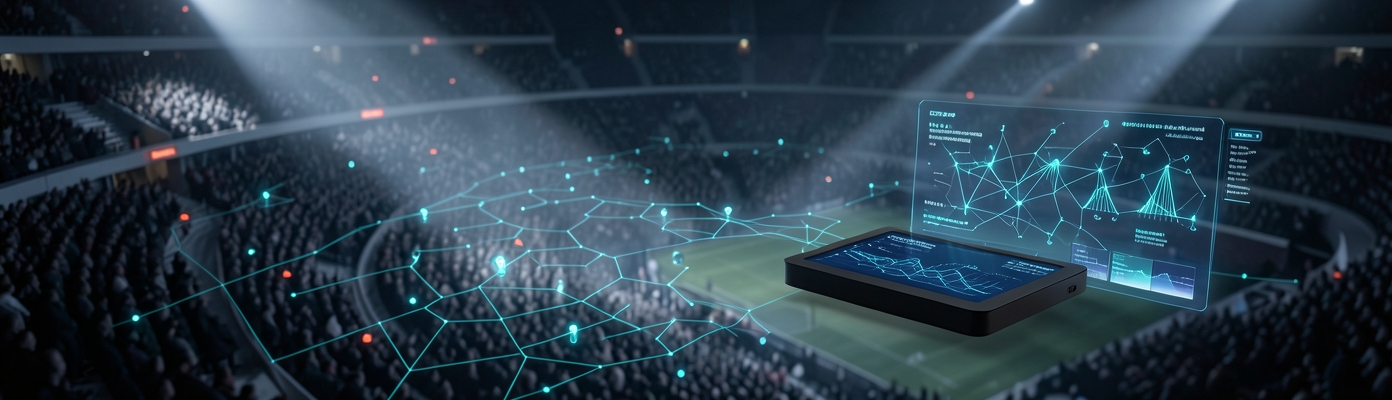
This is where the main concept matters: edge 1:N face matching at stadium entry scale. It’s not about sports—it’s about the operational reality of identity verification under massive throughput, strict timing, and adversarial conditions. The same engineering lessons now apply to AI therapy trust, session integrity, and user authorization at scale.
edge 1:N face matching at stadium entry scale: what it is
To understand why AI therapy adoption feels sudden, you need to understand what makes verification systems suddenly “work.” At stadium scale, that’s edge 1:N face matching at stadium entry scale: many-to-one recognition running on-device or near-device so you can authenticate rapidly without round-tripping to the cloud for every scan.
Liveness detection PAD Level 2 (Presentation Attack Detection, Level 2) is a certification-grade approach to distinguishing a live face from an imitation. In plain language, PAD Level 2 means the system isn’t only checking whether “a face-shaped image” appears—it’s checking behavioral or sensor-level cues that are harder to fake using common spoof methods (like printed photos or basic display attacks).
Think of it like an airport security check:
– A Level 0 style check is like “Does the passenger have a face in the frame?”
– A PAD Level 2 style check is like “Is this passenger actually present and responding as a live person?”
Two useful analogies:
1. Thermostat vs. smoke detector: a thermostat tells you temperature; a smoke detector is designed to detect a specific threat signal. PAD Level 2 is more threat-focused than a basic “face found” filter.
2. Bouncer at a club: letting anyone in just because they look similar is risky; a better bouncer looks for cues that prove you’re real—not a staged impersonation.
Edge 1:N face matching at stadium entry scale is the deployment pattern where a gate-like system compares one incoming face to a large gallery (N candidates) to determine identity quickly—while running that computation at the edge (locally on gate hardware or nearby processing units).
Key terms to anchor the decision:
– liveness detection PAD Level 2: ensures the camera is seeing a live presentation, not a spoof
– decentralized edge processing for latency: reduces decision time by keeping matching local instead of relying on centralized cloud calls
– false positive manual override cost modeling: quantifies the operational cost when the system mistakenly authorizes or blocks a user and staff must intervene
At stadium entry scale, this architecture must handle peak arrival windows. The system can’t wait for network conditions; it has to make a decision fast enough to keep lines moving. For AI therapy, the analogy is direct: when a service scales to millions of users or frequent re-auth sessions, you still need fast, reliable identity decisions—or therapy access becomes “the line outside the clinic,” except it’s digital.
The “edge 1:N” part is especially important. Many organizations start with 1:1 verification (“this face matches this exact identity claim”). But gates, onboarding workflows, and “find the right account quickly” scenarios push you toward 1:N identification. That’s where performance, throughput, and error economics become harder.
Finally, consider how this ties to therapy trust. A therapy system that can’t authenticate users consistently undermines confidentiality and session continuity—two pillars clinicians and compliance teams depend on.
Decentralized edge processing for latency means the matching engine (or major parts of it) runs close to the camera. In decision-maker terms, it’s a design choice that:
– prevents degraded performance when networks are congested
– makes session-start time more deterministic
– reduces dependency on remote infrastructure during peak demand
In stadium operations, it’s the difference between “scan-and-enter” and “scan-and-wait.” In AI therapy onboarding, it’s the difference between “tap-to-start” and “tap-to-spinner.”
A second analogy:
– Centralized cloud verification is like calling a customer support line for every password reset.
– Edge verification is like having self-service kiosks at the front desk.
Self-service doesn’t remove risk—it changes risk from “system latency” to “local model governance,” which can be managed with certification and monitoring.
False positive manual override cost modeling is the operational finance of mistakes.
A false positive can mean:
– the system incorrectly grants access to the wrong profile, increasing privacy and safety risk
– or the system incorrectly denies an intended user, triggering staff intervention
Either way, the cost shows up in labor and workflow friction. At stadium scale, a tiny accuracy difference can explode into thousands of manual reviews. For AI therapy, the same pattern exists: therapists, case managers, or compliance officers become the human “override layer” when automation fails.
To model this properly, organizations must estimate:
1. False positive rate (and false negative rate)
2. Expected volume of verifications per day and per peak hour
3. Override intervention cost (staff minutes, escalation steps, audit overhead)
4. Queue impact (how delays cascade into churn or abandonment)
A practical way to think about it:
– Accuracy is not just “percent correct.”
– Accuracy is the rate at which you pay humans to fix your models.
Why AI therapy is booming: the trust gap it mirrors
AI therapy feels like it’s “booming overnight” because it’s finally delivering a usable experience while organizations catch up on trust, identity, and safety engineering. Users don’t just want content—they want confidence that the service is legitimate, protects privacy, and connects them to the correct care context.
That trust is where identity systems (and their edge design patterns) become relevant. When identity verification is weak, AI therapy becomes a risk: wrong profile access, data leakage, and compromised clinical continuity.
When biometric systems scale across regions, identity data movement becomes a board-level issue. GDPR and cross-border biometric residency basics boil down to: who processes biometric data, where it’s stored or computed, and how that affects lawful handling.
Key governance questions for decision-makers:
– Are biometric templates processed in-region or exported?
– Are data transfers protected with appropriate mechanisms?
– Do vendor contracts define responsibilities clearly (controller vs processor)?
– Do operational workflows align with legal constraints when identity data crosses borders?
In cross-border scenarios, the “template” is often the most sensitive artifact. Modern face matching may store or compare embeddings (biometric representations). Even when you’re not storing raw photos, embeddings can still be treated as personal data with stringent requirements.
Cross-border movement introduces practical constraints:
– Operational latency: routing to remote processing can slow decisions
– Operational availability: regional outages can block onboarding
– Legal complexity: residency rules and transfer safeguards complicate scaling
– Auditability: proving compliance requires instrumentation and documentation
This is where edge matters again. If you can localize processing, you reduce the need for cross-border biometric routing—at least for the matching decision path.
Think of it like moving medical records. Even if a hospital can access charts remotely, compliance may require local handling for specific categories. Residency rules turn “technically possible” into “legally permissible” engineering.
Biometric AI deployments sit at the overlap of safety, discrimination risk, and high-stakes identification. The EU AI Act increases scrutiny on high-impact systems. Decision-makers should anticipate:
– stronger governance expectations
– documented performance and risk controls
– constraints on certain use patterns depending on application context
Even when AI therapy itself isn’t a biometric application, the identity layer it depends on can be. If the therapy platform uses face authentication for sessions, access control becomes part of the AI system environment—meaning compliance teams will ask for evidence, not assurances.
Most consumer identity flows begin as 1:1 verification: “I claim I am user X; verify I am user X.” Stadium systems increasingly shift toward 1:N under throughput pressure—because at gates, you often need to find the correct account quickly without knowing which candidate to compare against.
In simplified terms:
– 1:1 verification: compare against one claimed identity → lower computational complexity, easier risk framing
– 1:N identification: compare against a large set to locate the best match → higher throughput potential, but increases error-management complexity
The operational risk difference is crucial. In 1:N, a model’s ranking mistakes can surface as wrong-match candidates unless liveness and confidence thresholds are tuned and monitored.
Real-time throughput depends on deterministic processing. If your identity checks depend on network round trips, peak traffic creates latency spikes that degrade conversion and elevate manual overrides.
For AI therapy, that translates into a patient experience problem:
– Slow identity checks mean users abandon onboarding.
– Inconsistent checks mean users fail re-verification.
– Manual overrides increase cost and can reduce privacy.
Edge placement helps keep session initiation stable even during demand surges.
The hidden bottleneck: latency, spoofing, and throughput
If AI therapy is booming, identity verification must be quietly “winning” behind the scenes. The hidden bottleneck is rarely the model’s headline accuracy in a lab. It’s the system-level behavior under peak arrival windows and adversarial conditions.
decentralized edge processing for latency improves decision time, but it changes the engineering responsibilities:
– model optimization and hardware compatibility become critical
– updates and model governance must function locally
– monitoring must capture edge performance drift
The system tradeoff is like choosing local manufacturing over shipping: local production reduces shipping delays but requires tighter process control and inventory planning.
At stadium gates, the critical metric is camera-to-decision time. At peak, queues form quickly. Even small delays can create cascading congestion.
For AI therapy, camera-to-decision time becomes:
– time to onboard
– time to re-verify identity before session start
– time to authenticate in multi-event lifecycle identity scenarios (e.g., first session, subsequent visits, medication management check-ins)
When these times vary, user behavior changes. Conversion drops, helpdesk tickets rise, and “trust” becomes an operational outcome rather than a messaging promise.
liveness detection PAD Level 2 is a credible baseline, but real environments differ:
– lighting conditions
– camera angles
– user behavior under stress
– environmental spoof attempts
Even a certified PAD Level 2 system can face performance variance if the capture conditions differ significantly. Decision-makers should require test evidence that resembles real deployment conditions, not just generic lab performance.
False positives aren’t merely accuracy issues; they’re economics and operational risk.
A false positive can trigger manual review, escalation, or user rework. That’s why false positive manual override cost modeling is a board-level tool: it tells you whether the system is financially sustainable at scale.
When implemented correctly, edge 1:N matching can deliver:
– Higher throughput during peak demand (less waiting at the gate / less friction in onboarding)
– Reduced dependency on network reliability through decentralized processing
– Improved liveness assurance using liveness detection PAD Level 2
– Better operational determinism—a stable identity pipeline improves user trust
– Scalable automation that limits the proportion of sessions requiring human review
ROI often fails because organizations focus on “model accuracy” without modeling labor.
A useful decision rule: if a system’s marginal improvement reduces manual overrides, ROI can be dramatic. Conversely, if you’re below operational thresholds, even strong lab metrics won’t save the rollout.
Modeling should include:
1. expected verification volume
2. confidence thresholds and how they impact false reject vs false accept
3. average staff minutes per override
4. the compounding queue effect during peak windows
In stadium terms, a tiny error rate can multiply into thousands of manual handoffs. In AI therapy terms, it multiplies into support costs, onboarding failures, and possible security incidents.
Forecast the next wave of AI therapy and biometric trust
The next wave won’t just be “more AI.” It will be better integration between identity, compliance, and lifecycle usability—especially across jurisdictions.
Organizations will move toward hybrid stacks: combining high-assurance onboarding with lightweight re-verification for ongoing access.
Lifecycle identity means a user’s identity status isn’t verified once and forgotten. It’s refreshed across multiple events:
– initial therapy onboarding
– periodic check-ins
– escalations (new providers, new care plans)
– incident recovery (account lock/unlock)
This mirrors stadium reality: entry is one event, but re-validation may occur at multiple checkpoints.
Hybrid onboarding models often resemble:
– ePassport chip verification for initial high-assurance identity binding
– mobile SDK re-verification for later sessions, using face and liveness with liveness detection PAD Level 2
This reduces risk at the start while keeping ongoing friction low. It’s like registering a verified identity once, then using fast checks thereafter to maintain continuity.
As AI therapy expands, compliance becomes an architecture property, not a paperwork exercise.
GDPR and cross-border biometric residency will increasingly determine where processing happens. Expect routing constraints to drive:
– regional edge deployments
– stricter vendor data handling requirements
– localized model execution where feasible
In other words, the compliance layer will shape the compute layer.
Identity lifecycle systems will align with NIST SP 800-63 to standardize assurance levels, verification paths, and re-authentication patterns. Decision-makers should treat NIST alignment as a roadmap for policy consistency across product lines and jurisdictions.
Future implication: identity assurance tiers will become part of therapy UX. Users may see different friction levels depending on risk and assurance status—reducing overall friction while raising safety where needed.
Act now: choose architectures that can survive scale
If you’re planning AI therapy deployments, treat identity as critical infrastructure. A “demo-ready” identity pipeline is not sufficient for real-world throughput, adversarial conditions, and compliance scrutiny.
Before deployment, audit for credible controls—not marketing claims.
Specifically request:
– evidence tied to liveness detection PAD Level 2
– test coverage that matches your capture conditions (lighting, device types, user behaviors)
– documented thresholds and how they behave under attack attempts
Analogy: don’t accept “engine passes inspection” if you never checked highway mileage in the rain. Certification is necessary, not sufficient.
Require clarity on:
– where biometric templates or embeddings are processed
– how matching decisions are executed (especially decentralized edge processing for latency)
– how data movement is handled to support GDPR and cross-border biometric residency
This should be contractually enforceable with operational logging, audit support, and clear responsibility mapping.
Run cost models early to avoid “accuracy surprise” during rollout.
Perform false positive manual override cost modeling with:
– expected daily verification volume
– staff minutes per override
– escalation and audit burden per incident
– queue delay estimates during peak demand
This is where ROI is decided.
Finally, validate the real deployment environment:
– camera-to-decision timing on the specific edge hardware
– throughput under peak windows
– monitoring accuracy (does the system log enough to prove what happened?)
Edge 1:N matching only works when the entire pipeline—capture, inference, matching, and policy decisions—stays within operating budgets.
Conclusion: what AI therapy boom teaches about identity systems
AI therapy is booming because it’s delivering value fast. But the value depends on trust engineering—especially identity systems that can authenticate reliably at scale, resist spoofing, and behave predictably under latency constraints.
The boom story is not that AI therapy is automatically safe. The story is that organizations are finally building the operational guardrails underneath it: edge 1:N face matching at stadium entry scale principles, liveness detection PAD Level 2, and cost-aware error handling.
When identity systems scale, therapy can scale. When identity breaks, therapy becomes a queue, a support burden, and a compliance risk.
– audit your provider’s liveness detection PAD Level 2 evidence and coverage
– require documented GDPR and cross-border biometric residency handling for templates/embeddings
– insist on decentralized edge processing for latency where deterministic timing matters
– run false positive manual override cost modeling to size labor and queue impact
– validate edge hardware performance for edge 1:N face matching at stadium entry scale
If you want AI therapy to move from pilot to production without hidden failure modes, treat identity architecture as the backbone of trust—not an afterthought.