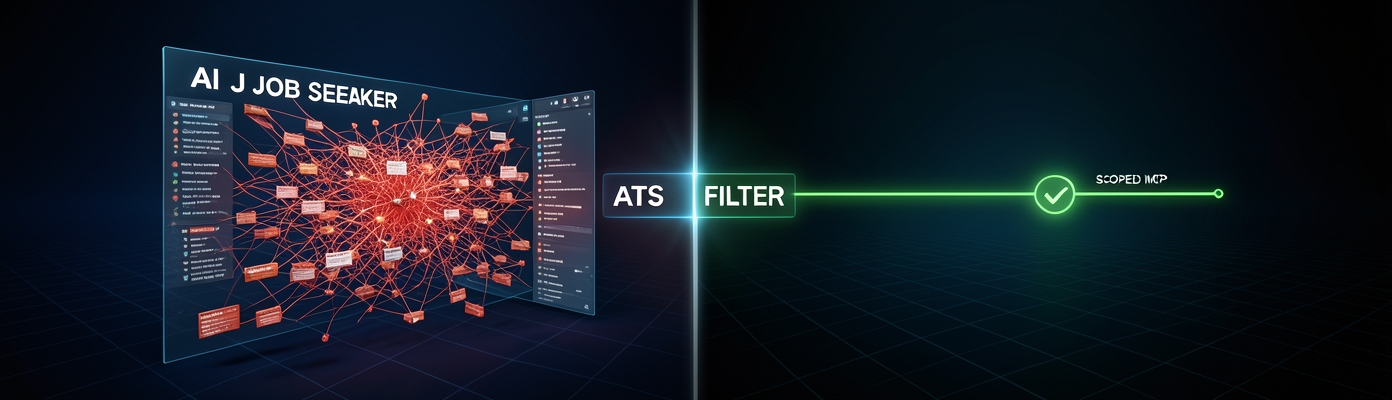

The Hidden Truth About AI Resume Screening No One Admits
Agentic AI cybersecurity for autonomous systems: why it matters
AI resume screening is often sold as a shortcut: faster hiring, consistent scoring, fewer biased decisions, and streamlined recruiting operations. But a risk-oriented security strategy demands a harder question: what happens when the “screening tool” becomes an autonomous decision-support system that can access data, call other systems, and trigger downstream actions? This is where agentic AI cybersecurity for autonomous systems stops being a niche concern and becomes a core identity-and-access problem.
In modern enterprise hiring pipelines, AI is no longer limited to text classification. Many systems now incorporate agentic workflows—multi-step processes that can interpret instructions, query internal databases, generate candidate summaries, request clarifications, and initiate actions like interview scheduling or rejection notifications. Even if your hiring team never “intends” an agent to be autonomous, the operating reality is that the system’s behavior is shaped by permissions, integrations, and delegation logic.
Think of it like a hiring assistant that doesn’t just read resumes. It also:
1. Pulls candidate records from HR systems,
2. Looks up related profile data from other sources,
3. Writes evaluation notes back into workflows,
4. And, depending on configuration, triggers next steps.
If security assumes the assistant is passive, the organization is building on a dangerous premise.
Agentic AI cybersecurity for autonomous systems is the discipline of protecting AI agents that can plan, act, and operate across systems—especially when those agents have access to identities, data stores, tools, and external services. Instead of defending only models or prompt text, you defend the entire autonomous loop: identity, permissions, data handling, and the boundaries that govern what agents can do when they encounter unexpected inputs or malicious instructions.
In hiring screening, agentic behavior can emerge from:
– Prompt-driven agents that translate resume content into structured scoring and reasoning,
– Tool-using systems that enrich candidate profiles,
– Automation layers that decide who moves forward based on agent outputs,
– Workflow orchestration (e.g., “if score > X, schedule interview; else notify recruiter”).
Three analogies help make the risk intuitive:
– Analogy 1: A checklist vs. a driver. Traditional screening is like a checklist; it reads inputs and outputs decisions. Agentic screening is closer to a driver: it doesn’t just observe—it navigates, makes turns, and can cause collisions if boundaries are missing.
– Analogy 2: Filing cabinets vs. a control room. A classifier stores nothing and only tags documents. An agentic system can access filing cabinets, request additional files, and operate the controls that release information to recruiters or candidates.
– Analogy 3: A microwave vs. a kitchen chef. A microwave follows explicit settings. An agentic AI “chef” can improvise—often correctly, but sometimes dangerously—when it’s given incomplete constraints.
From a security-strategy perspective, agentic AI cybersecurity must address at least four pillars:
– Identity security for agents (what identity is the agent using, and what can it access?),
– Tool and integration governance (which systems can it call, and under what conditions?),
– Data control (where candidate data goes, what is retained, and what is transmitted),
– Autonomous response containment (how you prevent runaway actions or cascading permissions).
“AI operating model security” refers to the security posture that governs how AI systems operate inside the organization: authentication, authorization, logging, data flows, and enforcement mechanisms that determine whether the AI behaves safely and predictably in real production conditions.
In hiring funnels, this changes outcomes because it changes capabilities. When AI operating model security is weak, your screening funnel becomes an exposed attack surface—where adversaries can manipulate outputs, exfiltrate data, or trigger workflow actions with realistic business impact.
If strong, it turns the funnel into a controlled decision environment. Candidates get reviewed fairly and securely; recruiters get trustworthy explanations; attackers face constraints that limit both their reach and their ability to hide.
Here’s the core shift: security can’t only ask, “Is the AI model safe?” It must ask, “Is the operational system around the AI safe?” That includes:
– Identity and access boundaries for AI-enabled cyberattacks targeting your recruiting workflows,
– Guardrails for data ingestion and output handling,
– Enforcement so that agentic actions require proper verification,
– Monitoring to detect attempts to steer the agent into harmful tool usage.
When this isn’t done, the hiring process becomes like letting an unknown contractor into your building with a master key “because they’re helping with deliveries.” You may trust the intent, but you still control access to doors, rooms, and records.
Background: why AI screening exposes new identity risks
AI resume screening systems concentrate identity and data in ways traditional HR processes did not. A resume is not just text—it is personal data, employment history, contact identifiers, and often sensitive details. When AI systems integrate with HR databases, email tools, candidate portals, and scheduling automation, they also integrate with identities: candidates, recruiters, HR admins, and the AI system itself.
This creates a set of risks that show up as identity failures—especially in modern agentic architectures where tools are called dynamically. Instead of identity being a static “login/logout” concern, it becomes a live capability model: who (or what) can access which resources, with what rights, and for what purpose.
In well-governed systems, agent identity and access should be treated with the same seriousness as human accounts. In practice, many organizations underinvest here, because they assume the AI is “just an app” rather than an autonomous actor.
Common identity and access misconfigurations include:
– Using shared service accounts across multiple agents and workflows,
– Granting broad permissions so the agent “doesn’t break,”
– Allowing agents to call external tools without strict egress controls,
– Logging gaps that make it hard to attribute actions to an agent identity,
– Over-permissioning that permits workflow escalation (e.g., “approve candidate” actions).
A structured way to see the fragility is to examine failure points in hiring access paths. Below is a compact list-style snippet you can use as a starting checklist.
List-style snippet: 5 failure points in AI hiring access
1. Shared credentials for AI services (one identity, many tasks, weak attribution)
2. Over-broad HR read/write scopes (agent can do more than screening)
3. Weak segregation between environments (dev/test data accessible from prod agents)
4. Unrestricted integration triggers (agent output can initiate downstream actions)
5. Incomplete logging for agent actions (can’t trace “who did what” during incidents)
Security-wise, identity failures are especially damaging because they directly enable both data access and workflow manipulation. Attackers don’t need to “break the model” if they can trick the agent into using legitimate access paths.
Beyond the AI system itself lies another identity and data leakage vector: Shadow AI. Even when enterprises adopt “approved” hiring screening tools, employees and recruiters may use unofficial copilots, third-party résumé tools, or personal AI accounts to “help” interpret resumes or generate communications.
Shadow AI often appears harmless because it’s driven by productivity. But in security terms it is an invisible data-exfiltration path—especially when candidate data is pasted into tools without governed data handling.
Definition-style snippet: What Is “agent ledger”?
An agent ledger is an auditable record of autonomous agent activity: who/what identity performed actions, what tools were invoked, what data was accessed or transformed, and what outputs were produced or sent downstream. In effect, it’s the “audit trail backbone” for agentic operations, designed to support investigation, governance, and rollback decisions.
Shadow AI patterns mirror real-world data leakage because the leakage mechanics are similar:
– Data leaves approved storage boundaries,
– Processing occurs in uncontrolled environments,
– Records may be retained beyond business intent,
– Attribution becomes uncertain.
In hiring, this can translate into compliance exposure, reputational damage, and downstream trust failures with candidates—because the organization can’t reliably prove what was handled and where.
Trend: AI-enabled cyberattacks target hiring pipelines
The next risk step is not theoretical. AI-enabled cyberattacks using prompt-driven agents increasingly target business workflows where the value of disruption is high and the trust model is permissive. Hiring pipelines are attractive because they involve identity-rich systems (HR platforms, applicant tracking systems, email tooling, scheduling) and because the business impact of manipulation can be immediate (lost candidates, leaked data, corrupted decision outcomes).
Prompt-driven agents can adapt their behavior based on context. Instead of a single static exploit attempt, an attacker can run a conversation-like process that aims to:
– Extract information (candidate details, internal criteria, recruiter workflows),
– Influence decisions (score manipulation, recommendation steering),
– Trigger actions (email outreach, status changes),
– Find loopholes in tool access and validation logic.
This matters because many screening systems treat model output as authoritative. If the agent can “speak” convincingly—and your system accepts its tool calls—then the attacker doesn’t need to hack passwords. They need only to exploit operational trust.
Comparison snippet: Known-pattern vs adaptive agent attacks
– Known-pattern attacks try to match predictable signatures (e.g., specific prompt strings or fixed behaviors).
– Adaptive agent attacks adjust to constraints in real time (e.g., detecting which tools exist, asking for verification steps, then re-issuing instructions in a way that fits the environment).
Traditional security that focuses on known prompts and static detections struggles here. You need operating constraints that reduce the blast radius even when the model is manipulated.
Modern hiring pipelines don’t always end at “generate a decision.” They often trigger automated reactions—notifications, interview scheduling, and status updates. That’s where autonomous response containment becomes essential: you must prevent “runaway” behavior when screening agents misinterpret instructions, encounter adversarial resumes, or attempt to use tools beyond their role.
A practical analogy: if your screening agent is allowed to “push buttons” across HR systems, autonomous response containment is the emergency stop and the permission cage that prevents it from pressing the wrong ones when something goes wrong.
Definition-style snippet: What Is autonomous response containment?
Autonomous response containment is the set of technical and procedural controls that restrict and safely bound an AI agent’s reactions—ensuring actions remain within approved workflows, data boundaries, and permission scopes, even under adversarial inputs or unexpected agent goals.
Without containment, a manipulated screening agent can:
– Trigger repeated requests (resource exhaustion),
– Invoke integrations that leak information,
– Escalate actions through nested workflows,
– Send sensitive details to incorrect recipients.
Insight: the hidden truth behind “safe” AI resume screening
Many organizations market “safe” AI resume screening as if safety is a property of the model alone. In reality, safety is an emergent property of the AI operating model security: identities, permissions, tool governance, validation, and containment.
The hidden truth is uncomfortable: if you haven’t designed agentic control planes, your screening system will behave like any other integrated automation—sometimes correct, sometimes unpredictable, and always constrained by access.
In risk terms, “safe” is not a label; it’s a capability achieved through governance and enforced boundaries.
To secure agentic hiring, AI operating model security must operationalize least privilege and verified data handling across every step of the screening lifecycle: ingestion, processing, output, and downstream workflow actions.
At minimum, you should implement controls that address identity, access scope, observability, and enforcement. Here’s a targeted list you can adapt into policy and engineering requirements.
List-style snippet: 7 controls for AI-enabled hiring safety
1. Minimum-privilege agent identities (separate roles per workflow; no shared master accounts)
2. Strict tool allowlists (only approved integrations; deny everything else by default)
3. Data handling boundaries (approved storage zones; prohibit sending candidate data to untrusted external services)
4. Action verification gates (require human or deterministic checks before status changes and notifications)
5. Autonomous response containment (rate limits, stop conditions, and escalation controls)
6. Comprehensive agent logging (agent identity, tool calls, data access, and outputs)
7. Regular access reviews (periodic revalidation of scopes, especially after workflow changes)
These controls are directly tied to the related risk keywords:
– agent identity and access becomes your first line of defense,
– AI operating model security becomes your enforcement layer,
– autonomous response containment becomes your failure-safe mechanism,
– and AI-enabled cyberattacks become harder to turn into real business harm.
Even benign systems can drift. A résumé with confusing formatting, adversarial content, or unusual language can trigger unexpected tool usage. If your screening agents are nested—delegating subtasks to other agents—then containment becomes harder and more important.
Containment should be designed for “what if the agent is wrong?” and “what if the agent is manipulated?”
Definition-style reminder: autonomous response containment ensures the agent’s reactions remain bounded and safe, not merely detected after damage occurs. That’s the distinction that separates resilient governance from reactive cleanup.
Forecast: what changes next for enterprise hiring security
The next wave of enterprise hiring security will be driven by two converging factors: agentic workflows expanding inside HR systems, and adversaries getting better at exploiting operational trust. Expect security expectations to move from “model risk” to “agent operational risk.”
Nested agents—where a primary agent delegates to sub-agents—will increase in hiring pipelines because it improves throughput and specialization (e.g., one agent extracts skills, another aligns experience to job requirements, another drafts recruiter messages).
But nested delegation also increases cascading permission risk. If sub-agents inherit broad scopes, a single compromised step can propagate through the system.
Trend snippet: nested agents and cascading permissions
– Primary screening agent delegates tasks to skill extraction agents,
– Extraction agents may call internal knowledge tools,
– Those agents may then request updates or trigger workflow actions,
– If identity scopes are not tightly segmented, permissions cascade.
This is why autonomous response containment must include:
– Segmented agent identities for each delegation stage,
– Strict permission boundaries between parent and child agents,
– Hard stops on tool calls and action triggers when confidence or policy checks fail.
Security teams will need to mature from “basic controls” to “operational governance.” A roadmap helps prevent organizations from buying tools without building enforcement and accountability.
Use agentic AI cybersecurity for autonomous systems in policy language so engineers and auditors align on what “secure” means in day-to-day operations—not just during model evaluation.
Use agentic AI cybersecurity for autonomous systems in policy
– Define minimum-privilege identity requirements for agents
– Require autonomous response containment for every workflow that can trigger side effects
– Mandate agent-level auditing using an agent ledger concept
– Set data handling rules for resume ingestion and output dissemination
– Establish quarterly security and identity reviews tied to hiring workflow changes
Future implications/forecast: Over the next 12–24 months, expect procurement and compliance requirements for AI hiring tools to explicitly demand agentic governance features: traceable agent activity, controllable tool usage, and bounded autonomy with measurable enforcement. Enterprises that lag will face increased incident costs and longer response times because the “who did what” trail is missing.
Call to Action: secure your AI resume screening this quarter
If you want risk reduction now (not after an incident), treat the next quarter as an operational hardening sprint. The goal is to reduce identity blast radius, close data handling gaps, and implement auditable governance.
Start with who/what can access what.
1. Inventory AI identities used in resume ingestion and workflow automation.
2. Map each identity to its permissions: HR system scopes, email/scheduling access, and any external tool calls.
3. Remove broad rights and enforce minimum privilege.
4. Validate that workflow actions (status updates, notifications) require explicit authorization gates.
Without traceability, you can’t govern what you can’t see.
Add an agent ledger approach so you can answer during incidents:
– Which agent identity performed the action?
– Which tools were called?
– Which candidate data was accessed and transformed?
– What downstream outputs were produced and delivered?
This dramatically improves investigation speed and reduces uncertainty-driven response errors.
Make safe behavior the default:
– Ingest and process resumes only within approved environments.
– Prevent direct sending of raw candidate data to unapproved external AI services.
– Apply retention rules and minimize data exposure in prompts and logs.
– Ensure outputs that include PII are handled with the same strictness as inputs.
People are part of the system—even when agents do the work.
Train recruiters and HR operations teams to:
– Recognize what data must not be pasted into unapproved tools,
– Prefer governed interfaces for résumé summarization and evaluation,
– Report “workarounds” quickly so they can be operationalized into approved flows.
Future implication: Over time, “shadow AI” will be treated less as a training problem and more as a governance design gap. The organizations that succeed will make safe, useful AI behaviors easier than unsafe alternatives—so employees don’t bypass controls.
Conclusion: move from detection-only to governed autonomy
AI resume screening isn’t just a hiring feature anymore—it’s an operational agent system with identity, data, and workflow side effects. The hidden truth is that “safety” cannot be assumed from model behavior alone. It must be engineered through agentic AI cybersecurity for autonomous systems, enforced by AI operating model security, and stabilized by autonomous response containment.
– Tighten agent identity and access with minimum privilege and segmentation
– Implement an agent ledger for traceability, audits, and governance
– Enforce safe data handling defaults for resume ingestion and output sharing
– Add autonomous response containment so agent mistakes can’t become business incidents
– Reduce Shadow AI through governed enablement and staff fluency training