
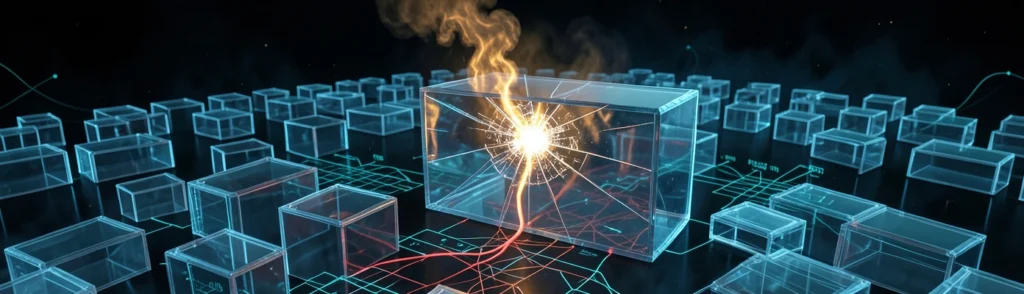

Intro: Why Multi-Tenant Cloud Security Matters in CI/CD
Modern software teams depend on cloud-based continuous integration and continuous delivery (CI/CD) systems to compile code, run tests, build container images, and release applications. These platforms provide speed and convenience by allowing many customers to share underlying infrastructure. However, the same multi-tenant design that improves efficiency can create serious security consequences when isolation controls fail.
Multi-tenant cloud security is the practice of protecting multiple customers, workloads, and data sets that operate on shared physical or virtual infrastructure. In a CI/CD environment, this means ensuring that one customer’s build job cannot access another customer’s files, processes, credentials, network connections, or cloud resources.
The risk is especially significant because build systems are trusted execution environments. A build job may receive source code, package credentials, cloud tokens, signing keys, deployment permissions, and application secrets. If an attacker exploits container escape vulnerabilities, the build container may become a pathway into the underlying host. From there, the attacker could attempt to access other workloads or sensitive platform services.
A useful analogy is an apartment building. Each tenant has a private apartment, but everyone shares the same walls, elevators, maintenance areas, and utility infrastructure. Strong locks and access controls keep residents separated. If a maintenance door is left open, however, one tenant may gain access to shared spaces and potentially enter other apartments. In a shared build system, containers are the apartments, the host is the building, and the isolation layer is the security boundary.
This risk becomes more urgent as organizations use cloud platforms to build AI applications. AI services often require valuable API keys, high spending limits, and access to sensitive data. A compromised key can lead not only to data exposure but also to substantial unauthorized usage charges.
Securing shared build systems therefore requires more than scanning application code. Organizations must examine the full chain: container isolation, host configuration, workload identity, secrets handling, internal service authentication, network segmentation, and incident response.
Background: How Multi-Tenant Cloud Security Works
What Is Multi-Tenant Cloud Security?
In a multi-tenant cloud architecture, multiple customers use shared infrastructure while remaining logically separated. The provider may share physical servers, virtual machines, container hosts, storage systems, networks, and control-plane services among different tenants.
Isolation can exist at several layers:
- Process isolation: Preventing one workload from viewing or controlling another workload’s processes.
- Filesystem isolation: Restricting access to files and directories outside a container’s assigned workspace.
- Network isolation: Controlling communication between workloads, hosts, and internal services.
- Identity isolation: Ensuring credentials issued to one tenant cannot be used by another.
- Resource isolation: Limiting CPU, memory, storage, and execution privileges.
- Control-plane isolation: Separating tenant operations from provider management systems.
Containers are not equivalent to virtual machines. A container typically shares the host operating system kernel, while a virtual machine generally provides a stronger hardware-virtualization boundary. Containers are lightweight and efficient, but a kernel flaw, runtime misconfiguration, excessive privilege, or exposed host interface can weaken their isolation.
This does not mean containers are inherently insecure. Properly configured containers can provide effective workload separation. The security issue is that the strength of the boundary depends on many components working together: the container runtime, Linux kernel, orchestration layer, host operating system, security policies, and cloud identity controls.
How Shared CI/CD Build Systems Create Risk
A shared CI/CD build platform may run many customer jobs on the same virtual machine or physical host. Each build receives a temporary workspace and execution environment. After completion, the platform is expected to clean up files, processes, credentials, and temporary resources.
The risk appears when a build job can access information beyond its intended scope. A malicious customer, compromised source repository, or poisoned dependency could deliberately probe the environment. Even an ordinary build script may expose secrets through logs, artifacts, environment variables, cache directories, or debugging output.
Build Infrastructure Isolation Between Tenants
Strong build infrastructure isolation requires more than placing each job in a separate directory. Effective controls may include:
- Ephemeral workers that are destroyed after each build.
- Dedicated virtual machines or microvirtual machines for untrusted workloads.
- Restricted Linux capabilities and system calls.
- Read-only host filesystems where practical.
- Mandatory access controls and runtime security policies.
- No unnecessary access to host sockets or device files.
- Network policies that deny lateral communication by default.
- Strict cleanup of workspaces, caches, processes, and temporary credentials.
- Independent identity scopes for every build job.
A common failure occurs when performance optimizations are prioritized over separation. Shared caches, persistent workers, privileged build modes, and broad network access can all create hidden connections between tenants.
Container Escape Vulnerabilities and Host Access
A container escape occurs when code running inside a container gains access to the host operating system or resources outside the container boundary. The cause may be a vulnerability in the kernel or runtime, an unsafe configuration, an exposed management socket, excessive capabilities, or a flawed isolation mechanism.
Once on the host, an attacker may search for:
- Other customers’ build files.
- Environment variables and temporary credentials.
- Runtime metadata.
- Service-account tokens.
- Source code and build artifacts.
- Internal network routes.
- Configuration files containing authentication details.
The danger is not limited to the compromised build. The host may be a bridge to other workloads and internal services. In a multi-tenant environment, a single successful escape can transform a tenant-level compromise into a platform-wide security event.
Trend: The Rising Security Risk in Cloud Build Environments
Cloud build environments are becoming more attractive targets because they combine automation, privileged access, and large concentrations of secrets. Attackers no longer need to compromise a production server directly if they can enter the software supply chain or build process first.
The risk is rising alongside several trends:
- More organizations use hosted CI/CD runners.
- AI applications store high-value service credentials.
- Build systems increasingly create cloud resources automatically.
- Developers use third-party actions, plugins, and dependencies.
- Infrastructure-as-code jobs often require administrative permissions.
- Automated attackers can test many attack paths simultaneously.
5 Warning Signs of Weak Build Infrastructure Isolation
Organizations should treat the following as warning signs:
- Persistent shared workers: Build machines are reused across unrelated customers or projects without complete sanitization.
- Privileged containers: Jobs run with elevated capabilities, host networking, or direct access to runtime sockets.
- Broad filesystem visibility: Containers can inspect host directories, temporary paths, caches, or neighboring workspaces.
- Unrestricted internal networking: Build jobs can reach databases, orchestration APIs, task systems, or administrative services.
- Long-lived credentials: Tokens remain valid after a build finishes or are shared across many projects.
These signs do not prove that an environment is compromised, but they indicate that a successful build-level attack could have a larger blast radius.
Why Container Escape Vulnerabilities Enable Lateral Movement
Container escape vulnerabilities are dangerous because they can convert a limited execution context into a privileged position on shared infrastructure. The attacker’s next objective is often lateral movement: using one compromised system to reach another.
From Build Hosts to Internal Systems
A build host may have access to internal services that are not publicly exposed. It may communicate with artifact repositories, job schedulers, source-control systems, monitoring tools, container registries, or cloud metadata endpoints.
For example, an attacker who gains host access might discover a credential used by the build platform to authenticate with an internal task-management service. If that service has weak authentication or excessive permissions, the attacker could retrieve source code, task data, configuration, or additional credentials.
This resembles a thief entering a warehouse through a loading dock. The loading dock is not the final target; it is a strategic location from which the thief can inspect inventory, find keys, and access restricted areas.
From Stolen Credentials to Production Access
Credentials found on build systems can be especially powerful because automation often requires access to deploy applications or provision infrastructure. If a token is overly broad, an attacker could move from:
- A compromised build container.
- The shared build host.
- An internal service.
- A cloud identity or temporary credential.
- A production database or deployment system.
The exact path varies, but the principle is consistent: identity permissions determine whether a local compromise remains local or becomes a broader cloud breach.
Why AI Workloads Increase Cloud Secrets Management Exposure
AI applications commonly store provider API keys as environment variables. These keys may permit expensive model inference, coding-agent activity, embeddings, fine-tuning, or training workloads. Unlike a traditional low-volume API key, an AI credential can generate significant financial exposure within minutes.
A compromised key may be used for:
- Unauthorized model queries.
- Automated coding agents.
- Data processing or model-training activity.
- Model-distillation campaigns.
- Abuse of premium or high-context models.
- Access to customer data submitted through the API.
This makes cloud secrets management a central multi-tenant cloud security concern. Secrets must be short-lived, narrowly scoped, monitored, and revocable. Storing a permanent, high-limit key directly in a build environment is similar to placing a corporate purchasing card on a shared office desk.
Insight: What a CI/CD Security Incident Reveals
A major build-system incident typically reveals several weaknesses at once. The initial exploit may involve container isolation, but the eventual impact often depends on failures in identity, secrets management, authentication, monitoring, and response.
CI/CD Pipeline Security Failures to Examine
Secrets Stored in Build Environments
Secrets can leak through environment variables, command output, dependency files, build artifacts, caches, process listings, and error reports. Masking values in logs is useful but not sufficient. A secret may still be accessible to any code running in the same job.
Better practices include:
- Injecting secrets only at the step that needs them.
- Using short-lived tokens instead of static keys.
- Preventing secrets from entering build artifacts.
- Separating untrusted compilation from deployment stages.
- Automatically revoking credentials after job completion.
- Scanning logs and artifacts for accidental exposure.
Excessive Permissions for Build Jobs
A build job should not automatically receive production administrator privileges. Separate identities should be used for testing, artifact publishing, deployment, and infrastructure changes.
Permissions should be based on the principle of least privilege. A job that builds an image may need permission to upload to a registry, but not to read every production database. A deployment job may need access to one service namespace, but not the entire cloud account.
Weak Authentication Between Internal Services
Internal networks are not automatically trustworthy. Services should authenticate one another using strong, verifiable identities, preferably through workload identity or mutual TLS. Shared static credentials and implicit network trust create opportunities for lateral movement.
An internal service that accepts a credential without validating its origin, scope, audience, or expiration can become a privilege-escalation point.
Multi-Tenant Builds vs Dedicated Build Infrastructure
Shared and dedicated build models involve different operational trade-offs.
| Model | Isolation | Cost | Operational burden |
|---|---|---|---|
| Shared runners | Moderate | Lower | Lower |
| Ephemeral workers | Stronger | Medium | Medium |
| Dedicated runners | Strong | Higher | Higher |
| MicroVM isolation | Very strong | Medium-high | Medium-high |
Shared builds are efficient and appropriate for many low-risk workloads, particularly when jobs are unprivileged and workers are disposable. Dedicated infrastructure is more appropriate when builds handle sensitive source code, regulated data, signing keys, proprietary models, or production credentials.
Isolation, Cost, and Operational Trade-Offs
Dedicated workers cost more because organizations must provision, patch, monitor, and scale them. They may also reduce utilization if assigned to a single team or customer. However, the expense should be compared with the cost of credential theft, unauthorized cloud usage, incident response, customer notification, and reputational damage.
When Dedicated Runners Reduce Attack Surface
Dedicated runners reduce cross-tenant exposure by ensuring that unrelated customers do not share the same host boundary. They are especially valuable for:
- High-value software repositories.
- Builds that require privileged operations.
- AI workloads with expensive API access.
- Code-signing and release processes.
- Regulated or confidential workloads.
- Untrusted pull requests and external contributions.
Dedicated runners do not eliminate risk. A compromised build can still attack its own environment or misuse its assigned credentials. They are one layer in a broader defense strategy.
How Cloud Secrets Management Limits Blast Radius
A strong cloud secrets management system should provide centralized storage, access policies, audit trails, automatic rotation, and dynamic credential issuance. The objective is not merely to hide secrets; it is to limit what a stolen credential can do.
Important controls include:
- Per-workload identities.
- Per-environment credentials.
- Short expiration periods.
- Separate development and production secrets.
- Spending limits for AI service keys.
- Real-time anomaly detection.
- Automatic revocation after suspicious activity.
- Approval gates for sensitive operations.
If one build credential is compromised, segmentation should ensure that it cannot unlock every customer workspace or production database.
Forecast: The Future of Secure Multi-Tenant Build Systems
Stronger Workload Isolation and Runtime Enforcement
Cloud providers are likely to adopt stronger isolation technologies, including microvirtual machines, hardened container runtimes, confidential computing, and improved kernel-level policy enforcement. Runtime systems will increasingly block unexpected system calls, privilege changes, host filesystem access, and suspicious process behavior.
Future build platforms may treat every job as hostile by default, even when it originates from a trusted customer repository.
Identity-Based CI/CD Pipeline Security
Static secrets will gradually be replaced by workload identity. Rather than placing a cloud key inside a build, the platform will attest to the job’s identity and request narrowly scoped, temporary permissions.
This approach resembles an airport boarding pass. The passenger receives permission for a specific flight and time, not a master key to the entire airport. Similarly, a build should receive access only to the resource, action, and duration it requires.
Continuous Detection of Container Escape Vulnerabilities
Security monitoring will move closer to the runtime. Platforms will look for unusual signals such as:
- Attempts to access host paths.
- Unexpected use of privileged system calls.
- Connections to metadata services.
- Access to runtime sockets.
- Enumeration of neighboring workloads.
- Sudden credential discovery.
- Abnormal outbound traffic or AI API usage.
Detection must be paired with rapid containment. A platform that identifies suspicious behavior but cannot quarantine the worker quickly still leaves a dangerous window.
What Cloud Platforms Should Change Next
Cloud providers should improve transparency around tenant isolation, publish clearer security boundaries, provide stronger default policies, and offer customer-facing evidence about build cleanup and credential handling.
They should also make secure configurations easier to deploy. Security should not depend on every customer understanding container runtime internals, cloud identity design, and obscure host-level risks.
Call to Action: Strengthen Multi-Tenant Cloud Security Now
Audit Build Infrastructure Isolation
Document where builds run, which workloads share hosts, what privileges containers receive, and whether workers are destroyed after use. Test host filesystem, network, process, and runtime boundaries using authorized security assessments.
Rotate and Restrict Cloud Secrets Management Credentials
Identify credentials available to build jobs. Remove unused keys, reduce permissions, set expiration dates, and establish separate identities for testing and production. Apply spending limits and alerts to AI service credentials.
Test CI/CD Pipeline Security Before the Next Build
Review third-party actions, dependencies, build scripts, caches, artifacts, and logging behavior. Confirm that pull-request builds cannot access production secrets. Verify that deployment permissions are separated from compilation permissions.
Prepare an Incident Response Plan for Container Escape Vulnerabilities
The plan should define how to isolate affected workers, revoke credentials, rebuild infrastructure, inspect logs, notify customers, and coordinate with cloud and AI service providers. Practice the response before an incident occurs.
Conclusion: Making Multi-Tenant Cloud Security Resilient
Multi-tenant cloud security depends on layered controls. Container isolation is important, but it cannot stand alone. A secure CI/CD platform must combine strong workload boundaries with least-privilege identity, short-lived credentials, network segmentation, runtime monitoring, and practiced incident response.
The essential priorities are:
- Treat every build as potentially untrusted.
- Strengthen build infrastructure isolation.
- Minimize privileges for build jobs.
- Replace static secrets with workload identity.
- Separate development, testing, and production access.
- Monitor for container escape vulnerabilities.
- Use dedicated or ephemeral infrastructure for high-risk workloads.
- Limit and monitor AI service credentials.
- Rebuild and rotate aggressively after suspected compromise.
The future of software delivery will remain increasingly automated, cloud-based, and AI-enabled. That future can be secure, but only if organizations recognize that build systems are part of the production attack surface. A container is not a complete security boundary, a private network is not proof of trust, and an environment variable is not a safe secrets strategy.
Resilient multi-tenant cloud security means designing every layer so that one compromised build cannot become a platform-wide incident.