
What No One Tells You About Burnout Recovery Plans That Actually Work
Intro: Burnout recovery where Snapdragon Sound Elite Gen 2 fits
Burnout recovery is rarely just about “rest more.” It’s about rebuilding attention, lowering background cognitive threat, and creating a repeatable rhythm your nervous system can trust. The problem is that most plans are written like spreadsheets—useful on paper, but unreliable in real life when noise, interruptions, and stress cues keep pulling you off course.
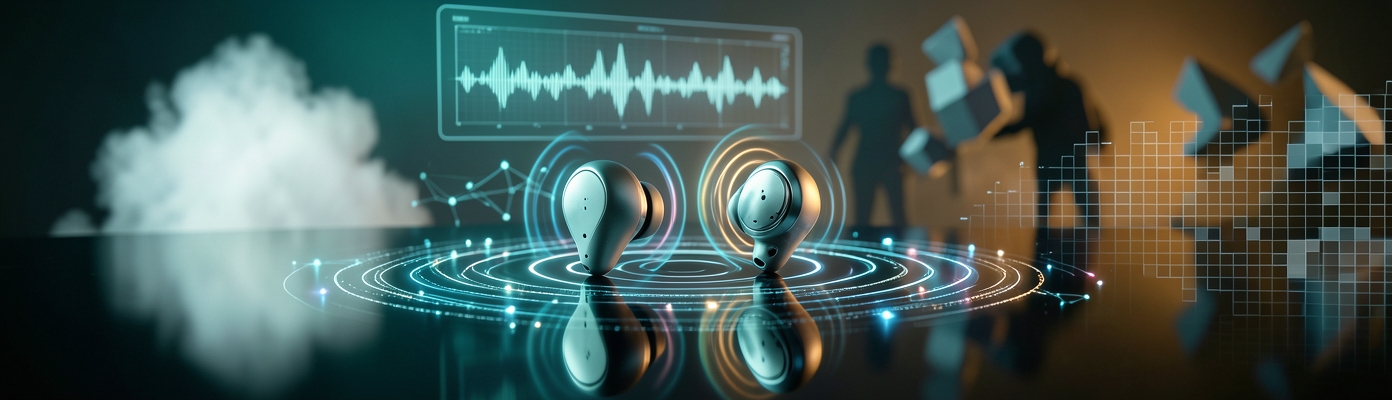
This is where Snapdragon Sound Elite Gen 2 camera earbuds start to matter—not as a magic fix, but as an enabling layer for your recovery plan. Think of them as a personal sound scaffold: they help you shape the acoustic environment, reduce distraction, and (when privacy controls are handled correctly) support more context-aware coaching through a personal AI audio platform.
In a burnout context, the “actually works” part is not the feature list. It’s whether the earbuds help you execute your plan consistently—on good days and bad ones—while protecting your privacy and keeping friction low.
Below is the blueprint many people miss: how to connect elite audio capabilities (especially AI adaptive ANC) to behavior change, how to interpret camera-related privacy controls during recovery, and how to structure a measurable week one so you can iterate without guessing.
Background: What Snapdragon Sound Elite Gen 2 camera earbuds do
Snapdragon Sound Elite Gen 2 is best understood as a premium audio platform designed around personal AI—a system that can adapt to what’s happening around you and support AI-driven audio experiences. In other words, it’s not only “louder bass” or “better microphones.” It’s about turning earbuds into a more responsive interface for daily life.
When people describe it as a personal AI audio platform, they’re usually pointing to three practical capabilities:
– Real-time adaptation (most notably through AI adaptive ANC, which can steer noise reduction as your environment changes)
– Contextual assistance that can occur through audio-based interaction rather than constant screen use
– Privacy controls that help you choose what information is shared, including camera-related safeguards like privacy controls obfuscate faces
During recovery from burnout, these matter because stress is not constant. Your environment changes every hour—office chatter, home quiet, commuting noise, even the sound of your own anxious thoughts. The platform’s goal is to help the audio layer behave more like a thermostat than a light switch: stable, responsive, and calibrated to conditions.
Traditional noise cancellation can be great in a static lab environment, but recovery is lived in motion—different rooms, different people, different frequencies of disturbance. AI adaptive ANC is meant to address that gap by optimizing noise reduction dynamically rather than relying on fixed presets.
Here are three analogies to clarify why this is different:
1. Thermostat vs. on/off heater: ANC that changes with conditions behaves like a thermostat. It avoids the “sudden temperature shock” feeling that can happen when audio conditions update abruptly.
2. Noise cancellation as adaptive earplugs: Instead of you replacing earplugs each time you enter a new place, the earbuds “re-fit” themselves automatically based on incoming sound patterns.
3. Driver assistance, not autopilot: It doesn’t replace your decisions (like choosing to rest). But it reduces the constant micro-corrections you’d otherwise need to stay on route.
For burnout recovery, that translates into fewer sensory triggers and fewer moments of “I can’t focus—why?” because the background noise has been handled more consistently.
Privacy during burnout is not theoretical; it’s personal. On-device systems can be faster to respond and typically reduce the amount of data leaving your device. Cloud systems can be powerful, but they also introduce dependencies (latency, connectivity, and what happens to data after capture).
The practical distinction is often summarized as on-device processing vs cloud:
– On-device processing vs cloud (expectation): If the earbuds handle more computation locally, you can expect more immediate adaptation and less reliance on external services.
– When cloud can appear: Some AI capabilities may still use cloud pipelines for heavier tasks or model updates, depending on the product configuration and settings you choose.
The “actually works” angle is that your recovery plan should minimize uncertainty. If audio behavior depends on network quality or shifting privacy defaults, your routine becomes harder to trust. So you want a setup where the system’s response is stable—especially when you’re tired, distracted, or not in a mood to troubleshoot.
Trend: Why camera earbuds privacy controls matter during recovery
There’s a new category of anxiety that shows up during burnout: not just “am I overwhelmed?” but “am I exposing myself?” When camera-capable wearables enter the picture, the recovery plan must include privacy controls as a first-class requirement.
Camera earbuds can raise questions about consent, capture visibility, and downstream processing. Many people only think about privacy when they’re doing something risky. But recovery is precisely when you’re most vulnerable—less energy to read policies, less patience to reconfigure settings, and more likelihood to default to “whatever is easiest.”
That’s why privacy controls matter during recovery windows: they reduce cognitive load.
Users typically want the following—especially when they’re trying to recover:
– Will it help me focus without amplifying stress?
– Can it switch between quiet and awareness modes smoothly?
– What exactly does it record, infer, or store?
– Can I control what information is shared?
– Does it work consistently when I’m low on energy?
These questions map directly to the system’s behavior. A recovery plan that ignores privacy controls can create a hidden stress loop: you begin the session relaxed, but your mind starts monitoring whether you’re being captured, tracked, or misunderstood.
During burnout recovery, many people need both extremes:
– Low-distraction calm for focus or rest
– Transparency to stay connected and safe (without feeling shut away)
A useful mental model is to treat ANC and transparency modes as recovery instruments, similar to how you might alternate between deep breathing and grounding exercises.
For clarity, two analogies:
1. Dimmer switch: ANC reduces sensory input; transparency increases it. The “right” setting depends on your current stress level, not on the day’s mood.
2. Noise as weather: You don’t “stop weather.” You adjust your shelter. Recovery uses audio modes to create the right microclimate.
The best earbuds support smooth transitions so you’re not constantly interrupted by audible artifacts or mode lag—because even small friction can erode adherence.
If camera processing is involved, privacy controls obfuscate faces is a major point of trust. The core idea is that the system can blur or mask identifiable visual elements so the AI operates on safer representations.
What users need to understand isn’t just that obfuscation exists, but how it changes the risk profile:
– It can reduce exposure if the device uses vision features for context.
– It can lower the emotional cost of wearing camera-capable hardware in public.
– It supports a recovery environment where you don’t feel like you must constantly “perform privacy.”
In practice, you should treat face obfuscation as one layer—not a substitute for consent. Your plan should include explicit privacy choices so you know when the camera-related features are on, off, or restricted.
Insight: Build a burnout recovery plan using AI audio cues
Most recovery plans fail because they don’t answer two questions:
1. When do I use the tool?
2. How do I know it’s working?
AI earbuds can help if your plan converts sound into a repeatable cue system—almost like a behavioral metronome.
Here are five benefits that matter specifically for burnout recovery, not just general listening quality.
AI adaptive ANC can support recovery by keeping your environment from constantly “breaking in.” When background noise is handled well, your cognitive load decreases—fewer micro-interruptions means fewer opportunities for stress escalation.
Example: If your workday includes sudden bursts (hallway chatter, construction noise), adaptive ANC can reduce those peaks so your focus rhythm stays intact.
In recovery terms, this is the difference between:
– Trying to concentrate despite chaos
vs
– Concentrating because chaos is dampened
A personal AI audio platform can enable coaching that feels conversational, not clinical. Instead of reading a plan, you can receive prompts in natural language—something like “What’s your energy level now?” or “Start a 10-minute reset.”
This works like a GPS with re-routing: even if you veer off course, it helps you re-enter the route without shaming you for the detour.
Analogy: If burnout recovery is a rehab program, conversational audio prompts act like a coach who meets you at the right moment—when you’re tired, not when you’re motivated.
Multimodal behavior matters too: if the system can fuse audio context with vision processing (while applying privacy controls like face obfuscation), you may get more relevant cues during walks, commuting, or quiet reflection.
A recovery plan should reduce uncertainty, which includes privacy uncertainty. When comparing on-device processing vs cloud, the key takeaway is control:
– On-device processing vs cloud: More processing locally generally supports faster responses and can reduce data exposure paths.
– Data minimization: Good privacy systems collect the minimum needed and keep the rest local or ephemeral when possible.
If privacy controls can obscure faces and minimize retention, your recovery routine becomes easier to maintain because you’re less likely to second-guess the tool mid-session.
In other words, privacy isn’t just compliance—it’s habit stability.
Forecast: What to look for next in elite camera earbuds
Camera earbuds will keep evolving, but burnout recovery needs are clear: responsiveness, consistency, and privacy that feels effortless.
As products improve, your criteria should be outcome-based, not feature-based. In 2026+, look for benchmarks like:
Ask whether the system delivers “quiet competence,” not just flashy AI:
– Does AI adaptive ANC handle real-world transitions smoothly (home → street → café)?
– Does it maintain stable behavior during long sessions without drifting?
– Does it respond quickly enough that you don’t feel lag during mode changes?
A recovery plan “works” when you notice fewer failed attempts. It’s like trying to develop an exercise habit: the best program is the one you can actually follow after a bad night’s sleep. Responsiveness is the adherence lever.
In future camera earbuds, privacy controls shouldn’t feel like extra work. Instead of burying settings behind menus, elite designs should support:
– Clear, user-friendly toggles
– Sensible defaults for recovery mode
– Strong mechanisms for face privacy such as privacy controls obfuscate faces
– Options that minimize “consent fatigue” when you move between contexts
The forecast is straightforward: privacy UX will become a competitive differentiator. If privacy is hard to manage, burnout users will avoid using camera-capable features altogether—reducing the value of the platform for recovery routines.
Call to Action: Start a measurable burnout plan today
You don’t need a perfect plan. You need a plan that you can run, measure, and adjust—starting this week.
Use this as a low-effort pilot. The goal is to create consistency, not intensity.
1. Choose two daily windows (even 20–30 minutes counts).
2. Start with low-distraction calm using adaptive ANC.
3. If you feel emotionally “cut off,” switch to transparency briefly, then return to calm.
4. Track one simple metric: “Did noise disrupt my task or rest?” (Yes/No).
Analogy: Think of this like dialing in a dimmer. You’re not aiming for “always dark.” You’re aiming for the right light level for the activity.
Before your first session:
– Confirm your privacy controls obfuscate faces (or equivalent visual privacy settings) are enabled if you plan to use any camera-adjacent capabilities.
– Review whether the device uses on-device processing vs cloud for the features you’ll rely on.
– Set any consent defaults so you’re not making privacy decisions while depleted.
This prevents a common burnout recovery failure mode: you start relaxed, then anxiety about privacy becomes the new noise.
Conclusion: Turn recovery into a repeatable system with AI audio
Burnout recovery succeeds when it becomes repeatable. The best plans aren’t the most complicated—they’re the most trustworthy under stress.
Snapdragon Sound Elite Gen 2 camera earbuds can support that by combining adaptive sound management (AI adaptive ANC), context-aware personal assistance through a personal AI audio platform, and privacy features that help reduce worry—such as privacy controls obfuscate faces and clearer choices around on-device processing vs cloud.
Going forward, the winners in elite camera earbuds will be the ones that treat recovery like a system: stable behavior, low consent friction, and measurable outcomes. If you build your week one around consistent recovery windows and explicit privacy setup, you’ll turn AI audio from a novelty into a reliable tool—one you can keep using after the motivation fades.