
The Hidden Truth About AI Productivity Tools Nobody Mentions—And Why It Matters Now
AI productivity tools are everywhere. They schedule meetings, summarize your day, and “optimize” your focus—often by quietly turning your habits into predictions. But there’s a catch: the most influential systems are not always the ones that feel like work. Many are embedded in wearable health platforms, where AI blends bodily signals with everyday guidance.
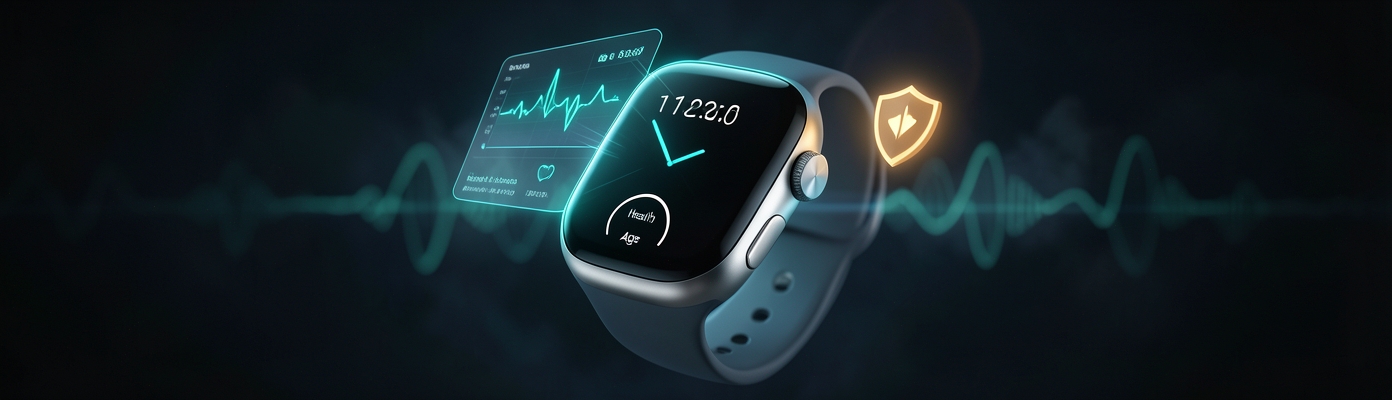
A prime example is the Apple Watch Series 12 Health Sensing System Readiness Score—a feature designed to translate health signals into a single “ready/not ready” style metric. It can be helpful, but it can also nudge you in ways you may not expect. And if you’re using health sensing alongside AI-driven attention tools (like audio intelligence and recap-style summaries), privacy and accuracy trade-offs become part of the productivity equation—whether you realize it or not.
In this guide, we’ll unpack what the readiness score actually is, how wearables mix health AI with daily workflows, where the hidden risks live (especially privacy concerns wearable listening), and what to expect as health sensing + AI productivity evolve.
Why the Apple Watch Series 12 Readiness Score matters now
Wearable tech has shifted from passive logging (“here’s your steps and sleep”) to active guidance (“here’s what you should do today”). The Apple Watch Series 12 Health Sensing System Readiness Score sits right in that transition. It matters now because more people are using wearables not just for health, but for performance planning—training decisions, recovery timing, workday pacing, and even mood management.
Think of it like a thermostat. If you set your house to “comfort,” the thermostat controls temperature automatically. Similarly, a readiness score can quietly influence what you choose to do next—workouts, intensity, and rest—based on the device’s interpretation of your physiology.
That influence is the “hidden truth” behind many AI productivity narratives: the system doesn’t just capture data; it shapes behavior.
The Apple Watch Series 12 Health Sensing System Readiness Score is a wearable-generated metric intended to summarize how ready your body may be for activity by combining health signals into a single guidance-oriented number.
In practical terms, the readiness score is designed to interpret multiple measurements into a simplified output. Rather than asking you to parse dozens of readings, it aims to provide a quick “readiness” indicator that can be compared across days.
Many users treat it like a daily dashboard headline: one glance, a decision. But that convenience has a cost—because the number becomes a proxy for a complex biological state. When the proxy is slightly off, your decisions can drift.
Here’s an analogy: it’s like using a weather app’s “rain chance” to decide whether to carry an umbrella. A “30% chance” may be enough to ignore it—or enough to carry one—depending on how risk-averse you are. The Readiness Score is similar: it’s guidance under uncertainty, not a direct read of your body’s internal reality.
Background: how wearables mix health AI with daily tasks
To understand why this matters for productivity, you need to see how wearables connect the health loop to the work loop. Modern systems rarely stop at “track and store.” They run algorithms that infer recovery, stress patterns, and readiness—and then present that inference alongside the features you use daily.
This blend is where productivity gains can come from, but also where unnoticed assumptions can enter your routine.
One of the most important inputs in wearable recovery guidance is heart rate variability tracking. Heart rate variability (HRV) reflects changes in the time between heartbeats and is often used as a proxy for autonomic nervous system balance—commonly discussed in the context of stress and recovery.
If you’ve ever made training decisions based on “how you feel,” HRV-style guidance is the wearable attempt to replace or complement that feeling with a measurable signal.
Example 1: Think of HRV like the “smoke alarm” for stress/recovery. It doesn’t tell you exactly what caused smoke, but it can warn you that conditions may not be stable—prompting you to adjust.
Example 2: HRV is also like a dashboard check engine light. You might still drive, but you now pay attention to what might be wrong and whether you need maintenance.
For beginners, the biggest shift is learning that HRV can trend differently across sleep quality, recovery time, alcohol intake, illness, and even temporary lifestyle stressors. So a readiness score isn’t just “fitness”; it’s your recent system-level context.
Many wearable platforms now add a concept like Health Age feature—an attempt to map your current health patterns to an “age-like” summary. This is powerful for motivation, but it can also create confusion.
For beginners, the Health Age feature can change the way they interpret everyday metrics:
– A normal-looking week might still produce a surprising Health Age shift
– Consistency might matter more than single-day spikes
– The metric may respond to trends in sleep, activity, and cardiovascular indicators—not just workouts
In other words, the tool can reshape your mental model: instead of “Did I train hard today?” it becomes “What trajectory am I on?”
Here’s how the system often behaves in real life:
1. You wake up, your device computes a readiness signal.
2. It compares today to your baseline and recent trends.
3. It nudges you toward a day type: train, go lighter, recover, or focus on steadier routines.
Example 1: Like a smart coffee maker that adjusts brew strength based on your preferences, the system tailors your “daily plan.”
Example 2: Like choosing between walking and sprinting based on whether your ankles feel stable, the readiness score offers a form of “stability prediction,” but it’s based on sensors and models, not direct sensation.
The hidden issue is not the existence of guidance—it’s when you treat the guidance as certainty.
Privacy concerns wearable listening vs health sensing
Productivity AI often has two faces: health sensing and audio intelligence. Health sensing feels “clinical,” while listening features feel “convenient.” But from a user-safety and privacy perspective, both can be sensitive.
On the health side, the Apple Watch Series 12 Health Sensing System Readiness Score depends on continuous or frequent physiological sampling—often including heart-related measurements used for heart rate variability tracking and sleep/recovery estimates.
On the audio side, features related to privacy concerns wearable listening can create additional risk exposure. If a wearable is doing background audio processing, sending reminders, transcribing conversations, or generating recaps, users may worry about:
– Whether data is stored
– Whether processing happens on-device or in the cloud
– How “background listening” is framed and controlled
Even if a platform uses privacy safeguards, user perception matters. A tool can be technically private yet still feel intrusive if the behavior is opaque.
A practical comparison:
– Health sensing is like measuring your temperature in the room.
– Wearable listening is like leaving a microphone on near your desk.
Both affect your environment. Only one is likely to feel like a surveillance risk to many people—even when the actual data handling is carefully designed.
Trend: AI productivity promises—and the wearable reality check
AI productivity promises often sound simple: “We’ll summarize your day,” “We’ll help you focus,” “We’ll reduce cognitive load.” In wearables, these promises take the form of recap summaries, conversation transcript features, and audio intelligence assistance.
The reality check is that the same ecosystem that helps you concentrate may also shape your behavior through health readiness and audio-driven cues.
Audio intelligence features such as Audio Intelligence Live Rewind and Siri-style Siri Recaps aim to help you regain context from conversations and reduce the mental burden of remembering details.
When it works well, it’s like having a notetaker who never misses a sentence. But there’s a safety angle: the more “background listening” and recap generation happen, the more you should think about consent, transparency, and control.
Example 1: A Live Rewind function is like rewinding a tape—helpful, but it implies the tape was recorded in the first place.
Example 2: Recaps are like a daily blog of your conversations. Even if it’s for you, the existence of the draft changes the privacy stakes.
On the health side, wearable accuracy depends on sensor design, sampling cadence, motion artifacts, skin contact, and algorithmic assumptions. The Health Sensing System sampling intervals—how frequently heart signals are measured—can meaningfully affect how stable readiness calculations are.
Higher sampling frequency can improve responsiveness and smoothness, but it can also create more opportunities for transient noise (for example, movement artifacts during sleep transitions).
Example 1: Imagine taking a pulse every hour versus every few minutes. More frequent readings can show variability, but you also need better interpretation to avoid overreacting to normal fluctuations.
Example 2: It’s like GPS navigation: frequent updates reduce drift, but if the map is uncertain, it may still “correct” you into the wrong lane momentarily.
A key question for productivity is whether you should trust the readiness score more than your own perception.
– Gut feel is immediate and contextual (“I feel heavy today.”)
– Readiness score is model-based and trend-driven (“Your recovery indicators suggest you should go lighter.”)
Neither is perfect. The best approach often treats the readiness score as a decision assist, not a final authority. If your body and the metric disagree, you may need to investigate why (sleep disruption, dehydration, stress, illness onset).
Insight: the hidden trade-offs behind “better” readiness
The promise of readiness scoring is that you get an objective marker for how prepared you are. The hidden trade-off is that “better” guidance can still be misaligned with your goals, your unique physiology, and your day-to-day context.
A readiness score can be wrong in either direction:
– It may suggest you should push when you’re actually not ready (false positive readiness)
– It may discourage you when you are ready (false negative readiness)
Common reasons include:
– Sensor fit and motion issues
– Unusual sleep patterns that change HRV quickly
– Stressors not reflected in heart metrics (mental load, deadlines, pain)
– Recovery that is “non-traditional” (for example, training adaptations)
The productivity risk: you might start optimizing your routine around the number rather than your actual performance and wellbeing.
Audio and recap features can reduce memory load, but they can also become attention fragments—especially if alerts, transcripts, or reminders appear at moments that matter for deep work.
Example: A wrist alert during a focus block might feel minor, but it can trigger interruption costs—small attention switches that compound over the day.
So, while readiness score might tell you “recover,” audio tools might quietly pull you into reactive attention patterns.
Privacy checklist for privacy concerns wearable listening
Before you enable audio-intelligence-style features, consider:
– Check whether background processing is on by default
– Review what gets transcribed vs what stays as metadata
– Confirm whether controls are available per app or per day
– Look for clear indicators when listening is active
– Decide what you’re comfortable with summarizing (e.g., private conversations)
Beginner guidance: what to do with Heart Rate Variability
If you’re new to heart rate variability tracking, the safest way to use it is to avoid overfitting your identity to one metric.
1. Look for trends over days, not single readings.
2. Pair HRV with simple context: sleep quality, alcohol, illness symptoms, and training load.
3. Use readiness scores to adjust intensity modestly—think “slight rerouting,” not “hard life decisions.”
4. If you notice persistent low readings along with symptoms (dizziness, chest discomfort, unusual fatigue), treat that as a health safety signal—contact a clinician.
Analogy: HRV is like a tide chart. You don’t judge the health of the ocean by one wave; you observe the pattern across time.
Safety note: wearable metrics are helpful, but they are not diagnostic tools.
Forecast: what to expect from health sensing + AI productivity
The next wave will likely be more personalized and more integrated—especially with on-device intelligence and tighter coupling between health metrics and scheduling/attention systems.
Expect more “closed-loop” guidance—where the Health app uses signals to tailor recommendations and where AI changes tone based on trends (for example, coaching phrasing when readiness is low).
A likely evolution:
– More personalization from your baseline
– Better routine recommendations (sleep timing, workout intensity, recovery blocks)
– Reduced friction between reading metrics and taking action
Imagine a scenario:
– Your Health Age feature shifts gradually over weeks
– The system identifies that your recovery windows are inconsistent
– It suggests a consistent routine: earlier wind-down, lighter training on certain days, and smarter timing for intense sessions
Over time, your productivity improves not because AI is “smarter,” but because the plan better respects your physiology.
Future readiness definitions may expand beyond immediate “train or recover” into:
– Sleep scheduling and wake-time consistency
– Workout periodization recommendations
– Longer-term longevity framing based on cardiovascular and recovery indicators
Forecast implication: as wearables become more predictive, users will increasingly treat health metrics as daily “operations inputs”—similar to how enterprise systems use monitoring dashboards. Done well, it can support sustainable habits. Done poorly, it can create metric anxiety or over-adjustment.
Call to Action: set up Apple Watch Series 12 health scoring today
If you want the productivity benefits without falling into the hidden traps, set up the Apple Watch Series 12 Health Sensing System Readiness Score intentionally.
1. Faster decision-making about workout intensity and recovery days
2. Trend awareness that complements gut feel
3. Routine consistency by nudging you toward sustainable pacing
4. Sleep and recovery linkage through signals like heart rate variability tracking
5. Personalization that can improve over time alongside features like Health Age feature
To stay user-safety aware:
– Treat readiness scores as guidance, not medical truth.
– Expect occasional mismatches—especially when you’re moving a lot, sleeping poorly, or wearing the watch loosely.
– Use privacy controls proactively for any audio-related features.
– Review alert frequency so focus time isn’t constantly interrupted.
If you’re concerned about privacy concerns wearable listening, start with minimal audio features enabled, confirm your preferred controls, and reassess after a week.
Conclusion: why readiness + focus tools work only together
AI productivity tools can help you accomplish more—but the best outcomes happen when you combine “readiness intelligence” with thoughtful attention habits and clear privacy boundaries.
The hidden truth is that wearables don’t merely measure you; they can influence your behavior through readiness scoring and audio-driven assistance. When you understand the trade-offs—sampling uncertainty, interpretation limits, and the realities of privacy concerns wearable listening—you can use the tools more safely and more effectively.
– Use Apple Watch Series 12 Health Sensing System Readiness Score as a decision assist, not a verdict.
– Learn heart rate variability tracking by focusing on trends, not single-day noise.
– Understand what Health Age feature is trying to communicate: direction over perfection.
– Control Audio Intelligence and watch for privacy concerns wearable listening behaviors you’re uncomfortable with.
– Pair focus tools with boundaries so productivity doesn’t become constant interruption.
The future will likely bring even tighter integration between health sensing and AI productivity. The winners will be the users who keep agency: measure the right signals, interpret responsibly, and protect privacy with informed settings.