
How Content Creators Are Using Programmatic Blogging to Trigger Viral Traffic (n=1 sleep experiment dream journal with AI)
Viral traffic rarely comes from “more content.” It comes from specific content that behaves like an experiment—something audiences can feel, verify, and share. In sleep tech, that means bridging two worlds that used to stay separate: subjective dream journaling and objective wearable metrics.
A practical illustration is emerging from the n=1 sleep experiment dream journal with AI: a personal logging workflow that pairs what you remember after waking with what a wearable measures overnight. The creator then uses programmatic blogging to publish those findings quickly—turning a small, private dataset into a repeatable story engine.
This article explains the mechanics and the mindset behind that approach, using the same core components: Oura ring API, Supabase experiment logging, and AI-driven theme extraction from dream text—so your next posts feel less like essays and more like “live research with receipts.”
Start Here: What Is a n=1 sleep experiment dream journal with AI?
An n=1 experiment is research where the “sample size” is you. That sounds small, but it’s powerful for content creators because it produces a clean narrative arc: baseline → process → matched data → within-person insights → iteration.
In the context of a n=1 sleep experiment dream journal with AI, the setup usually includes three pieces that connect directly to publishing:
1. A dream journal you complete daily (often in under a minute)
2. Wearable sleep data collected automatically from the same night
3. An AI theme extraction layer that turns messy, subjective language into consistent tags and themes you can compare over time
Think of the n=1 dream journal as a bilingual notebook:
– One “language” is your subjective memory of dreams: recall quality, emotional tone, whether a nightmare involved waking, emotions, and short narratives.
– The other “language” is wearable output: sleep stages, recovery signals, and physiological context.
The magic is the join. You need Supabase experiment logging to store each day’s dream entry in a structured way, and you need a way to match it with that night’s wearable metrics. When that alignment is done correctly, the dataset becomes a timeline rather than a pile of entries.
Now add AI theme extraction. Without it, your dream text is hard to aggregate. With it, you can produce consistent “analysis-ready” outputs—like recurring dream motifs, sentiment clusters, or topic labels that can be compared against physiological metrics.
A good n=1 sleep experiment has a narrow question and a repeatable method. For example:
– “When my dream recall is higher, do my dream recall and HRV signals look different?”
– “Do nights with more vivid dream emotions correspond to changes in sleep stages or recovery?”
The key is that the experiment produces publishable artifacts: charts, correlation results, and annotated stories that readers can follow day-to-day.
Traditional content formats are often static: “Here’s what we know.” But an n=1 experiment is dynamic: “Here’s what I’m doing, here’s the data, and here’s what happened.”
It’s like turning your audience into witnesses rather than spectators:
– Example 1 (analogy): A travel blog that posts photos is nice. A travel log that posts what changed day-by-day is shareable because readers can reuse the method.
– Example 2 (analogy): A cooking video teaches technique. A cooking diary that tracks ingredients, timing, and outcomes helps people copy the workflow and predict results.
– Example 3 (example): A gym influencer who records workouts helps; a creator who pairs workouts with sleep quality and energy scores helps even more because the narrative is measurable.
When you combine measurement with narrative and then publish through programmatic blogging, you can scale output without sacrificing coherence.
Build the Viral Hook: Programmatic Blogging for Sleep Tech
Programmatic blogging is the practice of using a repeatable template to generate content from structured data. Instead of writing every article from scratch, you:
– store data (dream logs + wearable metrics),
– compute insights,
– auto-fill charts, tables, and summaries,
– then publish fast and consistently.
This matters because virality is often a timing game. When you can produce a new post as soon as you detect a pattern, you’re more likely to intersect with audience attention—while the story still feels “in motion.”
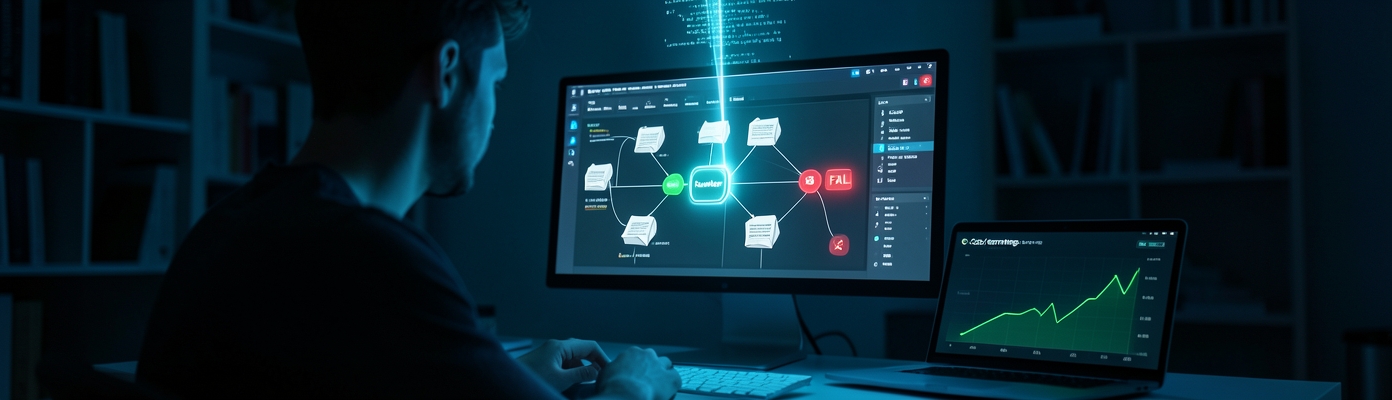
In a modern creator workflow, the stack often looks like:
– Oura ring API to fetch nightly wearable data (sleep efficiency, REM/deep/light minutes, HRV, resting heart rate, temperature deviation, etc.)
– Supabase (Postgres-backed) for structured storage of dream entries and experiment metadata
– A lightweight front end—often built quickly with tools like Lovable
– An AI layer that extracts themes from dreams and supports analysis narration
The content engine becomes a pipeline:
1. Collect dream inputs
2. Fetch Oura metrics for the matching sleep date
3. Run AI theme extraction (turn free text into comparable tags)
4. Log everything using Supabase experiment logging
5. Publish programmatic summaries and visualizations
Here are five tactics that tend to produce both engagement and sharing—especially in technical niches like sleep:
1. Publish “results posts” on a schedule tied to new data
– Readers return because they know fresh findings will appear.
2. Turn correlations into series-based storytelling
– Example: “5 nights later: dream recall vs HRV—still trending?”
3. Create comparison posts that feel like debugging
– “Oura sleep scores vs dream journal inputs: what lines up, what doesn’t?”
4. Generate “explainers” using the same dataset
– A creator can publish one article on methods, then another on findings, then another on limitations—without rewriting everything.
5. Use AI theme extraction to produce shareable highlights
– People share concrete labels and patterns (“recurring emotion X shows up near nights with higher HRV”) more readily than raw narrative text.
Analogy: Programmatic blogging is like a newsroom dashboard. Journalists still write stories, but the dashboard continuously feeds them facts. That continuous feed is what fuels rapid publication—and rapid publication is what helps posts catch attention windows.
Connect the Data: Sleep Architecture Metrics to Dream Logs
Once your pipeline exists, the next step is to connect subjective dream inputs to objective sleep architecture metrics. This is where the content becomes credible.
Sleep architecture metrics typically include:
– REM/deep/light minutes
– sleep efficiency
– total sleep
– recovery/readiness-style outputs (often derived from the wearable’s internal model)
And dream logs typically include:
– dream recall and HRV-adjacent variables (recall quality, number of dreams, emotions)
– dream tone
– whether a nightmare involved awakening
– optional recurrence labels
– free-text narratives that AI can theme-tag
Creators who aim for “viral credibility” don’t keep data in separate silos. They build a single dataset joined by the sleep date.
That dataset becomes the backbone for posts like:
– “How dream recall tracked with REM minutes”
– “Whether emotional tone predicted HRV shifts”
– “Oura ring API sleep scores vs nightly dream labels”
The most compelling move is not only to collect the data, but to structure it so each row represents one night and contains both sides of the story.
Example: Imagine your dataset as a train schedule:
– the dream entry is one platform (memory),
– the Oura metrics are the other platform (physiology),
– the sleep date is the timetable that ensures the “same night” passengers meet.
If you miss alignment, your analysis becomes noisy. If you align correctly, your posts can meaningfully compare “dream-side” and “body-side” patterns.
A practical comparison flow looks like this:
– Take Oura-side outputs fetched via the Oura ring API
– Take dream journal inputs entered by the user
– Compare using within-person methods first (because n=1 changes the rules)
Examples of comparison targets:
– Oura sleep scores vs dream recall quality
– REM % or REM minutes vs nightmare frequency
– sleep efficiency vs emotional intensity labels
Even before you compute statistics, this comparison produces content hooks:
– “Here’s the night my recall was strongest—and what my wearable showed.”
– “Here’s when HRV peaked—does my dream text match the pattern?”
Future implication: As creators publish more of these “joined datasets,” audiences may start expecting sleep content to include both dream recall and HRV signals, not just one or the other. This could pressure the next generation of sleep apps to integrate journaling and wearable analytics from day one.
Turn Insights Into Stories: Within-Person Analysis That Scales
The hardest part of turning an experiment into content is resisting the temptation to overclaim. Viral posts can backfire if they sound causal without evidence.
That’s why many n=1 creators emphasize within-person analysis and non-parametric methods early on. The point is not to make medicine claims. The point is to detect patterns that are promising enough to repeat.
For within-person datasets—especially when you have ordinal dream inputs—Spearman correlations are a natural choice. They compare rank-order relationships without assuming linearity.
A story-friendly analysis plan might include:
– Spearman correlations on continuous/ordinal metrics
– dream recall score ↔ HRV
– dream emotion intensity ↔ resting heart rate (carefully)
– dream tone ↔ REM-related changes
– Group averages on binary indicators
– nightmare label present vs absent
– awakening during nightmare vs not
When you publish this, you’re essentially writing: “Here’s whether my data suggests relationships worth watching.”
Analogy: This is like checking whether two signals move together in a weather log before building a forecasting model. Correlation doesn’t explain causality—but it tells you what’s worth studying next.
Creators who want long-term audience trust use guardrails in their posts:
– Correlation ≠ causation
– A pattern may exist, but it doesn’t mean dreaming causes HRV changes or vice versa.
– Lack of dream recall doesn’t imply no dream
– Memory encoding and retrieval vary across days.
– Wearable sleep staging estimates have limits
– Devices like Oura provide useful estimates, but they aren’t polysomnography.
Also, creators often include data-labeling boundaries:
– A “nightmare” tag is a self-report label, not a clinical diagnosis.
– “One night” is nearly meaningless—so the content should emphasize the trend, not a single spike.
Future implication: As more creators build these systems, viewers will become more statistically fluent. Expect audience questions to shift from “is it interesting?” to “what method did you use and what are the limitations?” That’s a positive future: it raises the quality bar for viral science communication.
Forecast the Playbook: AI Blogging Meets Experiment Logging
Once the workflow proves itself, the next evolution is forecasting: how could AI blogging and experiment logging combine to produce better content models?
With Oura ring API data and sleep architecture metrics, a creator can start training content logic—what to publish, when to publish it, and how to phrase findings based on reliability.
For example:
– If HRV changes track with specific dream theme clusters, the system could prioritize posts about that theme.
– If recall quality is highly variable, it could adjust how it summarizes uncertainty (“weak signal, continuing study”) rather than making confident conclusions.
This is where programmatic blogging becomes more than “automation.” It becomes a personalized research narrative engine.
Related infrastructure that supports this future:
– Supabase experiment logging for consistent recordkeeping
– tagging schemas for dream themes
– repeatable metric extraction jobs
And because the dream text isn’t structured by default, AI theme extraction is key. It turns the subjective into something computable.
However, AI features add operational risk: the pipeline can break subtly. A dream theme model might drift; a chart might summarize the wrong field; a join might fail due to time zone mismatches.
So creators need “release engineering” discipline for their content system. In practice, that means:
– Behavioral checks
– Validate that AI outputs match expectations (e.g., theme tags aren’t empty or nonsensical).
– Separate reliability budgets for AI-assisted features
– Treat AI theme extraction as a component that can fail differently than data fetching.
– Release manifests
– Log which AI prompt/version, which model, and which extraction policy generated a given post’s themes.
– Behavioral constraints
– Ensure the system can “fail closed” (e.g., fall back to raw narrative summaries rather than publishing incorrect structured labels)
This matters because the content pipeline is effectively a product. And when it publishes automatically, correctness becomes part of audience trust.
Future implication: Creators who adopt these reliability practices will likely outperform others long-term. Their audiences will come to rely on the work as consistent and verifiable—turning viral attention into sustained readership.
Call to Action: Launch Your Own Programmatic Blogging Experiments
If you want to build this yourself, start with a minimal experiment that you can complete consistently. The goal isn’t perfection—it’s a dataset you can analyze and publish quickly.
A solid 7-day plan is long enough to generate early patterns, but short enough to keep your method honest.
Here’s a practical plan:
1. Define metrics
– Dream-side: recall score, dream count (optional), nightmare/awakening flag, emotions/tone labels
– Body-side: HRV, REM/deep/light minutes, sleep efficiency, resting heart rate, temperature deviation, sleep score (from Oura)
– Include sleep architecture metrics you can fetch reliably nightly
2. Capture dream logs
– Keep entries fast (ideally within a minute after waking)
– Standardize the emotion/tone options so your dataset stays comparable
3. Log with Supabase experiment logging
– Store each entry with a sleep date key
– Store AI-extracted themes alongside raw text for transparency
4. Join datasets by sleep date
– Confirm time zone handling and “sleep night” alignment
5. Publish quickly via programmatic blogging
– Use templates for:
– daily recap posts
– mid-week results
– end-of-week “what changed?” summary
This approach mirrors how a scientist runs a protocol: repeatable steps, consistent timestamps, and a tight feedback loop.
– [ ] Pick 5–8 dream fields (keep it lean)
– [ ] Confirm which wearable fields you’ll fetch via Oura ring API
– [ ] Implement Supabase tables for:
– dream entries
– experiment run metadata
– nightly wearable metrics
– [ ] Build the join logic by sleep date
– [ ] Add AI theme extraction only after your dataset schema is stable
– [ ] Publish a first post by day 3 (even if insights are preliminary)
Analogy: Think of this like building a “minimum viable lab.” You’re not trying to invent sleep medicine—you’re trying to create an instrument that produces usable evidence and stories.
Conclusion: Viral Traffic Comes From Measurable Experiment Stories
Programmatic blogging works when your content is tied to evidence, and evidence becomes compelling only when it’s structured, repeatable, and communicated with restraint.
That’s the core of the n=1 sleep experiment dream journal with AI approach:
– you log dreams consistently,
– you fetch wearable metrics using the Oura ring API,
– you store everything through Supabase experiment logging,
– you use AI to extract themes,
– and you publish within-person findings tied to sleep architecture metrics, dream recall and HRV signals, and clear guardrails.
Recap: Viral attention follows measurable experiment stories—not generic hot takes. When your dataset can explain what happened and why it might matter (without pretending to prove causality), readers share it because it feels both human and testable.
If you build the pipeline once, you can run it again and again—turning your personal curiosity into a scalable content engine.