
How Content Creators Are Using Topical Authority to Rank Faster Than You (Philips Hue Screen Sync camera-based lighting with AI custom behaviors)
Intro: Why Philips Hue Screen Sync creators win faster
If you’ve noticed that some creators seem to rank almost immediately for smart home topics—especially around Philips Hue Screen Sync camera-based lighting with AI custom behaviors—it usually isn’t luck. It’s topical authority: they publish enough tightly connected, high-intent content that search engines treat their site as the “place to go” for answers.
Think of topical authority like building a well-stocked workshop rather than a single tool. One tutorial helps once; a cluster helps repeatedly. Another analogy: it’s like training a spotlight, not lighting a room. The creators aim their content at the exact shape of the viewer’s question until the beam reaches maximum brightness.
In this guide, you’ll learn how to apply the same system: pick the right keyword focus, create repeatable “featured snippet” formats, document real-world lighting workflows (including camera-sync realities), and forecast what to publish next so your rankings keep compounding.
You’ll also see how creator workflows specifically map to Philips Hue Screen Sync camera-based lighting with AI custom behaviors, including related terms such as camera-based TV screen sync for smart lights, Philips Hue Custom AI Behaviors natural language automations, Hue Play Screen Sync latency and reflections, and Philips Hue without HDMI sync box.
—
Background: What Philips Hue Screen Sync camera-based lighting is
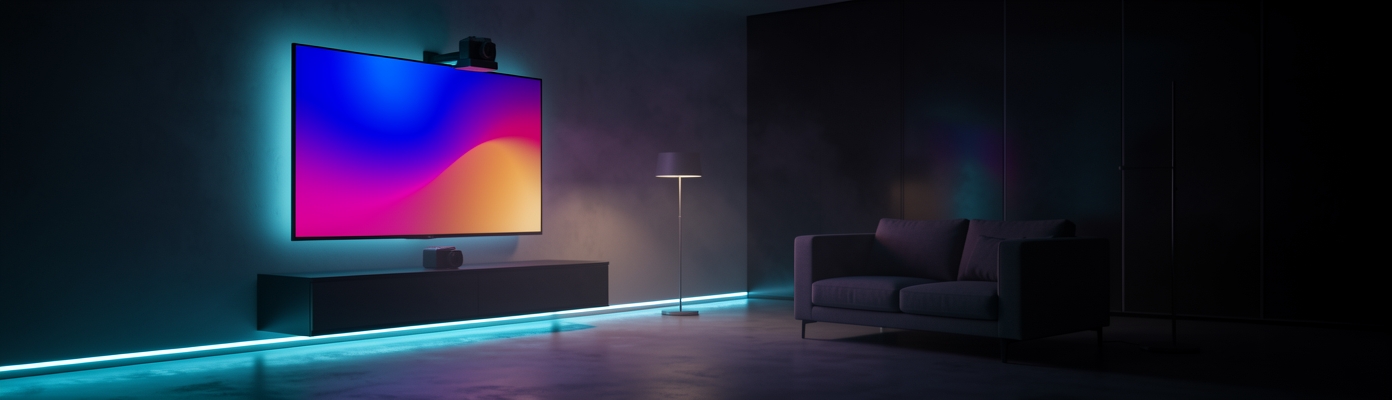
Philips Hue Screen Sync camera-based lighting is a screen-to-lights experience where the system watches what’s happening on your TV and adapts Philips Hue lights to match the on-screen action.
What makes newer approaches feel “creator-friendly” for content is that the underlying setup creates predictable content angles: compatibility, sync behavior, setup constraints, and visual artifacts like reflections or timing differences. Those are exactly the things viewers search for when they’re about to spend money.
Unlike HDMI passthrough setups that rely on a direct video feed, camera-first systems use a camera (often a fisheye-style lens) to monitor the screen and synchronize lighting accordingly. That means the system can work even when you’re watching through apps that don’t play nicely with HDMI capture paths.
If you’re targeting camera-based TV screen sync for smart lights, your content should clearly explain:
– What the camera is doing (capturing the screen scene)
– How the lights respond (color/brightness changes mapped to detected motion and imagery)
– Why it matters for creators (multi-source usability, fewer “it depends on HDMI” limitations)
– What to expect visually (reflections, glare, and latency trade-offs)
A useful analogy: think of it like a DJ reading the room rather than plugging into the soundboard. It doesn’t need the “direct signal,” but it needs good conditions—lighting, viewing angle, and screen brightness—to perform well.
Second analogy: it’s similar to a thermostat with a sensor in the room. The sensor can’t “see through” everything perfectly; placement affects accuracy. Likewise, camera sync depends on camera framing and environmental factors.
Third analogy: like photographing a stage under different spotlights, camera sync output changes based on glare and contrast. This is why your posts should include practical troubleshooting notes, not just setup screenshots.
Philips Hue Custom AI Behaviors adds a layer where lighting automations are described using natural language, then translated into practical routines and scenes.
In other words, instead of crafting every behavior manually, you can define intent—then let the system generate the automation logic behind the scenes.
For creators, this creates a major content advantage: natural language prompts are repeatable, testable, and easy for readers to copy. That’s gold for topical authority because it invites multiple follow-up queries.
When viewers search for Philips Hue Custom AI Behaviors natural language automations, they’re usually trying to solve one of these:
– “I want different lighting on weekends.”
– “I want after-dark scenes to start automatically.”
– “I want my lights to behave differently when I’m watching TV.”
Your content should therefore turn vague wishes into structured prompt templates and then document outcomes. Demonstrate both:
– What prompt you used
– What you got
– What you’d tweak next time
A simple example workflow for your audience:
– Prompt: “On weekends, make evenings warmer and dimmer.”
– Result: scene shifts and brightness adjustments at specific times.
– Next tweak: add an “if I’m syncing with the TV, don’t override the colors” rule (or the closest available equivalent).
If you treat these as “mini experiments,” you’ll naturally attract readers who search for solutions rather than marketing.
—
Trend: Camera-first sync replacing HDMI sync boxes
The big trend signal: camera-based TV screen sync is becoming the default recommendation when people want less hassle and broader source compatibility.
Creators are ranking faster here because they’re not only explaining “what it is”—they’re comparing it against the older standard, including Philips Hue without HDMI sync box approaches.
The practical win of Philips Hue without HDMI sync box is fewer points of failure.
When HDMI sync boxes are part of a setup, you tend to get:
– extra devices
– extra latency variables
– extra HDMI handshake issues
– limited behavior across certain streaming paths
Camera-first setups reduce that friction by “watching the end result” (the display) rather than integrating into the video chain.
Use cases that fit well for Philips Hue without HDMI sync box content:
– Streaming apps directly on the TV (Netflix, Prime Video, etc.)
– Consoles or devices where adding HDMI capture feels undesirable
– Multi-device households where HDMI routing gets complicated
– Renters or move-prone setups (easier physical placement than rewiring)
Second example for clarity: think of HDMI sync boxes like routing a power cable through a renovation. Works when done right, but you pay a hassle tax. Camera sync is closer to installing a smart sensor—less disruptive, more portable.
A recurring audience question is whether camera sync can handle different sources. Your posts should explicitly answer that with a reality-based checklist:
– Works across TV-native streaming apps (because it reads the picture on-screen)
– Works across many console and media uses—provided the camera sees the screen clearly
– May still require correct placement (angle, distance, avoiding glare)
Creators who win on search don’t just state “it works.” They show how they verified it:
– Which sources they tested
– What looked good
– What needed adjustment
That’s where topical authority forms: the reader trusts you because you’ve documented coverage.
Camera-first isn’t “perfect.” It introduces trade-offs that viewers actively search for, which is why Hue Play Screen Sync latency and reflections is a high-value cluster.
Latency and reflections usually show up as:
– delayed response during fast motion
– washed-out colors when the camera sees room glare
– over-bright edges when the screen is too reflective
A helpful analogy: latency is like clapping and hearing the echo. The timing mismatch becomes noticeable during sudden scene cuts. Reflections are like filming a window—light bounces back and pollutes what the sensor “sees.”
To build authority, explain trade-offs like a pilot checklist:
– If you want more accurate matching, optimize screen brightness and camera position.
– If you notice glare, fix environment before swapping hardware.
– If you notice delay, test high-action content and calibrate placement rather than blaming the system.
Your content should also include “what’s normal” vs “what’s wrong,” using plain language readers can apply:
– Normal: slight softness during very fast scenes
– Problem: severe lag due to glare, wrong camera framing, or extreme ambient light
If you do this well, you’ll rank because you address the exact uncertainty that stops buyers.
A comparison section can be the fastest path to featured snippet visibility because it maps to direct “which is better?” intent.
Use a structured comparison that readers can skim:
– Compatibility
– Camera-based: reads the TV output; tends to be more source-agnostic
– HDMI sync box: relies on correct integration into the HDMI signal chain
– Setup complexity
– Camera-based: placement and environment setup matters
– HDMI box: device routing, handshake reliability, and potential cabling constraints
– Artifacts
– Camera-based: reflections and potential latency during fast motion
– HDMI-based: fewer camera artifacts, but latency can still occur depending on processing and passthrough mode
Here’s a practical “rule of thumb” for your audience:
– If your household changes sources often, prioritize Philips Hue without HDMI sync box.
– If you want a more deterministic pipeline and can simplify HDMI routing, consider the HDMI approach.
The key for SEO: don’t just compare—conclude with scenarios. Scenario-based content wins because it matches user intent.
—
Insight: Build topical authority with repeatable lighting workflows
Now you’ll turn this into a repeatable content system. Topical authority isn’t “write a lot.” It’s “write related answers with consistent formats,” so both users and search engines learn your content patterns.
Start with the main cluster: Philips Hue Screen Sync camera-based lighting with AI custom behaviors.
Then expand using related keyword clusters. For example:
– camera-based TV screen sync for smart lights
– Hue Play Screen Sync latency and reflections
– Philips Hue without HDMI sync box
– Philips Hue Custom AI Behaviors natural language automations
Create one content pillar and multiple supporting posts, like spokes on a wheel:
1. Core definition and setup
2. Camera-first vs HDMI comparison
3. Latency/reflection troubleshooting
4. AI behaviors automation prompts
5. Real scenarios and “what to do when X happens”
A practical way to build clusters is to align each post with one viewer question type:
– How-to: “How do I set it up?”
– Problem-solve: “Why does it look delayed?”
– Decision: “Is camera-based better than HDMI?”
– Use-case: “How do I sync streaming apps?”
– Automation: “How do I write behaviors with natural language?”
When each post answers a distinct intent, search engines can confidently associate your site with a topic ecosystem.
Creators often win faster because they use snippet-friendly structures that answer questions immediately.
Use consistent templates across posts so Google sees repeated clarity signals.
Write the first 40–60 words like a dictionary entry:
– What it is (camera-based screen monitoring + light synchronization)
– What it does (adapts Philips Hue lights to screen content)
– Who it’s for (people wanting multi-source sync without HDMI complexity)
– One caveat (environment affects reflections/latency)
A snippet should read cleanly even without context.
For your Philips Hue Custom AI Behaviors natural language automations, a list snippet could be:
1. Define the goal (e.g., weekends, after-dark, TV-watching)
2. Choose triggers (time, day, motion, or mode)
3. Write a natural-language instruction
4. Set intensity/scene style boundaries (warm vs vivid, dim vs bright)
5. Test and refine with real use cases
Keep each step short and action-oriented. Readers love that—and snippets reward it.
A comparison snippet should include:
– a direct verdict style line (“Choose camera-based if…”)
– 3–5 differentiators
– a scenario summary
Example sentence structure:
– “Camera-based is better if you want source flexibility and fewer HDMI variables; HDMI is better if you want a more direct pipeline.”
Generic prompts don’t rank as well as “I tried this on a real routine and here’s what happened.”
For Philips Hue Custom AI Behaviors natural language automations, document scenarios like:
– weekday vs weekend changes
– “after dark” automation
– “TV sync mode” behavior that avoids conflicting scenes
– different lighting temperature profiles depending on activity
Create at least one scenario walkthrough with:
– the exact natural language prompt you’d recommend
– expected outcome
– your adjustment notes (the “what I changed after testing” section)
A reader might search: “Make my lights warmer on weekends automatically.” If you provide a tested prompt and show results, you earn both traffic and trust.
—
Forecast: What creators will publish next for smarter rankings
Future-resilient ranking means you publish what’s likely to become a recurring problem as the tech matures.
More creators will publish prompt libraries and automation templates for Philips Hue Custom AI Behaviors natural language automations, because they scale well and invite community feedback.
Expect to see content formatted as “copy/paste prompt” cards, such as:
– “After dark, shift to a low-glare warm scene at 10:00 PM.”
– “On weekends, increase brightness for morning routines.”
– “When I start Screen Sync, reduce ambient wash and keep highlights balanced.”
Your advantage: go beyond prompting—include refinement guidance (“If it’s too bright, reduce intensity; if it overrides TV colors, set a priority rule.”)
Creators will expand coverage with latency and reflections testing across streaming apps, consoles, and brightness levels.
Searchers will want measurable comparisons:
– how fast scenes respond during action movies vs sports
– whether certain apps trigger more aggressive scene changes
– what camera placement improves results most
Publish your own “test matrix” even if it’s qualitative. Consistency beats perfection.
As installs become easier, creators will focus content on simplicity: fewer steps, fewer accessories, more clarity for non-technical users.
For audiences who don’t want full hub complexity, creators will publish streamlined setup guides that highlight limited-scope syncing options—like single-light syncing without a Philips Hue Bridge.
These posts will rank because they solve a specific constraint: “I only have one light” or “I don’t want bridge setup.”
—
Call to Action: Apply this topical authority plan today
Here’s your immediate execution checklist—structured like a creator workflow so you can start publishing next.
Start by choosing one “primary” page theme and multiple supporting pages.
Your primary target should be:
– Philips Hue Screen Sync camera-based lighting with AI custom behaviors
Then align titles to intent and include at least one related term per post, such as:
– camera-based TV screen sync for smart lights
– Hue Play Screen Sync latency and reflections
– Philips Hue without HDMI sync box
– Philips Hue Custom AI Behaviors natural language automations
Make sure the first paragraph includes the main keyword naturally, and that the rest of the post covers the most searched follow-ups (setup, compatibility, troubleshooting, and behaviors).
A fast way to gain authority is to publish consistent formats that search engines can select.
For each week, cover one snippet type:
– Week 1: Definition (“What Is Philips Hue Screen Sync?”)
– Week 2: List (“5 steps to set up AI behaviors”)
– Week 3: Comparison (“Which sync method is better?”)
– Week 4: Scenario (“Latency/reflections: what to test first” + one AI behavior walkthrough)
Avoid fluff. The snippet section should be easy to lift:
– short sentences
– clear ordering
– direct “what/why/how” statements
For credibility—and for repeat traffic—turn each installation into a checklist readers can follow without guessing.
Include:
– camera placement notes (and what “good” looks like)
– brightness/glare considerations
– latency/reflection troubleshooting steps
– AI behavior prompt examples and refinement guidance
A single “common issues” section can differentiate your post from competitors who only show ideal outcomes.
Readers don’t just want the dream setup—they want the version that works on a Tuesday night with imperfect lighting.
—
Conclusion: Topical authority + AI lighting content = quicker ranking
Creators aren’t winning faster because they write more—they’re winning because they build a connected topic ecosystem around what people actually search and need. When you combine:
– topical authority (clusters, intent coverage, consistent formats)
– featured-snippet structure (definitions, steps, comparisons)
– real workflows (latency/reflections realities + Philips Hue Custom AI Behaviors natural language automations)
…your content becomes the easiest answer to trust.
In the near future, the winners will be the creators who treat camera-based sync and AI automations like evolving systems: test, document, publish templates, and update coverage as new sources and behaviors emerge. Start your first snippet-focused post today, and let the authority compound from week to week.