
What No One Tells You About Email Deliverability Rates—And Why It Matters Now (retro Mac mini dock bandwidth and compatibility)
Email deliverability rates used to be a “marketing ops” problem: something for specialists to monitor in dashboards and fix when campaigns mysteriously underperformed. That era is fading fast. Today, deliverability is increasingly shaped by infrastructure decisions—especially the devices and connectivity pathways people use to onboard, respond, and authenticate. If your email flow relies on modern authentication, consistent network behavior, and predictable client performance, then your “email system” is no longer just an email system.
At the same time, many organizations are modernizing workstations with compact, high-throughput setups. That’s where the technical details begin to overlap. Think of retro Mac mini dock bandwidth and compatibility: a seemingly hardware-focused variable that affects how reliably your setup transfers files, syncs assets, and runs web-based tools—often during onboarding, verification, and customer support flows. When the device layer becomes unreliable, deliverability can indirectly suffer through slower confirmations, incomplete sign-ups, delayed engagement signals, and higher bounce or spam outcomes.
This guide explains why deliverability rates are suddenly everyone’s concern, what actually changed, and how to diagnose deliverability the same way you troubleshoot hardware ports and bandwidth.
Why email deliverability rates suddenly affect everyone
A deliverability rate is how successfully your emails reach recipients’ inboxes (or at least their mail systems) without being blocked, bounced, or filtered into spam.
In practice, buyers and operators often track a combination of:
– Inbox placement (arrives in the inbox)
– Soft bounces (temporary delivery failures)
– Hard bounces (address is invalid)
– Spam placement (filtered by the provider)
– Throttling or rate-limited delivery (provider reduces speed based on reputation signals)
If you want one operational mental model, treat deliverability like network packet loss. Even small “loss” in delivery paths compounds across thousands of messages. You can still “send” emails, but your effective reach declines—just like a poor Wi‑Fi link still transmits but fails at the moments you care about.
Timing matters because email systems are adaptive. When you change your sending patterns, your identity signals, or your downstream engagement behavior, mailbox providers adjust filtering decisions quickly.
Right now, three timing pressures are intensifying:
1. Authentication and reputation are more dynamic than people assume. If you rotate domains, change sending infrastructure, or alter campaign cadence, your reputation signals shift faster.
2. User behavior is more measurable and more influential. Providers weigh engagement: whether messages are opened, responded to, marked as spam, or ignored.
3. Infrastructure variability is increasing. Hybrid work and device diversity create inconsistent client experiences. Even if the problem isn’t “email,” it manifests as deliverability symptoms.
Think of it like a factory line. If machines produce parts but workers receive them late or in inconsistent batches, the quality outcomes degrade. Email deliverability works similarly: the “parts” (messages) may be fine, but the “assembly” (auth, engagement, and consistency) fails under real-world timing.
And here’s a second analogy: deliverability is like camera focus in low light. If autofocus keeps hunting—because signals are ambiguous—the picture stays soft even though the subject (your content) hasn’t changed. In email, the “focus system” is reputation + filtering, and it reacts to timing and variability.
Background: What changed in email + device bandwidth
Email deliverability is a protocol problem, but it’s also a systems problem. The biggest recent shift is that providers increasingly correlate identity, content, and behavioral outcomes with infrastructure patterns.
Mailbox providers evaluate sender reputation continuously. Reputation can shift due to:
– Volume changes (spikes in sending)
– Audience churn (new segments, older lists)
– Content pattern changes
– Authentication changes (SPF/DKIM/DMARC alignment)
– Engagement changes (opens, clicks, replies, spam complaints)
– Bounce/complaint rates
What’s underappreciated: reputation can shift when upstream systems behave differently. For example, if your onboarding emails trigger actions that depend on a user’s device connectivity, delays can reduce engagement. Reduced engagement can then feed back into reputation.
This is where device bandwidth and compatibility becomes relevant—even indirectly. If your customer workflow uses web apps that load slowly or fail intermittently due to constrained I/O, then “user attention” can drop. Lower engagement is a deliverability risk multiplier.
Spam filtering is not one switch; it’s a set of overlapping checks. Typically, providers use combinations of:
– Authentication verification (SPF, DKIM, DMARC)
– Reputation (domain, sending IP, historical outcomes)
– Content analysis (keyword patterns, formatting, links)
– Header and routing behavior (anomalies in delivery paths)
– Behavioral signals (recipient outcomes over time)
A key buyer’s takeaway: you can’t treat deliverability as “set and forget.” The filter is always learning.
A useful analogy: consider spam filtering like airport security. Some travelers pass through fast because they match known patterns (reputation), while others undergo additional checks because they look uncertain (content + identity anomalies). Your goal is to be a “known traveler,” not someone who needs repeated manual verification.
1. “If we send less, we’ll automatically improve deliverability.” Sometimes reducing volume helps, but it can also stall recovery if engagement drops.
2. “Spam filters only care about email content.” Content matters, but reputation and authentication alignment often dominate.
3. “All bounces are the same.” Hard bounces and soft bounces have different causes and different reputational effects.
4. “Deliverability is only for big senders.” Even small senders can trigger filtering based on list quality, cadence, or authentication misalignment.
5. “One campaign failure won’t matter.” Reputation is cumulative and time-weighted. Repeated marginal failures can create long recovery cycles.
Trend: New Mac mini setups push dock bandwidth limits
People are building smaller workstations—and stacking more peripherals than ever. That changes how quickly assets load, sync, and verify during onboarding and support. It also changes the reliability profile of the “client side” of your customer journey.
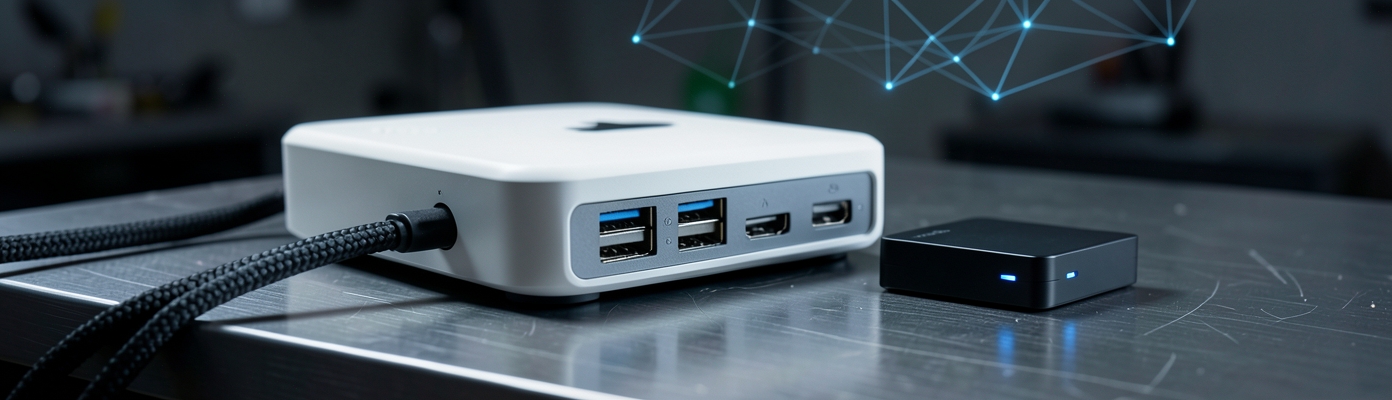
Modern “retro” and compact Mac mini dock setups often focus on aesthetics and convenience: integrated NVMe slots, multi-port expansion, and display outputs. But many buyers miss a crucial detail: bandwidth and compatibility constraints vary by dock model and by the Mac mini’s port behavior.
In real deployments, the risk isn’t just “slow transfer.” It’s inconsistent performance that can trigger timeouts in web apps used for verification, document upload, or support flows—especially during busy onboarding windows.
A practical example: imagine a student onboarding for a course. They receive a verification email, click the link, and must upload documents. If their dock has limited throughput, the upload may fail, the browser may reload, and engagement drops (or the user abandons). The next time you email them, they’re less likely to interact—hurting your engagement-based signals.
Second analogy: treat bandwidth like ferry capacity on a daily route. If the ferry can carry fewer cars, trips still “happen,” but delays accumulate. In email terms, delays can reduce how quickly users reach confirmation pages—shifting engagement metrics.
And third example: think of a dock as a shared power strip. If everything draws from the same constrained supply, one high-demand device (like external storage) causes voltage dips (slower or unstable behavior). The “power dip” can be indistinguishable from a user’s network problem—except you observe it as engagement loss.
Students often buy compact hubs and docks to connect monitors, storage, and peripherals in dorm rooms. The catch: Thunderbolt 5 vs 10Gbps USB-C limits are not interchangeable.
Key buying logic:
– 10Gbps USB-C docks can be enough for basic peripherals and light media, but they’re more constrained for storage-heavy tasks.
– Thunderbolt 5 docks can support higher throughput scenarios, including faster external NVMe access and more reliable multi-device performance under load.
If your workflow includes external storage (uploads, backups, or media rendering), throughput limits can become bottlenecks. Those bottlenecks show up as delays and failures, which degrade the user experience around time-sensitive email-driven actions (verification, password resets, confirmations).
Mac mini port placement compatibility is also practical engineering. Ports that are difficult to access, poorly aligned cable angles, or tight physical spacing can increase connector strain. Over time, this can lead to intermittent connectivity—exactly the kind of “sometimes it works” behavior that undermines web flows and engagement signals.
Intermittent I/O problems are the deliverability equivalent of random “soft bounces.” Email may still arrive, but the user’s path after clicking can fail, and the engagement outcome changes.
When evaluating docks, buyers should consider:
– Cable length and strain relief
– Whether multiple ports can be used simultaneously without blocking each other
– Whether the dock forces awkward adapter stacks
– The number of external devices likely to run concurrently during onboarding
External storage expansion is common in compact dock shopping. But storage choices aren’t just about “what connects”—they’re about how traffic competes.
– NVMe enclosure tradeoffs: typically targets better storage performance, but can concentrate throughput demand in one device.
– Hub tradeoffs: more flexible port expansion, but may share bandwidth among many devices.
A buyer’s decision should align with the dominant tasks:
– If students primarily run monitors + a keyboard/mouse, a hub may be fine.
– If students upload large files (projects, media, documents), the NVMe enclosure vs hub tradeoffs become a performance and reliability issue.
Bandwidth bottlenecks don’t directly filter email—but they directly affect whether users complete the actions that generate engagement, which then influences deliverability.
Insight: Diagnose deliverability like you troubleshoot ports
The fastest way to improve rates is to locate the failure domain. Just like you wouldn’t replace the entire network card to fix a flaky cable, you shouldn’t rewrite your whole email program when the real issue is authentication misalignment, list hygiene, or content triggers.
If you’re supporting a student environment—or your customers are largely on laptops and docks—consider how device setup influences your email-driven experiences.
What to check in the dock selection process:
– retro Mac mini dock bandwidth and compatibility with the specific Mac mini model you’re deploying
– Availability of reliable storage expansion without saturating the I/O path
– Mac mini port placement compatibility to minimize intermittent connection risk
– Whether the dock supports a clean multi-port layout for simultaneous tasks (monitor + storage + charging/peripherals)
This is especially relevant if your onboarding includes file uploads or multi-step flows within the time window after email delivery.
Treat deliverability as a system with three layers:
1. Auth (identity)
– SPF, DKIM, DMARC configured correctly
– DMARC alignment consistent with your “From” identity
2. Content (plausibility)
– Avoid sudden format changes and risky link patterns
– Maintain consistent templates and unsubscribe behavior
3. Engagement (outcomes)
– Segment by behavior
– Suppress low-quality or consistently non-engaging recipients
– Repair list hygiene to reduce bounces and complaints
A useful operational analogy: deliverability is like three locks on a door. Your email can’t enter if any lock fails. Auth is lock 1, content is lock 2, engagement is lock 3.
Bottlenecks show up as different symptoms:
– Bounce problems often correlate with list hygiene, invalid addresses, or infrastructure routing issues.
– Spam problems correlate with reputation drift, weak authentication alignment, or content triggers.
– Throttling problems often correlate with sending spikes, volume mismatches with engagement, or provider-side risk controls.
Think of it like plumbing:
– A leak (bounces) means water never makes it to the next room.
– A clogged filter (spam) means water arrives but is rerouted or contained.
– A pressure regulator (throttling) means flow is limited to prevent overflow.
In both plumbing and email, the symptom tells you where to look.
– Bounces: messages that fail delivery (hard = permanent, soft = temporary).
– Spam: messages delivered but placed into spam/junk folders or filtered away from the inbox.
– Throttling: mailbox providers reduce delivery rate due to risk signals, reputation changes, or suspected anomalies.
Actionable tests to confirm where delivery fails
Instead of guessing, run controlled tests:
1. Auth verification audit
– Validate SPF, DKIM signatures, and DMARC alignment end-to-end.
2. List quality sampling
– Identify whether bounces cluster in specific segments or time ranges.
3. Inbox placement comparison
– Use seed accounts across major providers to observe where the same message lands.
4. Cadence and volume review
– Compare delivery outcomes before/after any sending volume changes.
Forecast: How to plan deliverability for the next 90 days
Deliverability planning should follow a calendar, not a reaction loop. The next 90 days should reduce volatility and improve signal quality.
Stabilize cadence first:
– Avoid abrupt volume spikes
– Keep onboarding flows consistent
– Ensure verification and confirmation emails are fast and reliable from the user’s perspective
If your onboarding relies on device performance, coordinate expectations. A small delay can reduce engagement—especially for time-bound actions like document upload and account verification.
Scale only when segments behave predictably. Track deliverability by:
– acquisition source
– geography
– device type (when available)
– engagement level (opens/clicks/replies)
Segmentation prevents “silent failure.” Otherwise, you scale while the worst segments are dragging reputation.
Even though this article focuses on deliverability, the buyer reality is device-side bottlenecks are becoming more common—especially in compact workstation environments.
For future-proofing:
– Prefer docks with higher Thunderbolt 5 vs 10Gbps USB-C limits headroom when storage workloads are heavy.
– Choose setups that reduce cable strain and improve Mac mini port placement compatibility.
– Ensure students can do storage and display tasks concurrently without instability.
Make the storage decision based on the workload:
– Use an NVMe enclosure when file transfer, uploads, or media handling are core to the user’s flow.
– Use a hub when peripheral expansion dominates and storage tasks are minimal.
In the 90-day deliverability window, improving user completion rates on email-driven actions often improves engagement—which improves deliverability. Storage and throughput are frequently the hidden variables.
Call to Action: Improve rates with one weekly deliverability routine
You don’t need a giant program. You need a repeatable loop that catches issues early—before they become reputation problems.
Start with a compatibility-first approach:
– Confirm your dock supports the Mac mini model you deploy
– Validate retro Mac mini dock bandwidth and compatibility for the tasks users will perform
– Ensure the physical layout supports stable multi-port use
This reduces “sometimes it works” behavior that undermines onboarding and engagement.
Once per week, run a tight cycle:
1. Pick 1–2 recent messages
2. Test or review:
– bounce rate movement
– spam placement indicators
– inbox placement samples
3. Check authentication alignment status
4. Review engagement changes in the same time window
Track results in a simple sheet so you can correlate improvements (or regressions) with configuration changes.
1. Re-validate SPF/DKIM/DMARC alignment for your sending domain and “From” identity.
2. Suppress or clean the worst-performing segment (highest bounce/complaint risk or no engagement trend).
3. Keep templates stable: only iterate content that you can measure, and avoid sudden formatting or link structure shifts.
Conclusion: The fastest wins start with measuring what’s broken
Deliverability rates feel mysterious until you stop treating them like a black box. The fastest improvements come from measuring where delivery fails—auth, reputation, content triggers, or engagement outcomes—and then fixing the specific layer.
At the same time, modern user experiences depend on hardware reliability. If your customers or students interact with email-driven workflows from constrained setups, then retro Mac mini dock bandwidth and compatibility, storage choices (NVMe enclosure vs hub tradeoffs), and even Mac mini port placement compatibility become indirect but meaningful variables in the engagement signals that deliverability systems reward.
The practical way forward is simple: keep deliverability and hardware compatibility on the same checklist, and run a weekly measurement loop. In 90 days, you’ll not only improve inbox placement—you’ll understand your failure modes well enough to prevent them.