
What No One Tells You About AI Content Detectors (and Why It’s Getting Worse)— (mini PC home office setup)
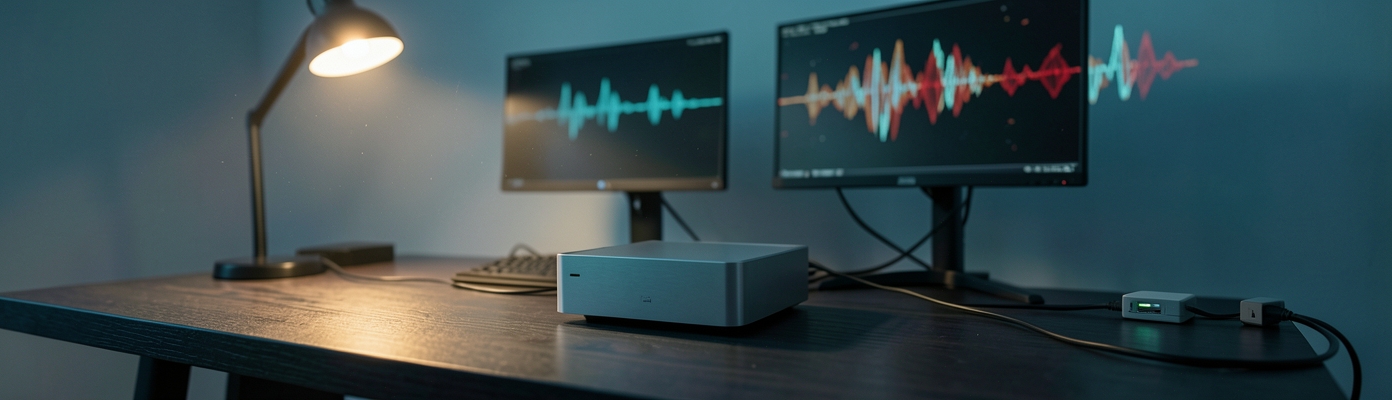
If you work from home, chances are your workflow has quietly evolved around a mini PC home office setup: a compact computer, one or more monitors, fast file transfers, and a writing pipeline that blends drafting, editing, and review. Meanwhile, AI content detectors are evolving too—often faster than writers can understand them. The uncomfortable truth is that AI detection is no longer just a “tool for spotting AI.” It’s increasingly becoming a system that can misread normal human writing habits, especially in tightly optimized home office setups.
In this post, we’ll explain why AI content detectors fail in a mini PC environment, what detectors actually measure, why “false positives” are trending upward, and how to build a more detection-aware writing flow. Along the way, we’ll tie in practical systems you may already be using—like dual monitor mini PC workflows, wired networking 2.5GbE, and office productivity hardware choices—to reduce the odds that your content gets incorrectly flagged.
—
Why AI content detectors fail in a mini PC home office setup
AI detectors don’t operate like human readers. They operate like pattern matchers wrapped in a scoring interface. That’s already a recipe for mistakes, but the risks multiply when your mini PC home office setup changes how you produce content.
A mini PC setup often compresses the workflow. You’re doing more in fewer steps: rapid drafting, quick switching between documents, and frequent copy/paste between browser tabs, note apps, and the editor. Think of it like cooking in a small kitchen: everything is within arm’s reach, which is efficient—but it also increases the chance of spilling sauce on the wrong ingredient. In the same way, detection models may “notice” your efficiency patterns and interpret them as machine-like rather than human.
Here are a few system-level reasons detectors struggle in this context:
– Workflow speed compresses revision cycles. Faster editing can cause repetitive structural patterns: the same paragraph scaffolding, similar transitions, and consistent sentence length ranges.
– Tool chaining changes text statistics. Using templates, auto-formatting, and editor features can unintentionally standardize writing in ways detectors read as synthetic.
– Multi-monitor writing can reshape reading patterns. In a dual monitor mini PC setup, it’s common to draft while referencing outlines, style guides, or source material on the second screen. The resulting text can become “source-aligned” in a way that looks algorithmic.
– Network and storage speed affects behavior. With wired networking 2.5GbE, uploads, checks, and exports may happen more frequently and quickly. That may lead to rushed “detector-first” iterations—where you repeatedly adjust outputs based on scoring feedback rather than on full human review.
A second analogy: imagine AI detection like a lie detector that reacts to nervousness, not deception. Even if you aren’t “lying,” being stressed by deadlines, frequent revisions, or unfamiliar tools can trigger the same signals. Detectors can behave similarly—reacting to writing conditions rather than writing intent.
Finally, mini PC setups are often used by people who are optimizing for productivity, not performance theatre. Those optimization choices can create surface-level regularities that models detect as “too consistent.”
—
What Is an AI Content Detector? (definition + simple test)
An AI content detector is a system that tries to estimate the likelihood that a piece of text was generated (or heavily rewritten) by AI. Most detectors don’t “see” the model behind the text. Instead, they score outputs using statistical and linguistic features—things like token probability shapes, repetition rates, perplexity-like measures, and style consistency.
A simple test you can run (conceptually) is to compare three categories of content:
1. An article you wrote longhand (or with long pauses, thinking, and manual reshaping).
2. A draft you generated quickly, then edited lightly.
3. A “lightly paraphrased” version of the same content (same structure, different phrasing).
If a detector labels #2 and #3 as “high risk” but treats #1 as “low risk,” that suggests the detector is sensitive to editing texture and structure changes more than it is sensitive to “authenticity.”
However, the bigger lesson is this: detectors often function like weather sensors. They may correctly predict “cloudy conditions,” but you still shouldn’t assume every cloudy day is the same storm. Your context—how you wrote, how you revised, how fast your workflow moves—can change the “weather” your text carries.
Detectors generally score based on text properties that correlate with machine generation or transformation. In practice, that means they often interpret:
– Unusual predictability (text that seems statistically “smooth”)
– Repetition with variation (same structure, swapped synonyms)
– Sentence distribution patterns (consistent length ranges and cadence)
– Paragraph-level symmetry (standardized transitions and headings—even when headings are absent)
– Lack of “human artifacts” (rare mistakes, idiosyncratic phrasing, personal digressions, uneven rhythm)
Now connect this to office productivity hardware. Your hardware doesn’t write the words—but it shapes your writing behavior.
For example, if your writing flow is built around rapid switching, copy/paste, and quick exports, you may produce outputs with consistent structure. That can be beneficial for readability, but it can also push text closer to what detectors flag.
A practical example: some people write using a repeatable template—introduction → key points → summary. It’s sensible from a documentation standpoint. But from a detector standpoint, it can look like a generated blueprint. It’s like wearing the same outfit to every event: it’s not “proof” of anything, but it does create visual regularity that an observer may overinterpret.
Detector scoring isn’t destiny, but it is influenced by the statistical “surface” of your content—and your setup affects that surface.
In many mini PC environments, writers manage multiple displays and devices efficiently using KVM monitor daisy chaining. While KVM and daisy chaining are primarily about display switching and cabling simplification, they can indirectly affect detector outcomes by changing how you move between contexts.
In practice, KVM monitor daisy chaining can encourage a workflow where:
– You keep one screen “in source mode” (notes, reference tabs, outlines)
– You keep the other screen “in draft mode”
– You frequently switch input focus without changing physical devices
This matters because frequent switching can change revision granularity. You might revise faster, resulting in smoother consistency—but sometimes fewer “human artifacts” like abrupt rewrites, uneven pacing, or spontaneous clarifications.
Analogy: if your workflow is a camera rig with automated focus, it produces crisp images. Great for clarity. But if every image is equally crisp, an automated system might start to treat them as “produced,” not “captured.” Similarly, consistent drafting habits can appear “too clean” to a detector looking for natural variance.
Wired networking 2.5GbE is a common mini PC feature because it makes file movement and remote workflows faster. For writing, that can mean quicker uploads, faster exports to cloud editors, and more frequent re-checks with online tools.
The systems implication: when feedback arrives quickly, you revise more often. That can lead to a cycle like:
1. Draft
2. Export
3. Detector check
4. Adjust wording
5. Re-export and repeat
Even if each adjustment is small, repeated “detector optimization” can make writing converge on patterns that detectors interpret as engineered. It’s not that you’re using AI—it’s that your iteration loop has become response-driven rather than meaning-driven.
Think of it like tuning a guitar by only listening to a digital tuner, not your ear. Eventually, it may sound correct, but it can also become over-tuned or harmonically constrained. Over time, feedback-driven changes can flatten the unique human rhythm your original draft had.
—
The trend: more “spotting” tools and stricter false positives
AI detection is moving from “one tool” to an ecosystem. As more detectors appear, platforms also integrate them into enforcement pipelines: moderation, admissions, enterprise review, publishing workflows, and compliance checks. That increases the likelihood that even weak signals become consequences.
False positives tend to worsen for three reasons:
1. Models get more sensitive. As detectors try to catch more AI content, the threshold tightens.
2. Training data isn’t uniform. Detectors learn from particular corpora and transformations that may not represent your writing style.
3. Adapters confuse context. The same text might be “low risk” in one detector and “high risk” in another because they measure different features.
Analogy: it’s like having multiple thermometers in a room, each calibrated differently. One might say “feels cold,” another might say “feels normal.” When companies act on the cold sensor, the room feels “wrong” even if people disagree.
A dual monitor mini PC setup is increasingly common because it fits office workflows: references on one screen, writing on the other. The downside is that this ergonomics often encourages consistent drafting rhythms.
Writers often:
– Start with outlines on the left monitor
– Draft quickly while reading back on the right
– Perform targeted rewrites instead of full rewrites
– Keep paragraph structures stable to reduce cognitive load
This can make text statistically more uniform—especially in how sentences connect and how paragraphs are structured.
Detectors commonly flag patterns such as:
– Templated phrasing: “In this article, we will…” or “The key takeaway is…”
– Repetitive structure: same paragraph shape across sections
– Paraphrase swaps: replacing a few words while leaving sentence skeleton intact
– Predictable transitions: the same conjunction patterns and similar sentence lengths
These aren’t “bad writing.” They’re common writing strategies—particularly for busy knowledge workers using office productivity hardware to maintain throughput.
Imagine your writing like stacking blocks. If you use the same block shape repeatedly, the tower is stable and readable. But a machine vision system might classify the tower as “built” rather than “grown.”
Human revision introduces variability: occasional overcorrections, uneven pacing, changes in tone, and small contradictions that get resolved later. Detectors often treat “smooth consistency” as suspicious, because AI output tends to be uniform.
But this is where your workflow matters. If your editor settings encourage consistency—style guides, autocorrect, grammar standardization, controlled vocabulary—the text may lose the natural irregularities detectors associate with humans.
Consistency checks are great for editing quality. The detector problem is that quality and authenticity can look similar to a scoring system that doesn’t understand your process.
The key point: writing quality tools can change the statistical footprint of text, which can increase flags even when your content is fully human.
—
The insight: reduce misflags with detection-aware writing
You can’t fully “beat” detectors reliably, because they’re probabilistic. But you can reduce misflags by making your process more verifiable and by injecting human revision signals that detectors often miss.
Detection-aware writing is not about hiding authorship. It’s about producing text with traceable intent and meaningful revision rather than rapid synonym swapping.
A useful way to think about it: detectors are like credit card fraud models—they identify suspicious patterns, not human stories. If your writing workflow generates “suspicious patterns,” you need better transaction history: drafts, revisions, and sources.
Your mini PC home office setup can support an audit-ready workflow. You already use hardware for productivity; use it for traceability.
The goal is to create artifacts that reflect real human work:
– staged drafts
– versioned edits
– source notes
– clear revision intent
1. Version history makes your narrative provable.
2. Tracked edits demonstrate revision behavior.
3. Source notes reduce “mystery phrasing.”
4. Consistent voice across devices reduces re-paraphrase churn.
5. Better organization reduces rushed drafts that can look synthetic.
Keep a tight loop between writing and evidence:
– write in increments (even short ones)
– preserve version history
– cite sources as you draft, not at the end
– use tracked edits so changes reflect meaningful rewrites
This is like keeping a lab notebook. A measurement isn’t credible without the method trail, not just the final result. Your writing is the measurement; your revision trail is the method.
In a dual monitor mini PC setup, switching contexts can accidentally shift tone. Make voice consistency part of your pipeline:
– define a style reference (“we use direct voice,” “short paragraphs,” “avoid filler”)
– keep the same template rules for intros and transitions
– avoid running multiple competing paraphrase passes
Consistency helps readers. It also helps you avoid “detector whiplash,” where different versions look like they came from different sources.
—
Comparison: AI detectors vs detector-proof “best practices”
There’s a temptation to treat detectors as a game you can “solve” with one trick. But the better approach is to align your writing with robust, human processes.
Detector-proof best practices are less about outsmarting a model and more about keeping your writing behavior legible.
With KVM monitor daisy chaining, your focus might become more stable: source content lives in one place while drafting happens in another. That reduces chaotic editing—copy/paste storms and scattered revisions.
– One-screen drafting habits often preserve paragraph intent.
– Scattered editing can lead to uneven structure and fragmented sentence goals.
The irony is that “efficiency” can sometimes increase uniformity, but stable context also supports better revision decisions. The best outcome comes from structured efficiency, not chaotic speed.
With wired networking 2.5GbE, you can move files quickly, but speed can tempt you into shallow revisions. The best practice is to use fast networking to enable more deliberate review, not just more detector-check iterations.
Instead of repeating export → check → micro-edit, use the speed for:
– longer reading passes
– source verification
– coherent restructure when needed
A good system uses speed to improve thinking quality—not to compress it.
—
The forecast: why AI detector quality keeps getting worse
AI detection quality may improve in some areas, but overall it’s likely to get worse in the ways that matter to writers—especially for routine office output. Why? Because adoption drives overreach.
Detectors are being trained and tuned for decision systems (flag or don’t flag) rather than for nuanced interpretation. That makes them more sensitive over time, with more enforcement wrappers.
Even if your hardware is excellent, mini PC workflows can create bottlenecks that influence text patterns:
Ergonomics can help you write longer—but it can also create “end-of-day velocity,” where the last pass happens quickly because you’re tired. Fatigue correlates with:
– less restructuring
– more micro-replacements
– fewer meaningful rewrites
Detectors can misread those traits as synthetic output.
With fast wired networking 2.5GbE, your tools run quickly, and cloud editors respond instantly. That can shorten the time between thought and export. If your process lacks checkpoints, you may inadvertently produce text that is “fresh” but not fully human-shaped.
Forecast implication: as network speed rises in compact workstations, misflag rates may increase for writers who iterate faster than they review. The bottleneck shifts from hardware to cognitive process—and detectors don’t measure cognition.
To avoid “everything gets flagged,” focus on process, not prompts:
1. Keep version history and tracked edits.
2. Write in meaningful increments, not one-pass drafts.
3. Use citations and source notes during drafting.
4. Avoid repeated paraphrase swaps; restructure when ideas change.
5. Test with your usual detectors once per major revision, not after every micro-edit.
This reduces the “pattern convergence” that can happen when you repeatedly adjust text to match a scoring model.
—
Call to Action: audit your mini PC setup and your writing flow
If you’ve been flagged unexpectedly, don’t assume the problem is your intelligence or your writing. Audit your system like you would audit a network: find where delays, loops, and automation shape outputs.
– Save outlines and drafts
– Record sources as you write
– Use tracked edits (or at minimum, clear version naming)
– Define where drafts start and where edits happen
– Maintain the same template logic for intros and structure
– Ensure the second screen is for reference, not for rapid paraphrase mining
– Run a check after substantial revision
– Compare “first draft vs final draft” results
– If you see consistent high-risk scoring, revise structure—not just wording
—
Conclusion: build a reliable home office workflow despite worse detectors
AI content detectors are becoming stricter, more numerous, and less forgiving of normal office writing patterns—especially in optimized environments like a mini PC home office setup with dual monitor mini PC workflows, fast iteration through wired networking 2.5GbE, and streamlined hardware operations like KVM monitor daisy chaining.
The practical takeaway is systems-oriented: don’t only improve text. Improve the process that creates text. Build an audit-ready workflow with version history, tracked edits, source notes, and stable writing structure across monitors. That’s how you reduce misflags even as detector quality keeps sliding toward harsher, pattern-based enforcement.
– Treat writing like an engineering workflow: iterate with checkpoints.
– Use speed to enable review depth, not just faster exports.
– Keep refining your pipeline so your final outputs reflect human revision behavior, not just human intent.
If detectors are getting worse, your advantage is to make your workflow clearer—one verifiable revision at a time.