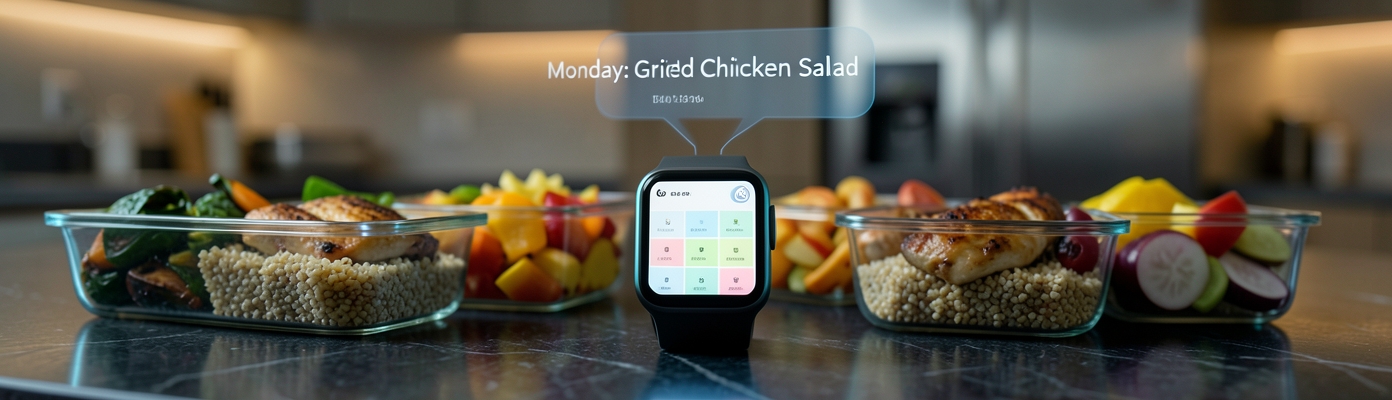

How Busy Parents Are Using Meal Prep Systems to Stop Weeknight Chaos: Pixel Watch 5 on-device Gemini low latency
Intro: Pixel Watch 5 on-device Gemini low latency for calmer nights
Weeknights have a way of turning even the best intentions into a stressful scramble: someone needs a snack, dinner is “almost” planned, and the family calendar looks like a chaotic whiteboard. Meal prep systems help solve the dinner problem, but the deeper win for busy parents is reducing daily friction—so the week doesn’t feel like a series of emergencies.
That’s where Pixel Watch 5 on-device Gemini low latency enters the conversation. When wearable AI can respond instantly—especially when Wi‑Fi is unavailable—meal prep stops being a vague “someday” strategy and becomes a concrete, step-by-step rhythm. Add fast on-device features like Raise to Talk offline AI, plus Gemini Intelligence Proactive Suggestions with an emphasis on proactive suggestions privacy, and you get a realistic way to translate meal plans into actions during the busiest moments.
Think of it like building a “kitchen autopilot”:
– Meal prep provides the map (what to cook, when, and how much).
– A watch with on-device AI provides the steering (what to do next, right now, with minimal waiting).
In this guide, we’ll connect meal prep systems to wearable edge intelligence—so your evenings feel calmer, not improvised.
Background: Meal prep systems and wearable AI basics
Before diving into tactics, it helps to align two concepts: meal prep systems and wearable AI basics. When you understand both, you can design routines that actually stick.
A meal prep system is more than cooking in bulk. It’s the repeatable workflow that turns planning into consistent execution—usually combining:
– A weekly planning step (menus, portions, substitutions)
– A shopping list process (ingredients, quantities, pantry checks)
– A cooking day routine (batch cooking, roasting, chopping, portioning)
– A storage strategy (labeling, containers, freezer/fridge zones)
– A weekday serving plan (mix-and-match meals, reheat instructions, “dinner in minutes” rules)
For busy households, the goal is to eliminate decision fatigue. If you’ve ever stared into the fridge asking, “What can we eat?” after a long day, you already know why this matters.
A meal prep system is like a railway schedule: trains still have to arrive, but the route and timing reduce chaos. It’s also like a checklist for pilots—you don’t reinvent procedures mid-flight. And it resembles a smart thermostat: it doesn’t “guess” each time; it follows a consistent control loop.
Parents don’t test AI features because they’re chasing novelty—they test them because reliability matters. Weeknights come with interruptions, dead zones, and unreliable networks. That’s why parents value Raise to Talk offline AI: an ability to get help when you’re away from Wi‑Fi or the connection is slow.
In practical terms, offline-capable AI helps in moments like:
– Someone needs an answer now (e.g., “How long do these need to bake?”)
– You’re in the kitchen but the router is far away
– You’re juggling multiple devices and don’t want to open apps
It’s the difference between a helpful assistant and a sometimes-useless app. When latency is low, the watch feels like part of your workflow instead of an extra task.
A watch that responds quickly needs enough on-device compute. The Snapdragon W5 Gen 2 Accelerated chip is designed to enable faster local processing, which is essential for Pixel Watch 5 on-device Gemini low latency experiences.
When AI runs on-device (or more of it runs locally), the watch can:
– Reduce waiting time compared to cloud-dependent prompts
– Keep responses consistent even with poor connectivity
– Support more real-time interactions—like “what should I do next?” during cooking
You can think of it like switching from a remote-control robot to one with an onboard brain. The second option can react instantly to obstacles. In the same way, on-device intelligence can respond immediately during time-sensitive routines—especially when parents are managing heat, timing, and hungry kids.
Trend: Pixel Watch 5 on-device AI for proactive meal planning
The shift happening now is from reactive to proactive. Traditional meal prep is often “scheduled,” but wearable AI pushes it toward “guided”—with the watch nudging you at the right moment, not just reminding you later.
A good meal prep system doesn’t just help you cook—it stabilizes the whole household rhythm. Here are five core benefits:
1. Less weeknight decision-making
– You’re not choosing dinner under stress; you’re executing a plan.
2. More predictable nutrition and portions
– Repeatable ingredients and servings help reduce “snack chaos.”
3. Time savings with fewer cooking starts
– Pre-chopped, pre-portioned components shorten weekday cooking time.
4. Reduced food waste
– Planning uses what you already have and reduces forgotten produce.
5. Easier family coordination
– Everyone knows what to expect—fewer arguments and fewer “I’m still hungry” moments.
An analogy: meal prep is like shopping for groceries once instead of daily—you’re buying stability in bulk. It also functions like a software release pipeline: you do the heavy lifting ahead of time so the “production” (weeknights) runs smoothly.
One of the most compelling trends is using Gemini Intelligence Proactive Suggestions to turn a meal plan into timed actions. Instead of manually checking your phone, you get prompts that align with your cooking steps.
However, proactive assistance only works if families trust it. That’s why proactive suggestions privacy matters. Parents want to know:
– What is processed on-device vs externally
– How prompts relate to their routine
– Whether sensitive health or household context is protected
With wearable edge AI, privacy is generally improved when more processing occurs locally—because raw data doesn’t need to travel constantly to the cloud.
A useful mental model: think of privacy as a fence around a backyard garden. It doesn’t stop growth; it prevents unwanted browsing. And for parents, that trust is what makes proactive nudges sustainable rather than annoying.
Even the best meal prep plan can derail when the watch needs connectivity. That’s why Raise to Talk offline AI is such a practical advantage.
Imagine you’re mid-cook:
– The oven timer is going off.
– Your hands are messy.
– Someone asks a question—like “Can we swap proteins?” or “Do we have enough rice?”
If the watch can respond immediately offline, it behaves like a reliable kitchen assistant. It’s like having a paper recipe card that never loses signal—except it can adapt to your specific setup.
Meal prep often intersects with health routines (blood pressure tracking, insulin resistance trends) and family schedules. That means security isn’t theoretical.
For wearable edge AI security, consider the following expectations (and what to verify in settings):
– On-device processing for low-latency responses
– Clear controls over suggestions and what triggers them
– Protection for health-related context, especially in shared household scenarios
In future-proof terms, the best systems will let parents decide how much the watch “knows” and when it can act. The goal is empowerment, not surveillance.
Insight: Match meal prep workflows to Pixel Watch 5 capabilities
Meal prep systems succeed when they fit real life. The next step is aligning them with what Pixel Watch 5 on-device Gemini low latency actually does well—so your routine becomes smoother, not more complex.
Low latency matters because cooking is time-sensitive. Cloud-dependent prompts add friction—especially if you’re dealing with multiple devices, poor signal, or just the reality of busy hands.
Here’s the core difference:
– On-device low latency: “Do X now” happens instantly.
– Cloud-dependent prompts: “Wait for the app” becomes a pause in your workflow.
That pause is costly during dinner. It can mean food overcooks, kids get impatient, and parents get flustered.
In practical terms, “wait for the app” creates a cognitive break. You’re not just waiting for an answer—you’re resetting your focus. On-device behavior reduces that interruption.
Analogy #1: It’s like driving. Cloud prompts are like GPS that reroutes every time you take a slightly wrong turn. On-device guidance is like steering that corrects in real time.
Analogy #2: Think of it like a video call vs face-to-face chat. If audio lags, you stop trusting the conversation. If AI answers instantly, you trust it as part of the routine.
Instead of copying a meal plan into notes, design it as watch prompts tied to the meal prep timeline:
1. Prep day prompts
– “Start batch cook step 1”
– “Portion proteins into labeled containers”
– “Preheat oven for the tray timing you planned”
2. Weekday cooking prompts
– “It’s reheat time—follow steps A to C”
– “If you want to swap sides, use the backup option”
– “Set timer for reheating and garnish”
3. Shopping follow-ups
– “You’re low on: X”
– “Add to list for next week”
When the watch can deliver Raise to Talk offline AI guidance, these prompts should still work even when connection is unreliable. That’s how you move from a plan that works “on paper” to one that works during dinner.
Parents often juggle both meals and health routines. To keep systems future-resilient, set boundaries for what the watch can do automatically.
A good approach:
– Allow reminders for meal prep steps
– Keep health insights in review mode (e.g., monthly summaries)
– Require confirmation for actions that could affect medical interpretation
This is where wearable edge AI security becomes a design principle: edge processing helps, but user-controlled triggers and clear privacy settings make the difference between helpful and risky.
Future resilience means your routine still works as devices evolve and families change. The best setups will remain understandable and controllable.
Forecast: Next-gen family routines with proactive offline intelligence
Where is this going? The next wave blends proactive planning, stronger offline capability, and better long-term household insights.
Expect improvements in:
– More tasks running locally to reduce dependence on the cloud
– More granular privacy controls for proactive suggestions
– Stronger authentication and secure-by-default settings
The future-friendly idea: security that is continuous, not a one-time setup. Just like you update apps, you should also be able to update AI behavior boundaries safely.
Meal prep systems will increasingly act like an ongoing “planning engine” rather than a weekly manual chore.
Within the next phase of wearable AI, you can expect:
– Shopping lists that update based on actual usage patterns
– Cooking step prompts that adapt to what you already prepared
– Faster “what should we eat tonight?” answers with minimal taps
In a sense, the watch becomes a household operations manager, but with edge intelligence that keeps it responsive.
Long-term health tracking is becoming more integrated into routine planning. Monthly summaries—such as trends in blood pressure—help families focus on actionable insights rather than constant monitoring.
This matters for meal prep because dietary choices and cooking routines influence health habits. When insights arrive on a sensible cadence (not constant nagging), families can adjust gradually—without burnout.
A realistic forecast: meal plans will become more personalized over time, with watch-guided education and routine-friendly recommendations, while still respecting proactive suggestions privacy boundaries.
Call to Action: Set up your meal prep + watch prompt routine
You don’t need a perfect system. You need a repeatable one that reduces friction quickly.
Pick a simple starting configuration:
1. Choose one meal prep system
– Example: batch cook proteins + prep two starch sides
2. Pick one prep day
– Many families succeed with a single 2–3 hour block
3. Select one watch action
– Example: “Raise to Talk offline AI” for next-step reminders during cooking
Keep it small. Like learning to drive, you master the basics first (lane discipline and smooth turns) before complex maneuvers.
Measure outcomes over one week. Focus on friction points, not just whether you cooked.
A simple tracking method:
– Rate weeknight stress from 1–10 each night
– Note how often you deviated from the plan
– Count how many times you needed to “figure it out” mid-cook
If you set up prompts with Pixel Watch 5 on-device Gemini low latency, you should notice fewer delays—because the watch can guide you instantly, including during offline moments.
Conclusion: Meal prep + Pixel Watch 5 low-latency AI = smoother evenings
Busy families don’t need more “tips.” They need fewer interruptions, clearer next steps, and systems that remain reliable when Wi‑Fi drops and energy is low. Meal prep systems provide the structure; Pixel Watch 5 on-device Gemini low latency provides the guidance that keeps execution on track.
With features like Raise to Talk offline AI, proactive help via Gemini Intelligence Proactive Suggestions, and a focus on proactive suggestions privacy and wearable edge AI security, the watch becomes more than a gadget. It becomes part of your dinner workflow—like an always-available co-pilot.
The future implication is straightforward: next-gen family routines will be more automated, more offline-capable, and more personalized—while still giving parents control. If you start small today—one prep day, one system, one watch prompt—you’ll be positioned to benefit from that evolution right away.