
How Doctors Are Using Apple AI innovations to Catch Sleep Apnea Earlier—Before It’s Too Late
What Is Sleep Apnea and Why Earlier Detection Matters?
Sleep apnea is more than a “snoring problem.” It’s a recurring breathing disorder in which airflow repeatedly stops and restarts during sleep. For many people, the condition develops gradually and remains undetected for years—until daytime fatigue, cardiovascular strain, or metabolic complications push them to seek care. Earlier detection matters because sleep apnea is both common and treatable, yet the longer it goes unrecognized, the more opportunity it has to disrupt sleep architecture, oxygen levels, and overall health.
From a clinician’s perspective, early intervention is like catching a leak before it floods the house: the repair is simpler, less expensive, and prevents downstream damage. Wearable technology paired with Apple AI innovations is increasingly positioned as that early “alarm system,” helping clinicians identify likely apnea patterns sooner—potentially before a patient’s quality of life deteriorates or comorbidities become harder to reverse.
Sleep apnea is a sleep-related breathing disorder characterized by repeated episodes of airflow reduction (hypopnea) or complete cessation (apnea) during sleep. These events often lead to oxygen desaturation and fragmented sleep, producing symptoms such as loud snoring, choking or gasping during sleep, morning headaches, and excessive daytime sleepiness.
Clinically, sleep apnea is frequently discussed in two categories:
– Obstructive sleep apnea (OSA): airway collapse during sleep (most common).
– Central sleep apnea (CSA): reduced respiratory drive from the brain’s control systems.
Regardless of type, the core issue is the same: disrupted breathing creates a physiological stress response night after night.
Early warning signs are typically a mix of patient-reported symptoms and caregiver observations. Doctors often look for patterns rather than single events—because sleep apnea severity can vary across nights and life stages.
Common early indicators include:
– Loud, habitual snoring (especially with observed breathing pauses)
– Witnessed apneas or gasping/choking during sleep
– Unrefreshing sleep despite adequate hours in bed
– Morning headaches and dry mouth
– Daytime sleepiness, impaired concentration, or mood changes
– Increased nocturnal urination (a less specific but helpful clue)
– Hypertension that is difficult to control
There are also “silent” signals. Some patients do not perceive excessive sleepiness; instead, they present with hypertension, atrial fibrillation risk, or metabolic issues. In that sense, sleep apnea can behave like a slow-burning background hazard—not always dramatic, but steadily consequential.
In practice, clinicians also consider risk factors that raise suspicion even before symptoms become obvious:
– Neck circumference and craniofacial anatomy
– Obesity or rapid weight gain
– Family history
– Alcohol or sedative use
– Smoking history
– Menopause/post-menopausal changes (for many patients)
– Comorbid conditions such as diabetes or heart disease
As wearable monitoring improves, earlier detection becomes less dependent on patients recognizing symptoms and more dependent on objective signals—especially when AI integration can help interpret complex sensor data.
How Apple AI innovations Enable Smarter Sleep Monitoring
The promise of earlier sleep apnea detection hinges on two capabilities: sensing (capturing physiologically relevant signals) and interpretation (turning noisy data into clinically meaningful insights). Apple AI innovations are increasingly relevant because they can bridge this gap—helping translate wearable measurements into actionable, patient-ready guidance for clinicians and patients alike.
Rather than treating sleep as a single binary outcome (“apnea present” vs. “absent”), modern monitoring aims to flag suspicious episodes and trends. That’s where intelligent interpretation becomes crucial: the same signal can mean different things across people, device placement, movement, or baseline health.
Apple’s ecosystem has been trending toward deeper health monitoring—using sensors and on-device processing to produce features that support sleep tracking. While the exact capabilities vary by device generation, the general approach often includes:
– Heart rate variability (HRV) and resting heart rate trends
HRV can reflect autonomic nervous system changes that occur during fragmented sleep or stress responses.
– Accelerometer-based motion context
Movement patterns help distinguish sleep phases and reduce false interpretations caused by shifting or device tilt.
– Low-light, passive measurement behaviors
Sleep monitoring can occur without the user actively managing the system—important for real-world adherence.
– Sleep stage estimation and night-level summaries
Even when staging isn’t perfect, trends across nights can inform suspicion and prompt further evaluation.
Think of these device features like having multiple “cameras” on a scene. One sensor sees heart-related changes; another captures motion context. Together they create a more complete picture—reducing the odds that a single imperfect view will lead to a wrong conclusion.
Clinical workflows often fail not because clinicians lack knowledge, but because communication and follow-through are hard. Siri AI and AI integration can improve this part of the pipeline: turning complex health signals into understandable, patient-ready next steps.
In a sleep apnea context, patient-ready insights may include:
– Summarizing nightly changes and trends in plain language
– Encouraging patients to log symptoms (e.g., morning headaches, fatigue) aligned with monitoring dates
– Prompting questions that help clinicians interpret context (“Did you feel unusually tired this morning?”)
– Providing guidance on when to schedule follow-up testing based on flagged patterns
A useful analogy here is a GPS navigation system. The data (sensor signals) is like raw road measurements; AI integration is like the map that tells you where the driver should go next. It doesn’t replace driving expertise, but it makes the next action clearer.
Siri AI, when implemented in a privacy-first and user-controlled manner, can also support adherence by reducing friction. If patients feel the system “talks to them” in a helpful way—rather than forcing them to interpret dashboards—they’re more likely to engage consistently.
Traditional diagnosis commonly relies on sleep studies—ranging from in-lab polysomnography to home sleep apnea testing. These remain important because they provide clinician-grade measurement under controlled conditions. However, they have limitations:
– Access delays (availability and wait times)
– Variable adherence (patients may not complete home tests properly)
– Limited frequency (often one-off or infrequent testing)
– Cost and logistics (especially for repeated monitoring)
Wearables with Apple AI innovations aim to complement—not immediately replace—formal testing. The key difference is coverage and frequency. Wearable monitoring can potentially flag patterns earlier and more often, acting like a smoke detector rather than a fire extinguisher.
Another analogy: traditional sleep testing is like taking one medical X-ray at a critical moment. Wearables, by contrast, are like having a continuous video feed that helps you spot recurring problems and choose the best time to request a high-resolution diagnostic image.
In the near term, the most realistic clinical role for wearable AI is to:
– Identify high-suspicion candidates
– Prioritize which patients should undergo formal testing
– Support monitoring after diagnosis and treatment initiation
This shift could reduce the time between symptoms and diagnosis—one of the biggest gaps in sleep apnea care.
Wearable Tech Trend: Earlier, Noninvasive Detection Workflows
The broader wearable health trend is moving toward earlier, noninvasive detection workflows. In sleep apnea, this means integrating passive monitoring into a pathway that can trigger timely clinical review. The goal is not simply to generate data—it’s to convert data into earlier clinical action.
A key advantage of noninvasive monitoring is scalability. Clinics can’t run full sleep studies for everyone who snores. But they can review risk flags from wearables—especially when AI-driven pattern recognition improves signal quality and reduces false alarms.
Device ecosystem updates often matter because they refine developer tools, privacy controls, and on-device processing efficiencies. Upcoming platform changes—such as those highlighted during WWDC 2026—could accelerate health AI by enabling:
– More capable on-device inference (faster, privacy-preserving)
– Improved sensor data handling and health data frameworks
– Better integration pathways between apps, clinical sharing, and user consent
– Enhanced accessibility and user engagement patterns for monitoring adherence
While clinicians ultimately care about validated outcomes, platform-level upgrades can accelerate the cycle of innovation: faster prototyping, more consistent data capture, and better integration into real-world care settings.
Sleep apnea detection is fundamentally pattern recognition under noise. Wearable sensors capture partial information affected by motion, sleep position, body habitus, and individual physiology. AI integration helps by learning which combinations of signals most often correlate with apnea-like events.
In a practical sense, algorithms can look for:
– Rhythmic changes in heart rate and HRV associated with apneic episodes
– Respiratory-effort proxies derived from signal fluctuations (depending on sensor suite)
– Nighttime variability patterns that suggest sleep fragmentation
– Contextual cues distinguishing sleep from restlessness
An example analogy: detecting apnea patterns is like identifying a specific bird call in a noisy forest. A human listener might miss it, but a trained model can recognize subtle features—especially when multiple sensor “microphones” are contributing.
Wearables can support earlier detection through multiple mechanisms:
1. Trend detection across multiple nights rather than relying on one test snapshot
2. Noninvasive monitoring that reduces barriers to starting evaluation
3. Signal contextualization using motion and sleep-stage related cues
4. Risk flag generation that prompts timely clinician review or follow-up testing
5. Treatment monitoring support to confirm improvement and detect relapse
When these mechanisms are combined with clinician interpretation, earlier diagnosis becomes more feasible—especially for patients who otherwise would not have sought testing until symptoms worsened.
(Already covered above to maintain the provided outline structure.)
Insight: How Doctors Interpret Wearable Data for Diagnosis
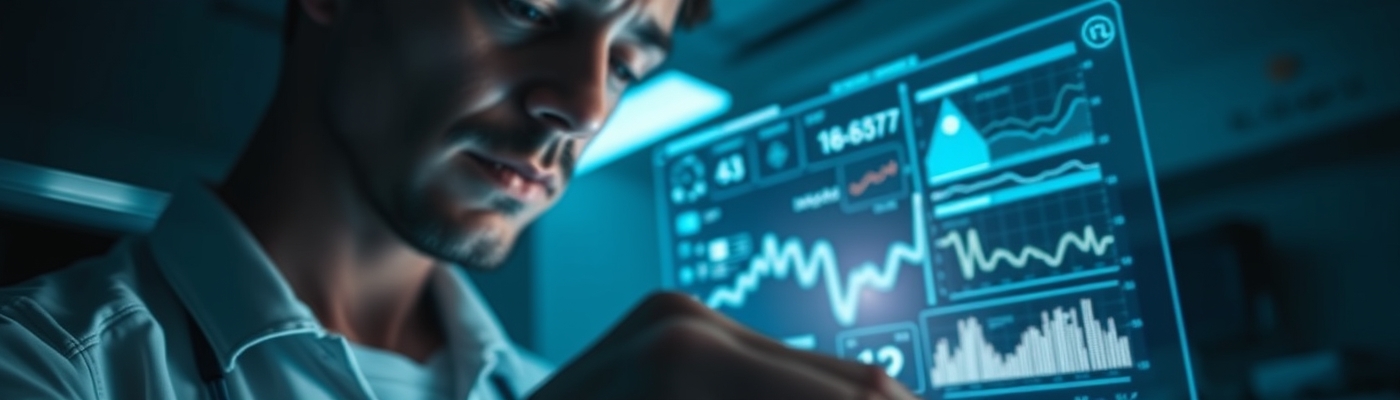
Wearables produce signals; clinicians produce diagnoses. The difference is interpretation. Doctors must decide which wearable patterns are meaningful, which are confounded by comorbidities, and which warrant formal testing.
This is where Apple AI innovations can be particularly valuable: not by “replacing” clinical judgment, but by structuring the workflow so clinicians can review the right evidence at the right time.
A typical workflow—simplified for clarity—might look like this:
– Data capture overnight using wearable sensors
– On-device or app-level preprocessing to clean artifacts (movement, irregular contact)
– AI scoring to estimate likelihood of apnea-related events or sleep fragmentation patterns
– Flagging episodes and summarizing relevant nights
– Clinical review where a clinician confirms risk and decides next steps
The intent is to convert continuous monitoring into digestible clinical flags. Consider it a triage system. Just as an emergency room sorts patients by severity before resources are allocated, wearable AI can prioritize who needs deeper testing.
Data quality determines how reliable the AI output can be. Features that support better monitoring can include:
– Stable sensor contact and calibration logic
– Motion-aware interpretation (reducing false positives from restlessness)
– Sleep-stage context to avoid interpreting awake behaviors as apnea events
– Consistent night summaries that show trends rather than isolated anomalies
Clinicians care about consistency because unreliable data can produce both false reassurance and unnecessary anxiety. Good Apple device features help reduce both.
A dashboard-only approach assumes the patient will understand what to look for and when to contact a clinician. In contrast, Siri AI prompts can guide patients in a structured way—for example:
– Dashboard-only: “Here are trends.” (The patient must interpret and decide what matters.)
– Siri AI prompts: “Your sleep shows patterns consistent with possible breathing disruptions. Consider logging morning symptoms and scheduling a review.”
This difference matters because sleep apnea is often underreported. When AI supports patient context capture (fatigue, headaches, witnessed breathing pauses), it improves clinical interpretability.
Forecast: What’s Next for Wearable Sleep Apnea Care
The next phase is integration: AI that not only detects patterns, but connects detection to action across the healthcare journey. That includes clinic workflows, patient follow-up, and long-term monitoring after treatment.
In future care models, earlier detection could become a routine part of preventive health—especially for higher-risk groups such as patients with hypertension, obesity, or cardiovascular disease.
A realistic forecast involves multi-layer coordination:
– Wearables generate risk flags and summaries for clinicians
– Apps facilitate consented data sharing and standardized reporting
– Clinics use AI-supported triage to decide who gets formal sleep testing
– Follow-up plans adjust based on treatment response (CPAP adherence, positional therapy, weight interventions)
This is where AI integration becomes systemic rather than incidental. Instead of “one app collecting data,” the ecosystem becomes a care loop—monitor → flag → confirm → treat → monitor again.
An analogy: it’s like moving from individual thermometers to a home-based monitoring network connected to a doctor’s clinic. The value isn’t only measurement—it’s coordinated response.
Earlier identification and intervention are expected to improve multiple outcomes:
– Reduced time to diagnosis and treatment initiation
– Improved symptom control (less daytime sleepiness and better sleep quality)
– Potential cardiovascular risk mitigation by addressing oxygen desaturation and sleep fragmentation
– Better monitoring of treatment effectiveness and adherence
However, there are also implementation challenges: ensuring validated algorithms, managing false positives, and maintaining patient trust. In the long run, the most successful models will combine wearable data with clinical confirmation while keeping communication clear and privacy-preserving.
In the coming years, we can plausibly expect:
– More refined AI scoring models tailored to broader populations
– Better personalization through longitudinal baselines
– Expanded platform support following WWDC 2026-style health AI advancements
– Stronger clinician-facing tools that translate signals into actionable decisions
Call to Action: Take Action With Your Next Sleep Check
If you suspect sleep apnea—or if you’ve noticed worsening snoring, fatigue, or morning headaches—the best next step is to prepare for a clinical conversation. Wearables can help, but only if the data and context are presented clearly.
Before your appointment, gather:
– A brief timeline: when symptoms started and how they’ve changed
– Notes on daytime impact: concentration, sleepiness while driving or working
– Details of sleep environment: partner observations, snoring intensity, witnessed apneas
– Wearable summaries: dates of monitoring nights, any AI flags, and trends in sleep quality or heart-related metrics
Think of it like bringing a “case file.” Clinicians can move faster when they aren’t forced to infer everything from memory.
If your wearable ecosystem supports it, export or document:
– Nightly trends (not just one night)
– The presence of flagged patterns
– Any notable confounders (alcohol before bed, illness, disrupted sleep)
When you meet your clinician, you can reference Apple AI innovations thoughtfully—without assuming the tool is a diagnosis.
Steps:
1. Explain your symptoms first (the clinical story matters most)
2. Share your wearable data summaries and mention any flagged episodes
3. Ask how they interpret the patterns relative to your risk profile
4. Request appropriate next steps (e.g., in-home or lab sleep testing) if warranted
5. Discuss follow-up monitoring, especially if you already use CPAP or other interventions
The goal is collaborative decision-making: wearables provide early signals; your clinician confirms and plans care.
Conclusion: Earlier Sleep Apnea Detection Saves Health
Sleep apnea can quietly damage health long before patients recognize the pattern. The shift toward earlier detection—supported by Apple AI innovations, Apple device features, Siri AI, and deeper AI integration—offers a practical pathway to identifying high-suspicion cases sooner, prompting timely clinical evaluation rather than reactive troubleshooting.
In the best future scenario, wearables become an early-warning layer across everyday life, while clinicians use that information to confirm diagnosis and guide treatment. That combination can shorten the time to care, improve outcomes, and transform sleep apnea from a long-delayed discovery into a condition addressed early—before it’s too late.