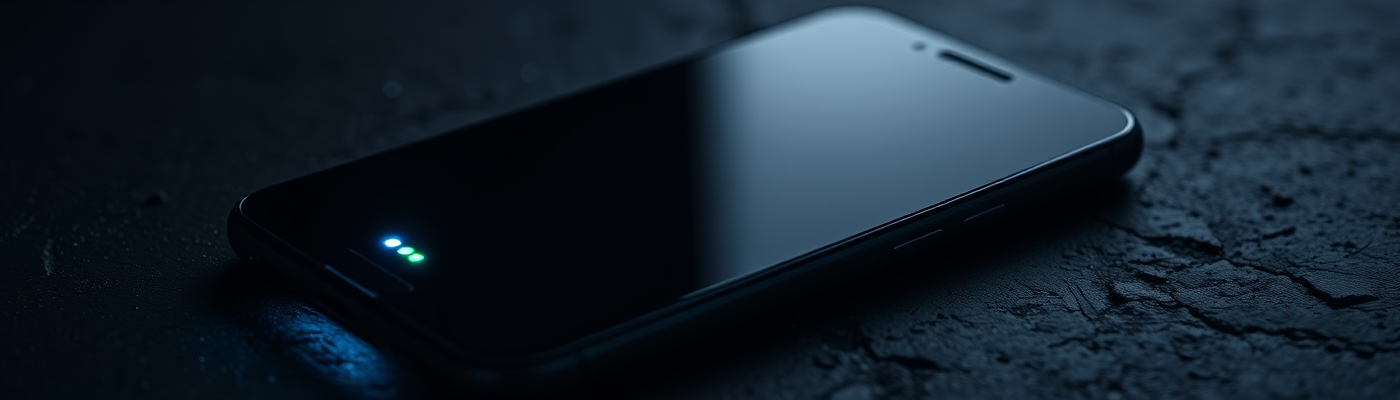

What No One Tells You About SEO Automation—And How It Can Backfire (Notification LEDs)
Why Notification LEDs Matter for Smartphone Usability
If you’ve spent years optimizing pages, fixing crawl issues, and tuning content workflows, you probably already know the promise of automation: faster publishing, fewer manual mistakes, and consistent execution. But there’s a classic pitfall hiding in plain sight—automation can start to behave like an intrusive interface element.
That’s where Notification LEDs are a surprisingly useful metaphor. When notification LEDs get it right, they deliver information in a calm, at-a-glance way. When they get it wrong, they become noise—distracting, misleading, or simply ignored.
To understand why this matters for SEO automation, we need to connect the dots between smartphone usability, notification behavior, and how automated systems can overwhelm users (or teams) with signals that don’t actually help decisions.
Notification LEDs are small indicator lights on a device that signal incoming events—like messages, missed calls, alarms, or app updates—typically without requiring the user to unlock the phone.
They’re valuable because they reduce the “interaction cost.” Instead of opening an app, checking the lock screen, or scanning the home screen, the user can interpret an external visual cue. In usability terms, they’re a form of ambient feedback: low-effort, brief, and often meaningful.
A practical way to think of them:
– Imagine a shop door with a bell. You don’t need to stare at the door to know when someone entered.
– Compare it to a dashboard indicator light on a car. You don’t drive by reading every label—you glance, interpret, and respond.
– Think of a lighthouse. It doesn’t carry your destination inside it, but it tells you where attention should go.
Many modern phones moved away from dedicated indicator lights toward Always-On Display (AOD) modes. AOD shows information on-screen continuously or near-continuously. It can be helpful, but it also changes the “attention pattern” of the user.
Here’s the core user interface trade-off:
– Notification LEDs deliver brief, peripheral signals.
– AOD delivers persistent, screen-based signals.
This difference affects smartphone usability in two competing directions: distraction versus clarity.
AOD can feel convenient because information appears immediately where the user already looks—on the screen. But that same convenience can become a subtle cost: attention is pulled repeatedly, even when the notification isn’t urgent.
Notification LEDs, in contrast, generally follow a “less often, more targeted” rhythm. They’re like a short ping in your peripheral vision rather than an ongoing display.
For SEO automation, the lesson is straightforward: signals should be designed for relevance and timing, not just visibility. If your automation produces output that’s “always on,” you may increase throughput while quietly decreasing effectiveness.
If you want a reminder from mobile technology experience, think of the difference between:
– A single clarifying ping that appears when action is needed (notification LED style),
– Versus a constant feed that demands context switching (AOD style).
Now let’s rewind—because the reason notification LEDs disappeared (at least in their classic form) matters for how we judge automation today.
Background: How Mobile Technology Moved Past LEDs
When notification lights became less common, the industry didn’t do it because LEDs were “wrong.” It was because mobile technology was optimizing for a different center of gravity: richer displays, more customization, and a lock screen that could do much more than a tiny light.
Part of the shift also came from user expectations. As smartphone screens improved, users began to expect more information on demand, in more places, and with better visuals.
In 2025, the idea of returning to LED-like signaling gained new momentum through the concept of Pixel 11 features such as “Pixel Glow.”
The framing is interesting: instead of simply resurrecting old-school notification lights, the goal is a hybrid approach—small, colored cues that communicate updates without forcing the user into constant screen-checking.
In other words, the “Pixel Glow” idea is not only about aesthetics. It’s about interaction design—a signal that’s present enough to be useful but subtle enough to avoid turning the device into a distraction engine.
To place this in context, consider what Pixel 11 features symbolize in the larger arc of mobile technology design:
– Early phones had minimal display capabilities, so indicator lights mattered more.
– As display tech improved, AOD and richer lock screens became more capable.
– Now, designers are revisiting the signal problem with modern expectations—where speed, battery awareness, and usability all collide.
This is where the analogy becomes useful for SEO automation. When teams optimize only for “more output,” they often forget what notification LEDs originally solved: reducing friction and keeping attention focused on what matters.
A quick history lesson: devices used to rely more heavily on dedicated beacons because they were efficient and easy to interpret. As displays improved, UI designers wanted richer context on the lock screen—so AOD expanded.
The catch is that “richer context” can drift into “always demanding attention.”
AOD is not universally loved, even if many users enjoy it. Two limitations tend to stand out:
1. Battery impact: a screen that’s continuously present can cost power, even with optimizations.
2. Focus disruption: the more a screen stays visually active, the more it competes with attention.
This mirrors a common SEO automation failure mode: automation that continuously generates alerts, tasks, rewrites, and “optimizations” can become battery drain for the human brain. Teams stop feeling clarity and start feeling noise.
If you’ve ever had a workflow that constantly nudges you with dashboards, suggestions, and auto-changes—without improving the user outcome—you’ve experienced a version of AOD’s focus problem.
Now let’s look at why the return of LED-like signals in 2025 signals something important: feedback loops are coming back, but with better intent.
Trend: The Comeback of Notification LEDs in 2025
The renewed interest in Notification LEDs suggests that the industry is searching for a balance: enough signal to act, not so much that it becomes disruptive.
In 2025, “notification signaling” is evolving rather than reverting. The goal is not to cling to old hardware behavior—it’s to modernize the principle: minimal disruption, maximum interpretability.
The most talked-about comeback theme is that devices may offer color-coded cues—“Pixel Glow”—to communicate categories of notifications.
Color coding has a usability advantage: it can help users categorize quickly. Even if the user doesn’t know the exact content, they can often infer urgency or type.
The reason teams care about this isn’t because colored lights are pretty. It’s because the design aims for minimal disruption:
– The user should notice something changed.
– The user should not have to process it deeply unless action is required.
– The UI should reduce the need to unlock or scan repeatedly.
A good analogy: it’s like a recipe card with clear steps versus a blog post that requires scrolling to find the oven temperature. Both contain information, but one respects your attention.
Another example: think of transit systems. Some stations use quiet signage only when you need it; others flood commuters with constant visual prompts. The difference determines whether people feel guided or overwhelmed.
If you want to translate LED thinking into any system—mobile or SEO automation—you can borrow a checklist:
– Is the signal at-a-glance and immediately interpretable?
– Does it trigger only when the notification is actionable?
– Does it avoid constant visual presence (or constant workflow interruptions)?
– Does it reduce steps instead of adding new ones?
– Does it support accessibility considerations for mobile technology users?
Visual alerts aren’t automatically accessible just because they’re visible. A usability-aware approach typically includes:
– Sufficient contrast for visibility in different lighting conditions
– Compatibility with user preferences (reduced motion, screen brightness habits, and notification settings)
– Meaningful mapping between signal type and notification category
– Alternatives when visual cues aren’t reliably perceivable
For SEO automation, this becomes a larger principle: automation should not assume one “signal channel” fits all stakeholders—searchers, marketers, editors, and developers. If your automated system only communicates through dashboards or alerts that some people ignore, it’s functionally the same as an unreadable LED.
The comeback of notification LEDs suggests users want better-managed attention, not more information.
And that’s exactly where SEO automation can backfire—because automation often increases volume while trying to claim it improves outcomes.
Insight: How SEO Automation “Backfires” Like Notification LEDs
SEO automation can fail in ways that feel unrelated—until you compare the mechanics to user attention.
Notification LEDs can backfire when they start acting like constant flashing banners: distracting, ambiguous, or irrelevant. In the same way, SEO automation backfires when it produces outputs that are too frequent, poorly prioritized, or not aligned with actual user needs.
Automation isn’t the enemy. Mismanaged automation is.
When automation mimics “bad notification design,” it usually shows up as one of these issues:
– Signal flooding: too many tasks, alerts, or recommendations
– False urgency: changes suggested with high confidence but low impact
– Ambiguous meaning: outputs that look “optimized” but don’t align to the page’s intent
– Context stripping: automation changes content without understanding why it exists
A simple analogy: it’s like a smoke alarm that chirps constantly because the battery is low. Even if it’s technically “working,” people start ignoring it. Eventually the alarm that matters loses credibility.
Another analogy: imagine a wearable that vibrates at every slight movement. You stop trusting it, even when something important triggers it.
Over-automation can create a “UI breakdown” equivalent inside your content pipeline:
– Writers stop trusting auto-suggestions
– Editors face more changes than improvements
– QA loses time validating output quality
– The site becomes a patchwork of inconsistently applied “best practices”
In mobile terms, it’s the difference between subtle LED cues and a lock screen that constantly competes for attention. In SEO terms, it’s the difference between automation that supports decision-making and automation that replaces it.
Here are common risks that mirror how notification LEDs can fail users:
1. Relevance drift: automated optimizations don’t match search intent
2. Keyword stuffing by rules: frequency-based logic overrides meaning
3. Duplicate or near-duplicate content: templated rewrites reduce uniqueness
4. Update churn: frequent micro-changes can harm stability and review cycles
5. User harm via UX changes: automated changes break readability, navigation, or user interface consistency
If you’re thinking about Notification LEDs as an attention channel, these risks are like making the LED flash for every event—no matter whether it’s a message you should read now or a low-priority system ping.
The safest automation role is supportive: it should surface information, detect issues, and propose options—but final decisions must still be guided by user outcomes.
LED design works because it respects timing and clarity. The signal appears, communicates a category, and stays out of the way.
SEO automation should follow the same principle:
– Automate detection (what changed, what’s broken)
– Automate drafting where low-risk (first-pass summaries, metadata variants)
– Avoid automating intent shifts without human review
– Set “notification thresholds” so only meaningful opportunities trigger action
In other words, your SEO automation should behave less like AOD that’s always on, and more like notification signaling that earns trust.
That trust is the real asset—and it influences what teams build next.
Forecast: What Smart Notification LEDs Teach SEO Teams Next
If 2025 brings a resurgence in Notification LEDs-style signaling, it implies a broader product direction: future systems will compete less on raw information and more on attention economics.
SEO teams can learn from this shift by planning automation around user focus instead of workflow volume.
We can reasonably expect patterns like:
– Users become more selective about when they want alerts
– Color-coded or category-based signals become more valued than generic notifications
– Minimal-disruption design becomes a default expectation (subtle, contextual, and configurable)
This is like moving from “notifications everywhere” to “notifications only when they matter.”
In practice, respect for attention means:
– Better prioritization (urgent first, low-value later)
– Clear mapping between signal and meaning
– Reduced noise over time as systems learn preferences
For SEO, the parallel is that the future favors automation that learns what actually improves performance—especially through user-centered metrics (engagement quality, task completion, and smartphone usability signals).
Here’s a practical roadmap approach that borrows from the LED comeback:
1. Define the “signal categories” in SEO (bugs, crawl risks, intent mismatches, content gaps)
2. Set thresholds for automation actions (only escalate when impact probability is high)
3. Use user interface thinking for content and templates (consistency, readability, and navigation clarity)
4. Keep a human review step for any change that affects intent or UX
5. Measure outcomes tied to user behavior, not just automation volume
The Pixel 11 features story isn’t about flashing lights—it’s about delivering small signals that create clarity. Adopt the same mindset:
– Small, targeted automation wins more trust than massive rewrites
– Minimal disruption to existing page experience helps performance stability
– Signals should guide decisions, not replace them
This is the future implication: SEO automation will increasingly be judged like UI design—by how it affects attention, comprehension, and action.
Call to Action: Test Notification-LED Thinking in Your SEO
Don’t guess whether your automation is helping or harming. Test it with the same method you’d use to evaluate a notification system: compare behavior before and after, with clear success criteria.
Start by auditing your current automation workflow as if it were a product feature.
Consider:
– What “alerts” does your system generate for writers and editors?
– How often do automated changes occur?
– Are recommendations prioritized by impact or by internal rules?
– Do outputs align with intent and mobile-friendly readability?
– Where do users (and team members) experience confusion or rework?
Then, identify where your system resembles noisy AOD versus helpful Notification LEDs.
Use a simple comparison framework:
– Before: high frequency of recommendations, inconsistent outcomes, frequent human rework
– After: fewer alerts, clearer priorities, higher acceptance rate, measurable improvements in user engagement
A quick example scenario:
– If your automation auto-updates titles daily but most changes don’t move CTR or engagement, you’re producing LED-like noise.
– If your automation only triggers when a page’s intent is clearly mismatched, you’ve learned to flash less often—and with higher meaning.
Apply this to content, metadata, internal linking, and UX-related changes. The goal is not “more automated work.” The goal is better signal quality.
Conclusion: Use Automation Safely—Keep the User in Focus
The big secret about SEO automation is that it doesn’t automatically become better just because it runs faster or produces more suggestions. Like notification lights, automation becomes valuable only when it respects human attention, timing, and clarity.
The lesson from the potential comeback of Notification LEDs—and ideas like Pixel 11 features and “Pixel Glow”—is that minimal disruption beats constant stimulation. In SEO, that means:
– Automate detection and drafting where low-risk
– Prioritize decisions by relevance, intent, and smartphone usability
– Avoid flooding your teams with meaningless outputs
– Treat every automation change like a UI element that can either earn trust or create distraction
If you want automation to help your SEO strategy scale, design it like a good notification system: small signals, big clarity, and always in service of the user.