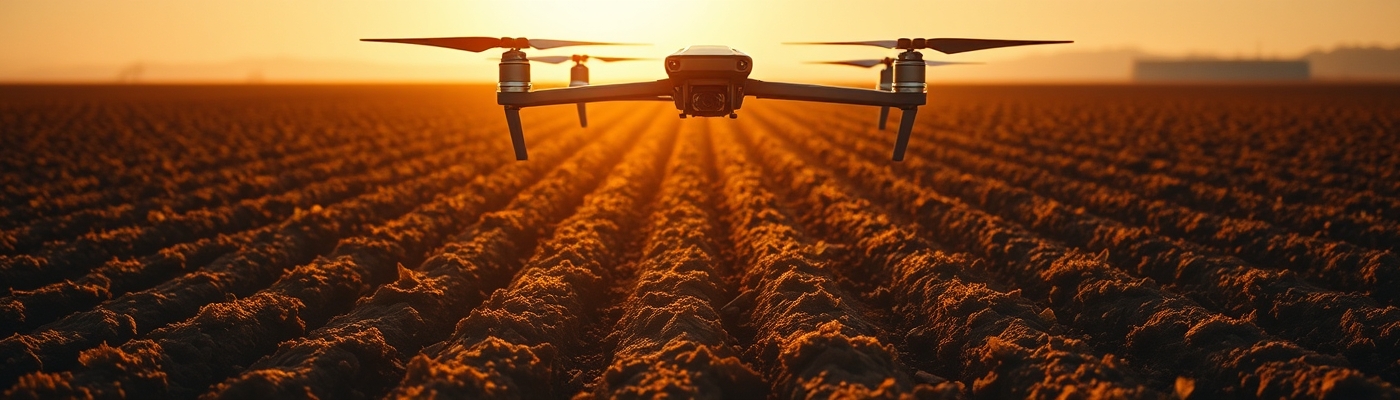

The Hidden Truth About AI Content That’s Ruining SEO Rankings (agricultural drones)
Intro: Why your SEO drops when AI content targets drones
If you’ve been publishing AI-written posts about agricultural drones, but your SEO rankings keep slipping, you’re not alone. The pattern is common: you produce more pages, target more “drone” keywords, and still lose visibility. That’s the hidden problem—most AI content doesn’t match what people actually need when they search for agricultural drones in the context of precision agriculture and real-world operations.
Search engines increasingly reward content that answers specific questions with credible detail: accuracy limits, operating constraints, implementation costs, and measurable outcomes. Generic AI copy often reads like a brochure—broad, smooth, and repetitive—without the “ground truth” that farmers, agronomists, and farm managers look for.
Think of it like this:
1) AI content can be a map that looks accurate—but the roads are imaginary. Searchers need navigable detail.
2) It’s like a fertilizer label with no dosage: the product sounds promising, but you can’t act on it.
3) Or like telling a pilot “fly the plane” without route planning, wind considerations, or safety constraints.
When AI-generated pages don’t cover those missing realities, your ranking performance suffers even if the writing sounds good.
Background: What agricultural drones do in precision agriculture
Before fixing your content, it helps to clarify what agricultural drones actually do and why that matters for SEO. In precision agriculture, the goal isn’t just “collect data”—it’s to connect data collection to decisions, from variable-rate treatment to targeted scouting. Drone technology is one tool in that workflow, and your content must reflect the workflow.
In farm technology, agricultural drones are unmanned aerial systems used to capture high-resolution imagery and sensor data over fields, then translate those inputs into actionable insights for smart farming solutions and precision agriculture.
They typically support tasks such as:
– mapping field variability (soil and canopy differences)
– monitoring crop health and stress indicators
– guiding treatment timing and targeting (spraying, scouting, and interventions)
– generating geospatial layers for decision-making and record-keeping
The best drone-related content doesn’t stop at “drones take pictures.” It explains outcomes:
– Yield improvement: Better timing and targeted interventions can reduce waste and improve plant performance. SEO readers want to know how drone data translates into better decisions, not just “visibility.”
– Field maps and reports: Accurate maps support consistent monitoring across seasons and help teams compare changes over time.
– Operational cost management: Farmers and operations teams care about cost per acre, time savings, and whether drones reduce manual scouting effort.
A useful analogy is that drone outputs are like a weather forecast for crops—not the weather itself. The forecast (maps and measurements) enables better action (treatment and monitoring schedules).
To perform reliably, agricultural drone systems rely on real inputs:
– AI vision (detecting row structure, canopy variation, damage patterns)
– positioning and navigation (accurate geolocation for consistent coverage)
– sensors (depending on configuration: multispectral imaging, thermal, and other data types)
The core SEO angle: your content should connect these inputs to what they enable in precision agriculture, such as consistent coverage, improved targeting, and decision support.
You can also frame this as an example:
– If your content only says “drones use cameras,” it’s like saying “a car uses fuel.” The interesting part is what that fuel powers—steering, braking, navigation, and performance.
To rank for agricultural drones, you need to write like you understand the stack. Modern drone workflows combine AI, autonomy, positioning, and data management into a chain.
A major reason AI content fails is that it describes components in isolation. Real deployment is about orchestration. Many advanced drone technology systems use an AI vision system plus geofenced autonomous flight to operate within defined zones and adjust in the air.
This matters because “autonomous” isn’t a marketing term—it’s an operational capability:
– the drone maintains consistent behavior inside a defined area (geo-fencing)
– it interprets field context while flying (for example, rows or zones)
– it supports real-time adjustment, reducing dependency on overly rigid pre-planning
An analogy: pre-planning-only drone workflows can resemble a pre-set playlist. Real-time autonomy is more like Spotify with adaptive recommendations—the system responds as conditions change.
Finally, the drone system is only valuable if the collected data improves treatment effectiveness. Your content should therefore describe how outputs are used to evaluate:
– crop health status (current field condition)
– where stress signals appear
– whether interventions match observed needs
Even better, content can emphasize a feedback loop:
– collect imagery → generate indicators → apply treatment → reassess outcomes
That loop is the difference between “cool drone pictures” and smart farming solutions that improve results.
Trend: How AI-written content is reshaping “agricultural” SEO
AI writing tools can generate thousands of pages quickly, which changes the competitive landscape. But quantity doesn’t equal relevance. For agricultural drones, the SEO bar is rising because users increasingly demand specificity.
When AI content resembles every other site—same phrases, same generic benefits, same vague explanations—search engines have fewer signals to justify ranking you above competitors. Worse, you may be cannibalizing your own pages.
Here are common symptoms seen across drone-focused AI content strategies:
1. Thin coverage of agricultural drones use cases
If your page says drones “help monitor crops,” but never describes the actual decision workflow, it won’t satisfy intent.
2. Missing farm technology terms like precision agriculture
Users who search “agricultural drones” often expect context: precision agriculture outcomes, maps, variable interventions, and how drone data supports them.
3. Overlooked drone technology proof points and timelines
Generic content avoids specifics like operational constraints, deployment timing, and realistic rollouts for different farm sizes.
4. Keyword cannibalization across smart farming solutions pages
If you have multiple AI pages targeting “agricultural drones,” “drone technology,” and “precision agriculture” separately—yet all cover the same basics—you split relevance signals across URLs.
5. No differentiation between awareness, education, and analysis intent
A beginner looking for definitions is not the same searcher evaluating autonomy, sensor choices, or implementation steps.
Think of your content portfolio like a silo system. If every silo stores the same grain in different shapes, you lose efficiency. Strong SEO depends on clean separation of topics and search intents.
To fix what’s broken, compare generic AI writing to drone-specific, deployment-aware content.
Generic AI copy often stops at:
– “drones improve efficiency”
– “drones capture images”
– “farmers benefit from data”
Drone-specific content goes further by explaining:
– what kinds of maps get produced
– how data becomes decisions in precision agriculture
– what outcomes teams track (yield proxies, treatment targeting, field variation mapping)
Generic copy usually ignores constraints because they’re harder to generate. But these constraints are what searchers want:
– how consistent coverage is maintained
– what accuracy requirements matter for mapping
– how real-time behavior changes results
– how geofencing or autonomous flight impacts operational planning
A simple analogy: generic copy is like a cookbook recipe without cooking temperature. You can read it, but you can’t reproduce results.
Insight: The hidden truth about ranking with AI content
The “hidden truth” is that AI content can rank—but only when it’s written to satisfy intent with evidence-like specifics. For agricultural drones, that means writing beyond features into deployment reality.
Search intent around agricultural drones usually spans awareness, education, and analysis. If you don’t align to the stage, your page may attract clicks but fail to earn trust—or it may never rank because it doesn’t fit the query’s job-to-be-done.
You can interpret intent as a progression:
– Awareness intent: “What are agricultural drones?” “How do drones help farms?”
– Education intent: “How do drones work in precision agriculture?” “What data do they capture?”
– Analysis intent: “Which drone technology fits my operation?” “What are the implementation steps and costs?”
If your page tries to cover all three equally, it often satisfies none.
To rank, your content should map key concepts to the ecosystem:
– farm technology: where drones sit within the broader stack
– precision agriculture: how drone data drives treatment and monitoring
– smart farming solutions: how decisions become measurable outcomes
– drone technology: autonomy, navigation, sensor inputs, and real-time behavior
In practice, this means structuring content so each section answers a distinct question aligned to intent.
Audit isn’t just checking grammar or keyword density—it’s verifying coverage against real query expectations.
Look for missing operational truths, such as:
– flight coverage limitations (how consistent mapping is achieved)
– autonomy boundaries (what “geofenced” means in practice)
– real-time adjustments (what changes during deployment)
– data quality variability (what affects results)
If your content ignores these constraints, it reads like theory, not farm operations.
To strengthen relevance for agricultural drones, include deployment-level details:
– autonomy style (fully autonomous vs. assisted)
– real-time adjustment behavior during flight
– geo-fencing and how zones define safe/consistent operation
– how these impact accuracy and repeatability
This is also where you can incorporate measurable expectations, such as rollout phases or coverage planning assumptions—without pretending every farm is identical.
Another common AI failure: no cost or rollout realism. Larger farms often have different constraints (workflow integration, training, data management). To improve rankings, cover:
– implementation steps (pilots, scaling, team training)
– integration considerations with existing farm technology
– what to measure during rollout (accuracy, time saved, treatment effectiveness)
An example analogy: it’s like installing irrigation. Readers need a plan for phases—pilot sections first—because “install everything at once” rarely works.
Featured snippets are one of the best ways to win visibility—especially if your content is already close to answering the question.
Use snippet formats deliberately:
For example, you can craft a clear definition block:
– “What are agricultural drones?”
– Include a short definition followed by a single-sentence explanation connecting it to precision agriculture
Use lists when the query expects scanning:
– “5 ways agricultural drones support precision agriculture”
– “5 factors to evaluate in drone technology for smart farming solutions”
Keep each list item distinct and operational (what changes for the farm, not just what sounds beneficial).
Comparison blocks can match analysis intent quickly:
– “Autonomous vs. pre-planned drone workflows”
– “Multispectral imaging vs. other sensor types (use cases)”
– “Awareness vs. decision-stage requirements”
A side-by-side comparison is like trying on shoes—readers want fit. The clearer the fit to their stage, the better your odds.
Forecast: What will rank best for agricultural drones in 2026+
SEO for agricultural drones won’t get simpler. It will get more exacting. In 2026+, rankings will likely favor content that behaves like an operational guide, not a generic explanation.
Expect the next wave of winning pages to emphasize real-time systems and measurable proof.
More content will demonstrate how drone data changes decisions during operations—rather than only describing data collection after the fact. Pages that explain workflows like “captured → interpreted → acted → rechecked” will likely outperform static explanations.
Readers and search engines will increasingly look for:
– specific outcomes (what improved and how it’s measured)
– realistic operational considerations
– constraints and trade-offs (what you gain and what you must manage)
Feature keywords alone won’t be enough. Content should tie drone technology capabilities to agronomic or operational requirements—especially autonomy, real-time adjustments, and geofenced behavior.
To stay ahead, build an editorial system—not one-off posts.
Create clusters such as:
– farm technology overview → where drones fit
– precision agriculture workflows → how data becomes action
– smart farming solutions implementation → pilots, training, ROI
– drone technology evaluation → autonomy, sensors, accuracy, constraints
This reduces cannibalization and strengthens topical authority.
AI content often “freezes” as if the world stops changing. But drone deployments evolve. In 2026+, pages that are updated with pilots, scaling timelines, and refined ROI assumptions will likely keep performing.
A practical editorial approach:
1) publish with clear assumptions
2) run pilots and track outcomes
3) refresh pages with operational learnings
That’s like iterating on a control system—feedback improves performance.
Call to Action: Fix your AI SEO for agricultural drones today
If you want rankings back, stop treating agricultural drones content as generic SEO writing. Treat it as operational education built for search intent.
Use this checklist to convert AI drafts into ranking-ready pages:
Update lines like “drones improve efficiency” with:
– what data is captured
– how it informs precision agriculture decisions
– what operational steps change on the farm
– add a short definition-style block for “agricultural drones”
– include at least one list-style section tied to use cases
– add a comparison that matches either awareness or analysis intent
Instead of one mega-page, publish:
– Awareness: definitions and basic workflow
– Education: deeper precision agriculture concepts and data interpretation
– Analysis: evaluation criteria, constraints, costs, and rollout steps
This will also reduce keyword cannibalization across your smart farming solutions pages.
Optimization doesn’t end at publishing. You need feedback loops.
Monitor:
– which queries trigger your impressions
– whether your pages win featured snippets
– which sections are being used by search results
If your first draft is based on assumptions, refine it:
– add more about real-time adjustment
– clarify geofencing or autonomy boundaries
– expand costs and implementation steps as your data improves
In forecasts, iteration is the competitive advantage.
Conclusion: Turn AI content into rankings for agricultural drones
AI content doesn’t have to destroy your SEO. The real issue is that many pages miss the intent-aligned realities of precision agriculture and farm technology deployment—especially for agricultural drones, where accuracy, constraints, autonomy, and measurable outcomes matter.
Replace generic phrasing with operational detail grounded in drone technology and how it supports farm decisions.
Create content that matches awareness, education, and analysis stages—so each page does one job well.
Use definition blocks, lists, and side-by-side comparisons to earn visibility and improve click-through potential—especially as competition increases through 2026+.