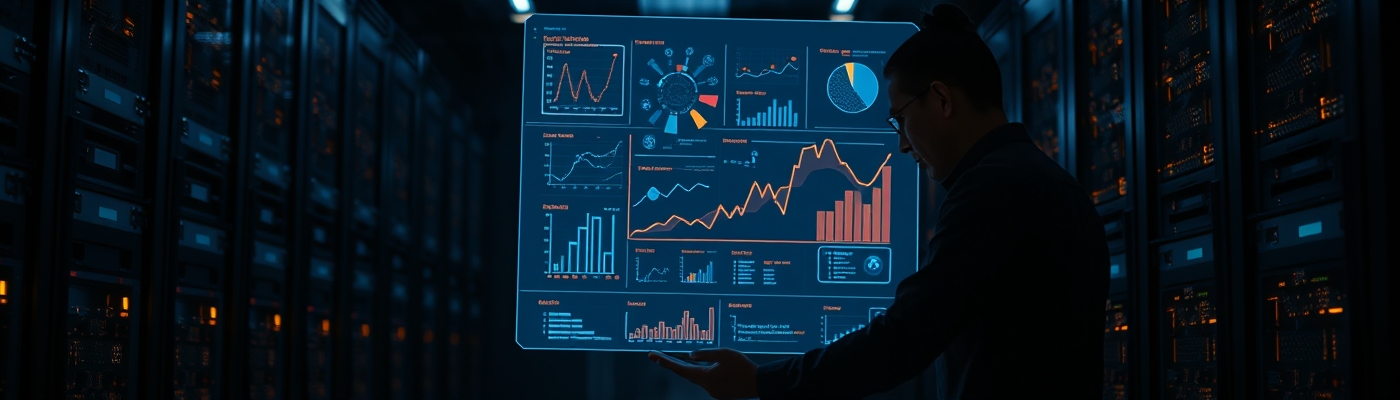

How Managers Are Using Performance Metrics to Unmask Burnout Fast (AI in Crypto Exchanges)
Intro: Spot Burnout Earlier with AI in Crypto Exchanges
Burnout rarely announces itself with a single dramatic event. More often, it appears as a slow drift: small delays in decisions, more frequent “I’ll check later” moments, cautious workarounds, and a gradual drop in quality. In fast-moving operations like crypto exchanges, those signals can compound quickly—especially when the team is juggling trading pressure, incidents, monitoring overload, and continuously evolving market conditions.
That’s where AI in Crypto Exchanges becomes more than a trading innovation story. It can also be an operational lens. Managers are increasingly using performance metrics—the same data streams used to optimize latency and risk—to detect early burnout indicators. In other words, instead of waiting for a person to “look tired,” managers watch systems for human-stress fingerprints: reaction times, escalation frequency, monitoring fatigue patterns, and error trends in workflows.
Think of it like industrial machine diagnostics. You don’t wait for a turbine to fail before you inspect bearings—you watch vibration patterns. Burnout works similarly: it leaves measurable traces before it becomes catastrophic.
And as Bybit architecture patterns and other exchange designs get more data-driven, the opportunity for early detection grows. If you can detect a risk event early in a trading pipeline, you can often detect an operational strain early in a team pipeline too.
—
Background: Performance Metrics Managers Track for AI Trading
Managers who run trading teams—especially those building or supervising AI trading systems—have always tracked performance. The difference now is that they’re expanding the definition of “performance” from pure market outcomes (P&L, slippage) to work outcomes (how quickly decisions happen, how often humans get pulled into firefighting, and where friction accumulates).
In AI-enabled trading and exchange operations, performance metrics become a shared language across engineering, risk, operations, and sometimes even customer-facing support. That shared language helps teams recognize when the workload or system complexity is no longer sustainable.
Performance metrics for burnout detection are operational measures that correlate with human strain. They don’t “diagnose” burnout directly; instead, they infer early risk using behavioral proxies found in logs, dashboards, and workflow timing.
In practice, managers look for patterns such as:
– Escalation spikes: more handoffs to senior staff or incident managers than usual
– Longer time-to-action: delays between anomaly detection and mitigation
– Higher “retry” rates: repeated attempts to resolve issues that previously were easy
– Increased monitoring burden: more alerts, more pages, or more time spent reviewing rather than acting
– Decision fatigue indicators: more conservative choices, higher variance in response times, or inconsistent playbooks
A useful analogy: if trading operations are a flight, performance metrics are the cockpit instruments. Burnout is like hypoxia—subtle at first, dangerous later. Instruments don’t replace a medical check, but they can warn you early enough to intervene.
Another analogy: consider project management with version control. When commits start to cluster around late-night hours and bug-fixes balloon, you can infer stress even without reading every team member’s mind. Similarly, metric trends can reveal when the operational environment is exceeding human capacity.
Managers typically begin with a baseline set of KPIs that already exist in exchange and trading pipelines, then adapt them into “burnout-friendly” signals. Common examples include:
– Alert-to-response time: time from alert trigger to first meaningful action
– Incident escalation rate: frequency of events requiring senior involvement
– Workflow throughput: number of tasks/actions completed per unit time
– Rework rate: frequency of repeated checks, rollbacks, or “fix then fix again” cycles
– Latency metrics (system-side): times that correlate with human workload during triage
– Decision consistency: variance in how similar incidents are handled across shifts
– Ops coverage load: how many workstreams one person/shift is responsible for simultaneously
– Model intervention frequency: how often humans override AI trading systems decisions
These metrics are easier to integrate when teams already run AI-driven monitoring and observability. But the key shift is cultural: metrics must be used to support humans, not to punish them.
—
Trend: AI Trading Systems and Burnout Signals in Exchanges
The growth of AI trading systems changes how exchanges operate—but it also changes how burnout shows up. When automation expands, the bottleneck often moves. Human strain might not come from “doing trades manually” anymore; it can come from supervising the automation, handling edge cases, interpreting ambiguous model signals, and managing exceptions.
That’s why managers are increasingly treating operational telemetry as a proxy for cognitive load.
A common transition in exchanges is shifting from manual review to AI-assisted workflows. Both modes create workload, but they distribute it differently.
With manual review, strain often looks like:
– long review cycles,
– inconsistent attention spans across shifts,
– and growing backlog during high-volatility periods.
With AI trading systems, strain often looks like:
– frequent model overrides,
– “unknown unknowns” when signals don’t match expectations,
– and repeated investigation when automation behaves unpredictably.
In a sense, manual review is like editing a manuscript line by line. AI review is like using a spell-checking tool that sometimes suggests fixes you must verify. Verification can still be exhausting—especially when the tool gets it wrong more often than anyone expected.
Here’s where operational design matters. Systems should minimize false alarms and provide clear explainability or actionable context—otherwise the team becomes a human “cleanup crew.”
Even without getting into proprietary specifics, modern exchange architectures—often reflected in patterns attributed to Bybit architecture—tend to emphasize:
– real-time observability,
– modular services that emit structured events,
– and analytics layers that unify monitoring across components.
These patterns make early risk measurable. For burnout detection, that’s crucial. Managers need consistent event streams to correlate workload spikes with human workflow outcomes.
Examples of “early risk” patterns managers can surface through architecture-aligned metrics:
– Fan-out monitoring: when a single issue creates many alert types, teams spend time correlating noise
– Exception-heavy automation: when AI systems require constant human arbitration during certain market regimes
– Backpressure in pipelines: when queues grow, it indirectly increases triage time and escalation pressure
– Uneven shift load: when certain on-call roles inherit a disproportionate share of incidents
When managers can connect those patterns to human-facing operational KPIs—like time-to-action or rework—they can unmask burnout earlier.
Exchange interoperability in AI workflows refers to the ability to coordinate systems, data, and actions across multiple exchanges or components—so models and monitoring stay coherent even as the environment shifts.
Interoperability affects burnout risk because it changes how teams work:
– More integrations can mean more failure modes (more places for edge cases to appear)
– But better interoperability can reduce repetitive manual reconciliation
– Shared formats and standardized interfaces can reduce “alert fatigue” caused by inconsistent signals
If interoperability is done well, managers can unify dashboards and incident taxonomies—making it easier to interpret what’s happening and reduce cognitive overload.
Think of interoperability like a universal plug adapter versus a bag of random chargers. Without it, every device requires context switching. With it, energy management becomes simpler—and so does operational decision-making.
Crypto market evolution keeps changing the monitoring landscape: liquidity shifts, volatility regime changes, new instrument types, and evolving trading patterns. That means managers can’t rely on static thresholds.
Burnout risk rises when monitoring rules become outdated. If alerts become noisy, humans start to disengage or “learn to ignore” signals, which increases escalation frequency and rework.
In practice, managers need monitoring that adapts to market conditions while maintaining signal quality. When AI in Crypto Exchanges expands, the monitoring should expand too—but with guardrails:
– fewer irrelevant alerts,
– clearer attribution of causes,
– and faster, more actionable “next steps.”
—
Insight: Use Performance Data to Unmask Burnout Fast
Once metrics are collected, the most important step is interpretation. Managers should avoid using metrics as a blunt instrument. The goal is to detect strain early and intervene before performance—and people—decline.
Performance-metric monitoring can unlock tangible benefits for trading teams overseeing AI systems:
1. Earlier warning signs
Metrics can flag increasing strain days or weeks before burnout becomes visible behavior.
2. Reduced escalation delays in exchange operations
When escalation patterns spike, it often signals confusion, overload, or insufficient support. Managers can intervene faster with targeted help rather than waiting for incidents to get worse.
3. Smarter staffing and shift planning
If workload concentrates in certain hours or market regimes, scheduling can change to match reality rather than assumptions.
4. Better workflow design
High rework and repeated retries can identify bottlenecks in AI workflows, runbooks, or tool UX.
5. More resilient AI trading supervision
If human overrides increase, managers can adjust model thresholds, retrain with new regimes, or improve explanation layers.
One more analogy: performance metrics are like a thermostat. Burnout is like a room getting too hot—if you only notice when people start sweating, you’ve already lost comfort and productivity. Metrics let you adjust earlier.
In exchanges, escalation delays can turn minor friction into major outages. Performance metrics help managers detect when escalation is becoming harder:
– response time grows,
– approvals require more rounds,
– and “stuck” investigations become the norm.
By tracking escalation velocity alongside workload proxies, managers can assign an incident lead earlier, reduce handoff complexity, or temporarily narrow the scope of monitoring. This reduces pressure on individuals and speeds resolution.
To intervene effectively, managers must connect metric trends to likely root causes. Burnout often stems from a mismatch between human capacity and system complexity.
Key categories of root causes often show up in patterns like:
– Latency: system delays leading to repeated checks
– Workload spikes: volatility-driven bursts in incident volume
– Decision fatigue markers: repeated “choose and verify” tasks without confidence
Here’s how teams can map it:
1. Latency correlates with triage time
If downstream delays increase, humans spend more time waiting, validating, and retrying.
2. Workload spikes reveal capacity gaps
If incident volume surges while staffing remains constant, escalation rates will climb—fast.
3. Decision fatigue appears in variance and rework
If similar incidents produce different actions, or if outcomes frequently require reversal, the team is likely operating under cognitive strain.
A practical example: imagine a customer support team during outages. If tickets jump and customers repeat the same problem, agents begin to feel trapped. Similarly, if AI trading signals repeatedly require manual correction, the “trapped loop” forms—and metrics will show it through overrides, rework, and time-to-action.
—
Forecast: AI Agents, Exchange Interoperability, and Team Health
The next wave in AI in Crypto Exchanges is AI agents—systems that don’t only forecast or score, but also execute workflows. That can either reduce or increase human strain depending on how guardrails are built.
As crypto market evolution continues, monitoring needs will likely shift toward:
– more regime-aware thresholds,
– cross-exchange anomaly correlation,
– and higher reliance on automated triage.
This creates a new opportunity: dashboards that don’t just report incidents, but translate them into actionable operational capacity signals—like “team load will exceed safe limit within 20 minutes.”
AI agents also increase security and scalability demands. Managers will need dashboards that are:
– resilient under load (no dashboard lag during incidents),
– consistent across services and exchanges,
– and privacy-conscious when combining operational telemetry with people-related signals.
Security matters too: if metrics are manipulated, or if dashboards become single points of failure, managers lose trust in the signal. Trust is essential for early intervention.
Future implications are twofold:
– Positive: better early detection and faster burnout relief through automated capacity sensing.
– Risk: if metrics become punitive or opaque, teams may game the numbers rather than use them to improve conditions.
The winning strategy is to treat metrics as an operational safety system for humans—similar to how exchanges design circuit breakers for risk.
—
Call to Action: Implement a metrics loop for AI trading teams
Managers don’t need a perfect system to start. They need a metrics loop: collect, interpret, intervene, measure again. That loop turns raw telemetry into actual burnout relief.
Start small, keep it human-centered, and align it with existing exchange operations.
Build a checklist that triggers action when metric thresholds suggest rising strain. The checklist should prioritize supportive interventions, not blame.
A 24–48 hour loop can include:
1. Review last 7 days of alert-to-response time and escalation rate
2. Check for rework/retry spikes and rising model override frequency
3. Identify whether spikes align with latency or backpressure events
4. Determine if noise is increasing (too many low-signal alerts)
5. Confirm staffing/coverage matches current market regime risk
6. Decide on one intervention: reduce scope, adjust thresholds, add support, or update runbooks
7. Re-measure within 48 hours for improvement signals
If you want a pilot inspired by Bybit architecture patterns—where modular observability and unified data streams are emphasized—start with dashboard items that are easiest to connect to human workload:
– Alert-to-action timer by shift and team role
– Incident escalation heatmap (time + category + severity)
– Model override rate and explanation failure markers
– Queue depth / backpressure indicators that correlate with triage time
– Rework rate (rollbacks, repeated investigations, duplicated checks)
– Monitoring load index (alert volume weighted by signal confidence)
A good pilot is like testing a smoke detector battery: it doesn’t solve the fire, but it confirms the system will warn you reliably. Similarly, the goal is not to “predict burnout perfectly,” but to create a dependable early-warning mechanism.
—
Conclusion: Turn performance metrics into faster burnout relief
Burnout in AI trading teams isn’t only a personal issue—it’s an operational signal. AI in Crypto Exchanges provides the instrumentation needed to see stress earlier: escalation patterns, time-to-action drift, rework and override frequency, and monitoring overload.
When managers connect performance metrics to root causes—like latency, workload spikes, and decision fatigue—they can intervene within 24–48 hours instead of waiting for visible breakdowns. And as the industry moves toward AI agents and deeper exchange interoperability, the opportunity to build smarter, safer, more human-centered monitoring systems will only grow.
If you treat metrics as a safety system for people—rather than a scoreboard for performance—you can unmask burnout fast, reduce escalation delays, and help teams sustain both operational excellence and healthy decision-making.