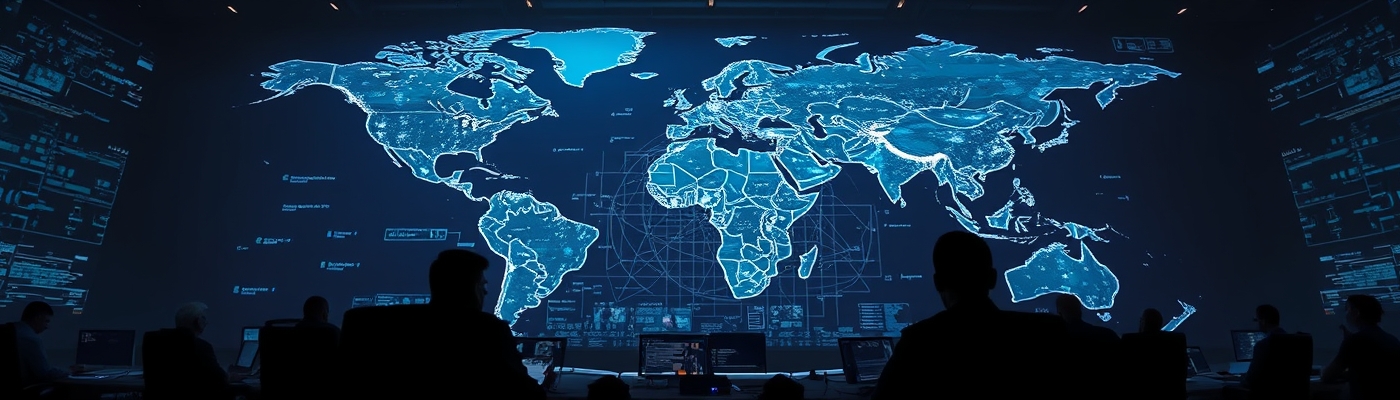

The Hidden Truth About Palantir’s Role in Modern Warfare
Understanding AI in Military Strategies
The integration of AI in military strategies is a transformative trend that reshapes traditional defense operations. Historical methods relied heavily on human intelligence and analysis, but the rapid advancements in technology now allow militaries to leverage data on an unprecedented scale. AI-driven solutions promise not only enhanced efficiency in operations but also actionable insights that can significantly influence the outcomes of military engagements.
Palantir Technologies, known for its data integration and analytical capabilities, has emerged as a key player in this landscape. Their software platforms harness data from various sources, providing military strategists with potent tools to plan and assess operations. Much like having a GPS system that not only shows you the route but also adapts based on real-time traffic data, Palantir’s capabilities help military units navigate complex operational terrains with improved situational awareness.
In this context, the strategic use of AI technology in defense helps in streamlining decision-making processes, predicting enemy movements, and optimizing resource allocation. The collective potential of these tools represents a paradigm shift in how militaries across the globe plan and execute their strategies.
The Impact of Palantir AI on Defense Operations
What Is Palantir AI and Its Military Uses?
At its core, Palantir AI is a suite of sophisticated software platforms designed to analyze vast datasets, turning unstructured information into actionable intelligence. In the military realm, this translates to catering robustly to tasks such as counter-terrorism, logistics, and battlefield awareness. Applications of Palantir AI can be seen in operations ranging from intelligence gathering to mission rehearsal.
For example, the U.S. Department of Defense utilizes Palantir’s Project Maven, which applies machine learning to enhance image recognition from drone footage. This capability allows analysts to quickly sift through hours of video data, pinpointing relevant information that can directly impact operational outcomes. Such analyses can be likened to using a metal detector in a vast field: instead of aimlessly searching for objects, the metal detector indicates where to focus efforts, saving time and resources.
How AI War Planning Is Revolutionizing Tactics
#### Benefits of AI Technology in Defense
AI’s application in war planning introduces several significant benefits, including:
– Speed: AI systems can process data and generate insights far quicker than human analysts, allowing for timely decisions in fast-paced military environments.
– Accuracy: By employing predictive algorithms and machine learning, militaries can improve targeting accuracy and operational efficacy.
– Adaptability: AI systems can adjust to evolving situations on the battlefield, analyzing real-time data to provide responsive tactical adjustments.
#### Key Features of Military AI Systems
Military AI systems boast features that enhance actionability and efficiency, such as:
– Data Fusion: Integrating data from various sensors and sources for a comprehensive operational picture.
– Predictive Analysis: Using historical and real-time data to anticipate potential threats or changes in enemy tactics.
– Decision Support: Offering strategic recommendations based on data-driven insights, facilitating informed decision-making for commanders.
As AI in military strategies develops, the operational frameworks within a military context will continue to evolve, reshaping how wars are fought.
Current Trends in AI Technology in Defense
The Role of AI in Strategic Planning and Decision Making
One of the most profound impacts AI has on military operations is its role in strategic planning and decision-making. Historically, commanders relied on experience and intuition, circumstances that required time for deliberation and lacked real-time data. Today, AI tools synthesize information rapidly, enabling rapid scenario assessments and contingency planning.
Palantir’s promise in this sphere is akin to having a strategic consultant who can analyze countless possible scenarios and outcomes. At present, many military strategists endorse AI’s capability to simulate various operational pathways, considering logistical, environmental, and sociopolitical factors that could arise in a conflict.
Comparison: Traditional vs. AI-Driven Military Operations
In comparing traditional military operations with those augmented by AI, the distinctions are stark. Traditional frameworks often relied heavily on linear methods of planning and execution, with significant periods of trial and error on the battlefield. Conversely, AI-driven operations facilitate:
– Enhanced Coordination: Various branches (land, air, sea) can operate synergistically as they share real-time data via consolidated AI systems.
– Resource Optimization: AI assesses available assets and suggests optimal deployment based on dynamic variables.
– Predictive Capability: Forecasting tailored strategies based on recognized patterns and direct intelligence input can be transformed from theory into practice.
The heightened success rates reported in AI-assisted military operations underscore their effectiveness, predicting conflicts with greater accuracy than previous traditional models.
Insights on Future AI Developments in Warfare
Ethical Considerations in Military AI Technology
While the benefits of AI technology in military contexts are substantial, ethical considerations cannot be overlooked. The risk of misuse and the potential for AI systems to operate without human oversight raises critical questions regarding accountability and moral implications in warfare.
Significant international discourse surrounds topics like the reliance on autonomous weapons systems, which could potentially make life-and-death decisions without human intervention. Drawing comparisons to a self-driving car, which is programmed to prioritize passenger safety, the question of whose safety is prioritized in an AI-controlled battlefield must be scrutinized.
Emerging Technologies Shaping Military AI
As military AI develops, emerging technologies will undoubtedly play a unified role. Innovations such as:
– Quantum Computing: Could vastly enhance the processing capabilities of AI systems, enabling them to analyze data at lightning speeds.
– 5G Networks: Bolster the connectivity required for real-time data sharing across military units, dramatically improving situational awareness.
– Biometric Data Integration: Enhances security and intel gathering, allowing for swift identification of threats.
These technological advancements will further influence how militaries leverage AI in military strategies, unearthing new opportunities and challenges that policymakers will need to navigate.
How to Stay Informed About AI in Military Strategies
Resources for Understanding Military AI Trends
Staying abreast of developments in AI in military strategies requires access to reliable resources. Suggested avenues include:
– Industry Reports: Many consulting firms publish in-depth analyses of military technology trends.
– Academic Journals: There are numerous publications focusing on defense technology and military strategy that deepen understanding.
– Webinars and Conferences: Attending events focused on defense technology to gain insights from key thought leaders can be invaluable.
Call to Action: Engage in the AI Military Debate
As technological advancements continue to intersect with the realm of national defense, engaging in the discourse surrounding military AI is vital. The implications of these technologies extend beyond military boundaries, influencing societal structures and ethical considerations.
Readers are encouraged to participate in local discussions, write to policymakers, or join organizations advocating for a balanced and informed approach to AI’s military integration.
Conclusion: The Future of AI in Warfare and National Security
In analyzing Palantir’s role in modern warfare, it’s evident that the AI technology in defense is set to revolutionize how military operations are conducted. As AI continues to evolve, it raises not only operational efficiencies but also ethical dilemmas that demand careful consideration.
The collaborative future of military strategies entwined with AI calls for vigilance from stakeholders, ensuring that while technological advancements bolster national security, they do so in a morally responsible manner.
For further insights on how AI and military technology are evolving hand-in-hand, read more at Wired.