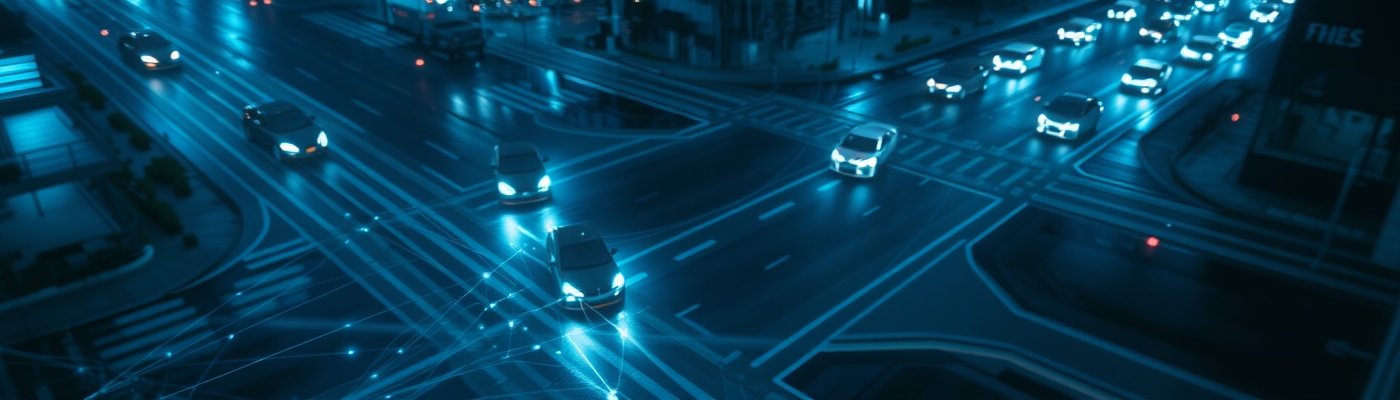
Wayve’s $1.2B Funding: Revolutionizing AI in Self-Driving Cars

Why Wayve’s $1.2B Funding Could Revolutionize AI in Self-Driving Cars
Introduction to AI in Self-Driving Cars
The development of AI in self-driving cars has sparked tremendous interest and investment in recent years. The automotive landscape is changing rapidly, driven by advancements in machine learning, computer vision, and sensor technologies. As cities grow and traffic congestion becomes a more pressing issue, the promise of autonomous vehicles is not just a futuristic fantasy but a very real opportunity for improved efficiency, safety, and accessibility. Companies like Wayve are at the forefront of this revolution, pushing boundaries with innovative approaches to AI in self-driving technology.
Recent investments signal a burgeoning belief in the potential for widespread adoption of autonomous vehicles, with Wayve raising a staggering $1.2 billion in funding. This ambitious financial backing could very well propel the company—and the industry—into a new era of self-driving solutions that redefine how we envision transportation.
Understanding Wayve’s Funding Impact
Key Details of Wayve’s $1.2B Funding
Wayve’s recent funding round was led by prominent investors, including Nvidia, Uber, and major automotive manufacturers. The initial capital injection of $1.2 billion highlights the confidence these giants have in Wayve’s technology and vision. Additionally, if Wayve successfully deploys robotaxis in London, this funding has the potential to increase to $1.5 billion, contingent upon a further $300 million investment from Uber. This substantial valuation of $8.6 billion reflects not only investor interest but also a growing market for AI-driven solutions in automated driving.
What Is Wayve Tech and Its Unique Approach?
Wayve distinguishes itself through its unique technology, which is described by CEO Alex Kendall as a \”contrarian\” approach in contrast to traditional self-driving systems. Rather than relying on high-definition maps, Wayve’s self-learning model uses a combination of real-world data and AI to navigate environments. Their technology encompasses an \”eyes on\” assistance system that enhances driver control while facilitating a smoother transition to full autonomy.
This innovative direction allows Wayve’s solutions to be more adaptable than linear models, providing a framework for vehicles that can learn from their surroundings in real-time, akin to a human learning to drive in various environments. Such capabilities position Wayve as a pivotal player in the landscape of AI investments directed toward self-driving technologies.
Exploring Automated Driving Trends
Current Trends in Self-Driving Technology
As the self-driving industry matures, several key trends have emerged. A focus on automation levels is gaining traction, where vehicles range from assistive technologies to full autonomy. This classification often informs regulatory frameworks globally.
Another critical trend is the increasing integration of AI systems that afford vehicles the ability to make real-time decisions based on the dynamic environment, including pedestrians, cyclists, and varying weather conditions. The momentum behind vehicle-to-everything (V2X) communication is also on the rise, which enables vehicles to exchange information with traffic infrastructure, enhancing overall road safety.
How AI Investments Shape the Self-Driving Future
The infusion of capital into companies developing AI in self-driving cars profoundly impacts not just individual company trajectories but the industry at large. With significant funding, companies can accelerate research and development, enhance their offerings, and expand market reach. Investors, intrigued by the self-driving future, are seeking to back technologies that are likely to disrupt traditional transport paradigms.
Wayve’s approach, which emphasizes licensing its software rather than manufacturing vehicles, underscores a shift in corporate strategies within the automotive arena. The potential for AI investments to catalyze partnerships between tech firms and traditional automakers could lead to innovations that dramatically reshape our transportation infrastructure. As we evaluate these trends, it’s clear they will inform the implementation of AI solutions across the self-driving landscape.
Insights on Wayve’s Technology
Comparison of Wayve’s Approach vs. Traditional Models
In traditional automated driving models, reliance on high-definition maps and extensive sensor hardware is prevalent. Companies like Tesla have made headlines by focusing on hardware integration and a subscription-based service model. Conversely, Wayve’s tech aims at a more software-centric solution, enabling interoperability across various hardware setups and allowing flexibility in application details.
Wayve’s approach leverages its self-learning model to interpret sensory data and understand the environment. This adaptability can be compared to how humans learn to navigate new areas based primarily on visual cues and experience rather than pre-known maps.
Benefits of Wayve’s ‘Eyes On’ Assistance System
The \”eyes on\” assistance system represents a significant advancement in AI in self-driving cars by allowing for a hybrid mode of operation. This system not only facilitates a human driver’s oversight but also provides added layers of safety and assurance through AI support.
For instance, envision a scenario where a novice driver uses this system; the AI can identify potential hazards and suggest maneuvers, thus improving confidence and driving performance. This aspect of Wayve’s technology aligns with current pedestrian safety concerns by prioritizing reliable interactions between vehicles and their surrounding environments.
Future Forecast for AI in Self-Driving Cars
Predictions for Wayve’s Growth in the Automotive Market
With the continued escalation of global investments, including Wayve’s recent round, one can reasonably predict an exponential growth trajectory for the company in the automotive sector. The partnership with notable firms such as Nissan and Uber allows for a broader integration of Wayve’s technology across diverse vehicle types.
Particularly significant is Nissan’s commitment to integrating Wayve’s software into its fleet by 2027, helping to accelerate the company’s market penetration. As partnerships continue to emerge, the likelihood of broader adoption of AI solutions in everyday transport increases, positioning Wayve favorably against competitors.
5 Key Influences on the Future of Automated Driving
1. Technological Advancements: Continued innovation in AI and machine learning will enrich systems’ capabilities and decision-making processes.
2. Regulatory Frameworks: Governments are likely to develop clearer guidelines that accommodate the safe deployment of autonomous vehicles, creating pathways for wider acceptance.
3. Consumer Acceptance: Public perception will play an essential role in the fate of self-driving cars. Efforts to educate and engage consumers will be pivotal.
4. Infrastructure Developments: Smart city projects and the integration of V2X communication will create supportive environments for autonomous vehicle operation.
5. Investment Trends: As funding accelerates, competition will drive improvements and innovations among AI-focused companies, benefitting the industry as a whole.
Take Action: Follow the Self-Driving Revolution
The time is ripe for stakeholders in the automotive and technology domains to invest and engage actively. As Wayve’s journey illustrates, there is profound potential within AI in self-driving cars—an avenue ripe for exploration by consumers, investors, and automakers alike. Keeping abreast of the developments within this sector will be crucial for all players involved.
Conclusion: The Future of AI in Self-Driving Cars
Wayve’s innovative approach and significant funding present a compelling case for the future of AI in self-driving cars. As trends evolve and technologies mature, it’s clear that advancements in this space will profoundly impact our daily lives. The combination of investment, technology, and a visionary model reflects a burgeoning revolution in transportation that promises to reshape roads, opportunities, and societal norms. To learn more about this transformative journey, refer to articles like this TechCrunch piece on Wayve’s funding for in-depth analysis and insights.
As we stand on the precipice of this future, it becomes essential to embrace the changes, comprehend their implications, and participate in shaping a self-driving reality that is both sustainable and prosperous.