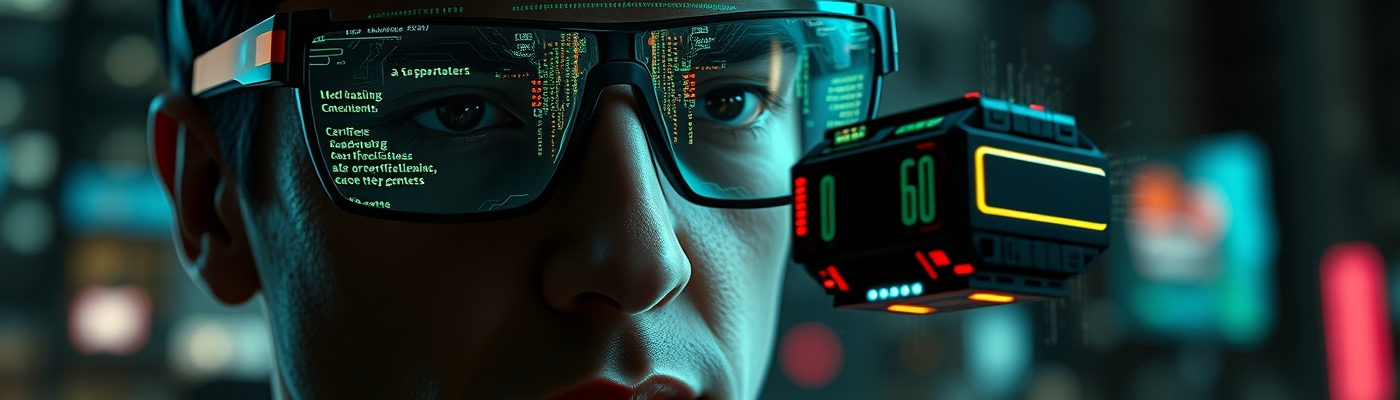
Design Challenges for AI Glasses: What You Need to Know

What No One Tells You About Designing for AI Glasses: The Challenges Ahead
Understanding AI Glasses: Key Features and Impact
What Are AI Glasses?
AI glasses, a cutting-edge technology merging artificial intelligence and augmented reality, promise to revolutionize the way we interact with the world. These devices are not merely glasses; they are intelligent companions that overlay digital information onto real-world environments. Imagine walking down the street and receiving real-time navigation cues as holograms, or enhancing your vision by accessing information about your surroundings without pulling out your phone. Such is the potential of AI glasses, but this innovation comes with its own set of design challenges and considerations.
Display Technology Considerations for AI Glasses
At the heart of AI glasses lies their display technology. Unlike traditional screens that are flat and constrained, AI glasses utilize additive displays to project information onto an augmented reality canvas. This introduces several complexities:
– Transparency: Since the glasses must overlay digital images onto the real world, they have to be transparent enough for users to see their surroundings clearly.
– Brightness: The display needs to be bright enough to compete with natural light without causing glare.
– Field of View: Designers must consider how much visual information they can provide without overwhelming the user.
Thus, as we continue to explore AI glasses, it’s crucial to think about these display technology dilemmas and how they dictate the design framework.
Emerging Trends in User Interface Design for AI Glasses
The Role of Jetpack Compose in AI Glasses
As AI glasses evolve, so too does the way we design their user interfaces (UI). The introduction of Jetpack Compose, a new spatial UI framework from Google, represents a significant leap forward in designing interfaces suitable for this new form factor. This framework allows developers to create intuitive and engaging environments that harmoniously integrate with the real world.
Here’s why Jetpack Compose matters:
– Spatial Design: It facilitates the creation of interfaces that act in concert with a three-dimensional space rather than a two-dimensional screen.
– Dynamic Adaptability: The UI can react seamlessly to environmental changes, enhancing user experience.
– Fostering Intuition: A spatial UI allows users to interact in ways that feel more natural and less obstructive.
Adapting UI for Augmented Reality Experiences
When creating UIs for augmented reality experiences, designers must adopt a fresh mindset. The traditional conventions of flat interfaces fall short when the digital interface needs to coexist with real-world elements. The use of spatial arrangements, contextual prompts, and user-friendly navigation aids are critical.
By utilizing augmented reality, we can engage users in an immersive way. Picture using AI glasses during shopping; instead of scrolling through a phone, you gaze at an item and receive overlay information like price, reviews, and alternatives without ever taking your eyes away—a seamless interaction.
Navigating the Challenges of Designing for AI Glasses
Designing for Additive Displays: Unique Requirements
Additive displays position unique challenges for designers, particularly concerning how information is conveyed. Instead of relying on traditional pixels, measurements must adapt to visual angles. The design team faces two primary issues:
1. Measuring UI: Visual Angles vs. Pixels: Traditional resolution measurements become obsolete. The spatial relationship between the user’s eyes and the displayed information requires designers to understand how the perception of size and distance affects usability.
2. Enhancing Readability on Transparent Displays: The clarity of UI elements directly influences their effectiveness. A typeface that works on a standard display may become unreadable against varying background elements. Here, the importance of typography and contrast cannot be overstated.
Enhancing Readability on Transparent Displays
To assist with this challenge, designers are incorporating specific typography, such as the modified Google Sans Flex font, recognized for its legibility on transparent surfaces. Designers must ensure that text remains legible not just generally but in various environments, where brightness and backgrounds can vary dramatically. A common analogy is thinking of how a sign needs to be easy to read from afar on a sunny day—more nuanced than simply displaying text.
In addition, utilizing dark surfaces within the UI design can counterbalance the ethereal quality of a transparent display, ensuring that interactions remain clear and distinguishable, regardless of surrounding conditions.
Insights and Best Practices for Designers
5 Essential Tips for UI Design in AI Glasses
1. Prioritize Contextual Awareness: Create interfaces that respond to the user’s environment, adapting to light conditions.
2. Focus on Simplified Interactions: Minimize user cognitive load by presenting essential information without unnecessary distractions.
3. Embrace Scalability: Use vector-based graphics that can be easily adapted for various display sizes and angles.
4. Design for Movement: Consider how motion affects UI visibility, implementing smoother transitions that catch the eye without breaking focus.
5. Test in Real-World Scenarios: Conduct usability tests in environments similar to real-world usage to gauge effectiveness.
The Importance of Motion Design in User Interaction
Lastly, the essence of motion design must not be ignored. It’s vital to engage users without overwhelming them. Think of motion design as choreographing a dance; every transition must feel natural, helping users to flow smoothly from one interaction to the next. This leads to an intuitive experience that feels integrated into their daily lives.
Future Outlook: Where AI Glasses Are Heading
Predictions for Display Technology Evolution
Looking ahead, it’s clear that display technology for AI glasses will not only evolve but grow exponentially in sophistication. Expect enhancements in contrast, resolution, and adaptability to user behaviors and environments. More advanced algorithms will enable smart displays that can modify their content dynamically based on context and user intent. The relationship between AI and AR will blur further, creating displays that seamlessly merge the magical with the practical.
The Future of User Interface Design in Augmented Reality
UI design for AI glasses is expected to grow and evolve alongside display technology. As augmented reality becomes more integrated into our daily lives, designers will need to develop interfaces capable of addressing increasingly complex interactions, ensuring user safety and simplicity. More intuitive gestures and voice commands will likely dominate, ushering in an era where users engage without extensive training or learning curves.
Act Now: Embracing the Future of AI Glasses Design
Collaborate with Experts in Display Technology
Now is the time for open collaboration across disciplines—designers, engineers, and display technologists need to work hand-in-hand. By pooling their knowledge, we can address the challenges of transparency, legibility, and interactivity, crafting designs that do more than look good—they enhance user experiences.
Utilize Resources for Learning Jetpack Compose
Utilizing frameworks like Jetpack Compose is invaluable. Designers should actively engage in upskilling, embracing resources and workshops that facilitate learning about this new spatial design paradigm. As patterns evolve, the proficiency in such tools will define the industry leaders.
Conclusion: Preparing for the AI Glasses Revolution
Emphasizing User Experience in Future Designs
The emergence of AI glasses presents exciting prospects while simultaneously raising questions about user experience. Designers and developers must remain proactive in addressing challenges as they arise, ensuring that future iterations focus on creating intuitive, streamlined experiences that prioritize usability. By disseminating knowledge, collaborating with technical experts, and continually adapting to technological advances, the evolution of AI glasses can indeed reshape our interaction with the world.
To learn more about the direction of display technologies, you can read the insightful findings on Jetpack Compose and its implications on user design in AI glasses here: MarkTechPost.