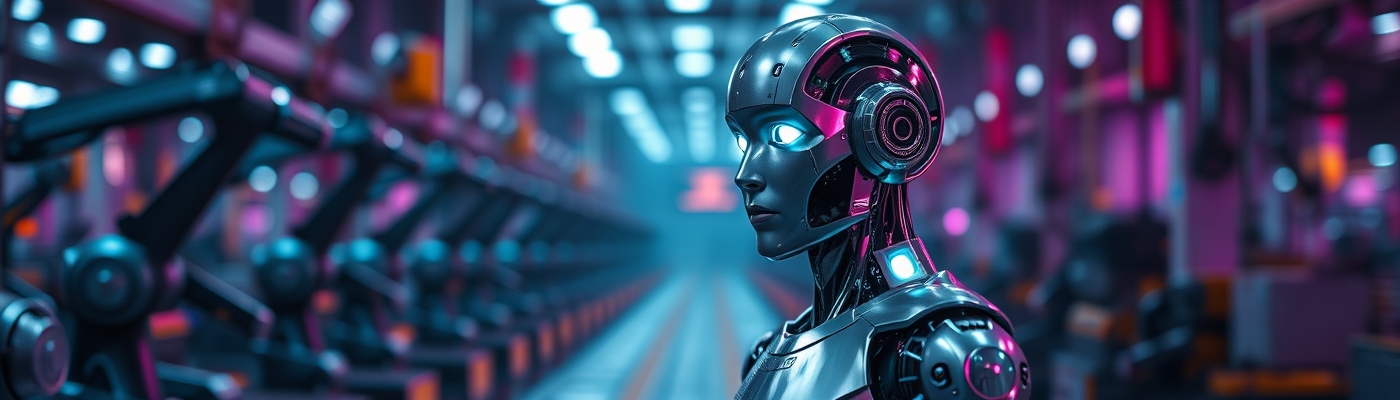
How China’s Labour Crisis is Driving the Development of RynnBrain AI to New Heights

How China’s Labour Crisis is Driving the Development of RynnBrain AI to New Heights
Understanding RynnBrain AI and Its Impact
The landscape of artificial intelligence is rapidly evolving, and at the forefront of this transformation is RynnBrain AI. Developed by Alibaba, this groundbreaking open-source model enables robots to see, think, and act intelligently in real-world environments. As traditional automation succumbs to the limitations of mere mechanization, RynnBrain AI represents a pivotal shift towards robotics AI, enabling not just action, but autonomous decision-making.
Against the backdrop of China’s ongoing labour crisis, characterized by dwindling workforce numbers and a rapidly ageing population, the emergence of RynnBrain AI cannot be underestimated. This innovation serves as both a response to these demographic challenges and a strategic weapon in the evolving landscape of physical AI. With an unprecedented demand for robotic solutions expected to continue surging, RynnBrain AI’s impact is destined to resonate across multiple industries, enabling more efficient operations and fundamentally reshaping the workforce.
Exploring the Link Between China’s Labour Crisis and Robotics AI
As China’s economic engine faces significant pressures due to its labour crisis, the relationship between this crisis and the evolution of RynnBrain AI becomes apparent. With the National Bureau of Statistics attributing over 60% of the country’s economic growth to its labour force, the ramifications of a declining workforce are staggering.
In this environment, traditional methods of labour are increasingly failing, leading to significant questions about sustainability. This is where robotics AI steps in, promising to fill the void left by human workers. The shift to RynnBrain AI is emblematic of a broader trend toward automating not just manual tasks but functions requiring cognitive engagement—making the AI not only a tool but a partner in productivity.
What Is Physical AI?
Physical AI, defined as the integration of physical machines with AI capabilities, focuses on creating systems that can interact intelligently with the world around them. RynnBrain AI exemplifies this by enabling machines to make autonomous decisions based on their surroundings. Just as an experienced chef adeptly combines various ingredients to create a dish, physical AI merges sensory input, decision-making algorithms, and motor functions to enact fluid, human-like interactions.
The Role of RynnBrain AI in Solving Labour Shortages
The need for advanced robotics has never been more urgent. As industries grapple with labour shortages, RynnBrain AI emerges as a beacon of hope. For instance, the manufacturing sector is beginning to embrace this technology at a rapid pace. Instead of relying solely on humans to perform repetitive tasks, companies can deploy RynnBrain-driven robots that learn from their environment and adapt, leading to enhanced productivity and lower operational risks.
The statistics speak for themselves. According to a report by UBS, there could be as many as 300 million humanoid robots in workplaces globally by 2050, creating a marketplace worth between $1.4 trillion and $1.7 trillion. RynnBrain AI is perfectly positioned to capture this burgeoning market by allowing robots to perform at unprecedented levels of efficiency.
Trends in Autonomous Decision-Making Technologies
The rise of RynnBrain AI is part of a larger trend in the tech landscape—the shift toward autonomous decision-making technologies. These innovations are no longer confined to speculative science fiction; they are entering the workplace, transforming how businesses operate.
RynnBrain AI stands out as a game changer, particularly in its direct competition with giants like Alibaba AI and others. It signifies a monumental leap forward, turning the theoretical aspects of AI into practical applications readily deployable across various sectors. The implications are vast. Imagine a world where robots are not just extensions of human labour but collaborators that assist in decision-making processes, ultimately enhancing operational efficiency.
Why RynnBrain AI is a Game Changer for Alibaba AI
RynnBrain AI’s potential for Alibaba transcends mere function. It solidifies Alibaba’s position as a titan in the AI ecosystem, poised to rival established players like Nvidia and Tesla. This elevation is significant, as the battlefield for AI supremacy intensifies on a global scale. The advantage lies not just in creating smarter robots but in facilitating an entire shift in workplace dynamics.
The future of humanoid robotics in the workplace may hinge on models like RynnBrain AI, paving paths for collaborative robots or “cobots” that can work alongside human employees. Rather than replacing workers, these advanced systems could offer significant enhancements in productivity and creativity, promoting a more synergistic working environment.
Insights on Governance Challenges in AI Deployment
With great power comes great responsibility. The deployment of AI, particularly in robotics AI, presents substantial governance challenges. Issues surrounding accountability, ethical frameworks, and operational integrity must be addressed to ensure that AI systems do not just serve corporate interests but also societal needs.
5 Key Challenges in Using Robotics AI
1. Ethical Dilemmas: As robots become more autonomous, determining the ethical implications of their actions becomes increasingly complex.
2. Accountability: When AI systems make decisions, who is held responsible for those decisions? This legal ambiguity must be clarified.
3. Data Privacy: The vast amount of data collected by AI systems raises significant privacy concerns that need proactive safeguards.
4. Job Displacement: The fear of job losses leads to resistance against AI adoption, challenging companies to find a balance between automation and employment.
5. Operational Failures: As robotics AI becomes more integrated into critical systems, the potential for catastrophic failures looms larger.
Proper governance frameworks must take these challenges into account, with a focus on creating a sustainable and balanced approach.
Future Predictions for AI and Robotics in China
Looking ahead, the trajectory for AI and robotics in China appears to be optimistic yet fraught with challenges. The demand for humanoid robots is projected to reach astonishing levels, with estimates suggesting that up to 300 million humanoid robots could inhabit workplaces by 2050.
This growth will be spurred not only by China’s labour crisis but also by the nation’s ambition to dominate the global robotics market, challenging entrenched leaders in the space. China’s leap into physical AI, driven by developments like RynnBrain AI, positions it uniquely in this race.
How Many Humanoid Robots Will Be in Use by 2050?
Forecasts indicate that by 2050, humankind could employ millions of humanoid robots across various industries. The significance of this shift cannot be overstated; it could redefine labor dynamics, alter employment patterns, and even reshape societal norms surrounding work.
Join the Conversation on RynnBrain AI
The discussion surrounding RynnBrain AI is just beginning. What does the future hold for AI and robotics in China and beyond? As stakeholders in this growing field, it’s crucial to engage in conversations surrounding the potential, the ethical considerations, and the innovative changes this technology will usher in.
Are we ready for a future where AI plays a prominent role in decision-making, productivity, and even ethical considerations? The rise of RynnBrain may well set the stage for a new era in AI, making the discourse around governance, responsibility, and innovation all the more pertinent.
Conclusion: The Future Landscape of RynnBrain AI and Robotics
The trajectory of RynnBrain AI is a testament to the resilience and adaptability of technology in the face of challenges like China’s labour crisis. As this technology matures, it will not only fill gaps in workforce inadequacies but change how we perceive the role of AI in our lives.
In an era where automation can be a double-edged sword—offering efficiency while threatening job security—the successful integration of RynnBrain AI could create a new balance, enabling collaboration between humans and machines. The way forward is laden with exciting possibilities and tough questions, challenging us to think deeply about what the future holds.
To delve deeper into the advancements of RynnBrain AI, you can visit this article from Artificial Intelligence News.