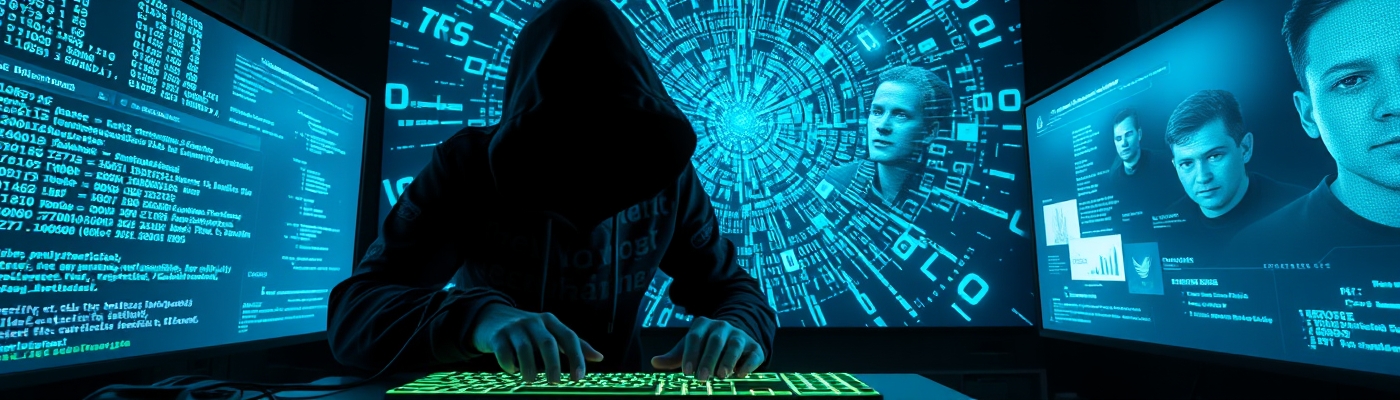
AI Phishing Scams: The Rising Cyber Threat

How Cybercriminals Are Using AI to Orchestrate Unstoppable Phishing Attacks
Introduction to AI Phishing Scams
In today’s digital landscape, where technology rapidly evolves, the rise of AI phishing scams has made cybersecurity a nerve-wracking challenge for individuals and organizations alike. Imagine a world where your most sensitive data can be compromised in seconds, not by a seasoned hacker, but by sophisticated algorithms capable of mimicking human behavior. These AI-driven phishing attacks are no longer mere inconveniences; they represent a pressing threat that multiplies at an alarming rate.
As cybercriminals harness the power of artificial intelligence, they are not just tweaking old scams; they are launching an unprecedented wave of attacks with a level of sophistication that traditional defenses rarely anticipate. While we once viewed phishing emails as poorly constructed, laughable attempts at fraud, today’s scammers are leveraging deepfake technology and machine learning to construct perfectly tailored assaults. The digital arena is their battlefield, and they are evolving faster than our ability to defend against them.
Understanding the Rise of AI in Cybercrime
What Are AI Phishing Scams?
AI phishing scams involve the use of artificial intelligence to create more convincing and personalized fraudulent messages aimed at stealing sensitive data, such as login credentials or financial information. Using natural language processing (NLP) and machine learning, these scams imitate the writing style of trusted individuals or organizations, making them highly effective. What’s more intriguing is that at least half of all spam emails now utilize AI content, creating a landscape rife with deception (source).
In the age of AI, these scams have advanced from generic messages that could be easily identified as fraudulent to personalized attacks that target specific individuals. Consider it akin to a predator in the wild—waiting patiently, employing tactical patience, and striking only when it becomes most opportune.
How AI Scams Are Evolving
AI scams are continuously evolving, fueled by the availability of AI tools that simplify and enhance the cybercriminal’s toolkit. Machine learning algorithms can analyze massive datasets to identify vulnerabilities and craft hyper-targeted messages. All it takes is a brief interaction or data leak for these algorithms to gather enough context to simulate a trustworthy persona convincingly.
For instance, a hacker can harvest data from social media platforms and use NLP models to create a false email that appears to come from a colleague or a known contact. This level of personalization is drastically different from earlier phishing attempts, making it significantly harder to detect. As cybercriminals refine their methods, the likelihood of victims falling prey to such AI phishing scams grows exponentially. Security expert Lorenzo Cavallaro states, \”The likelihood that cyberattacks will now become more common and more effective over time is not a remote possibility but a sheer reality.\”
Current Trends in Phishing and Cybersecurity
Key Stats on AI-Driven Phishing Attacks
Statistics reveal a grim picture of how AI is reshaping the landscape of cybercrime. Research indicates that by April 2025, 14% of targeted email attacks will involve large language models (LLMs), a dramatic increase from 7.6% the previous year. This surge illustrates how quickly cybercriminals are adopting AI to enhance their efficiency and reach (source).
– $4 billion worth of scams have already been blocked by Microsoft, with a significant portion presumably reinforced by AI capabilities.
– AI-generated spam is making it more challenging for average users to differentiate between legitimate communications and malicious attempts.
The Role of Deepfake Technology in Data Theft
Deepfake technology plays a crucial role in implementing these AI phishing scams, giving fraudsters the tools necessary to impersonate individuals convincingly. By generating realistic images or audio, criminals can create completely fabricated scenarios that convince victims to divulge sensitive information. Imagine receiving a video call from your boss requesting confidential information—only to realize, too late, that it was a deepfake impersonation.
According to cyber experts, as these tools become more sophisticated and accessible, the rising popularity of deepfake technology will undoubtedly serve as a catalyst for various other forms of data theft.
Expert Insights on AI and Cybersecurity
Perspectives on Future AI Scams
The consensus among cybersecurity experts is that AI scams will only grow in sophistication and prevalence. Some skeptics may argue that the technology is still in its infancy and that our existing defenses are enough to combat these threats. However, as figures like Marcus Hutchins remind us, \”For some reason, everyone is just focused on this malware idea of, like, AI superhackers, which is just absurd.\” It isn’t just about superhackers; it’s about empowering everyday criminals with tools that elevate their game to a terrifyingly effective level.
Comparison of Traditional vs. AI-Enabled Cyber Defenses
Traditional cybersecurity defenses, such as firewalls and antivirus software, are increasingly shown to be less effective against AI-powered threats. While these defenses still play a pivotal role, new strategies must be developed to combat the specific tactics employed in AI phishing scams. Firewalls cannot anticipate the nuanced, context-driven approaches of AI impersonation, leading to a false sense of security among users.
As cybercriminals push the boundaries of technology, defenders must also adapt and innovate. This could mean embracing advanced machine learning and behavioral analysis tools that proactively detect unusual patterns of behavior in users or transactions.
Predictions for AI’s Role in Phishing Attacks
Looking Ahead to Cybersecurity Challenges
The future promises an escalating battle between cybersecurity professionals and cybercriminals empowered by AI. As AI phishing methods become more sophisticated, organizations will need to invest heavily in their cybersecurity measures to keep pace. Predictions point towards a world where zero-day exploits—previously unheard of vulnerabilities—utilize AI to infiltrate systems before defenders even know they exist.
Moreover, the mainstream adoption of remote working environments will only serve to exacerbate the challenge, resulting in increased entry points for AI-powered threats.
Preparing for Advanced Phishing Scenarios
The proactive measures necessary to stay one step ahead of AI phishing scams will require a combination of technological advancements and training. Organizations must be dedicated to providing ongoing education about emerging threats to employees, as well as regularly updating defense mechanisms to ensure optimum protection.
It is essential to invest in AI-enhanced cybersecurity solutions that employ machine learning to adapt to evolving threats dynamically.
How to Protect Yourself from AI Phishing
Steps to Enhance Cybersecurity Awareness
– Stay Informed: Regularly update yourself on cybersecurity trends and statistics to understand the current threat landscape.
– Train Employees: Organizations should invest in training programs that educate employees about recognizing phishing attempts, especially those using AI.
– Use Two-factor Authentication (2FA): This adds an additional layer of security by requiring a second form of identification before granting access.
Tools for Preventing Data Theft
Numerous tools are available to combat the rising tide of AI phishing scams:
– Phishing Detection Software: Employ software that uses AI to scan for suspicious messages and potential phishing attacks.
– Email Verification Services: Utilize services that verify the sender’s identity and check for red flags before trusting incoming communications.
– Incident Response Plans: Develop a robust incident response plan that outlines steps to take if a phishing attempt is successful.
Conclusion: The Future of Cybersecurity in an AI World
As we venture deeper into the era dominated by AI-powered cybercrime, the reality is stark: cybercriminals are becoming more skilled and versatile than ever before. The traditional strategies for combating cyber threats may soon prove insufficient against the evolving landscape of AI phishing scams. The imperative to adapt is stronger than ever.
In this ongoing battle, organizations and individuals must commit to staying educated and informed, investing in the right tools, and building robust defenses against these savvy cybercriminals. The question remains: will the realm of cybersecurity adapt quickly enough to thwart the relentless onslaught of AI-enabled phishing attacks? Only time will tell.